


Bridal Shower Party Ideas: The Complete Planning Guide

A bridal shower sits in an odd and rather lovely spot on the wedding calendar. It is not the wedding, so nobody has to behave. It is not the hen party, so nobody has to survive a nightclub. It is the one event in the whole run-up where the bride gets to sit in a nice chair, be handed a drink, and be told by people who love her that they are glad she found her person.
Which is exactly why it is worth planning properly — and why over-planning is the most common mistake. This guide covers the whole thing: who hosts, when to hold it, how to build a table that photographs well, what to actually feed people, games that are not humiliating, a realistic budget, and a timeline that will not wreck your month.
Who Hosts, and When
Traditionally the maid of honour hosts, often with the bridesmaids sharing the cost and the work. In practice, mothers, aunts, close friends and future mothers-in-law all host showers now, and nobody minds. The one rule still worth observing: the bride should not throw her own shower. If she is organising everything herself, something has gone wrong with the support structure around her.
Timing. The sweet spot is two to three months before the wedding. Earlier than that and it feels disconnected; later and it collides with final fittings, seating charts and the general last-month panic. If out-of-town guests are travelling, aim for the same weekend as a dress fitting or another wedding errand so the trip does more than one job.
Guest list. The iron rule is that everyone invited to the shower must be invited to the wedding. Breaking it reads as a gift grab, and people notice. Beyond that, keep the list to people the bride would genuinely want in a room together — typically fifteen to thirty. A shower of sixty is not a shower, it is a reception rehearsal.
Duration. Two to three hours. Long enough for food, gifts and a game; short enough that nobody is checking their phone. Afternoon — around 1pm or 2pm — is the classic slot because it works for a lunch menu and lets people get home in daylight.
Choosing a Theme That Is Not Just a Colour
A theme should give you decisions, not decoration. The good ones answer questions about food, drinks and activities as well as palette.
Garden party. The most forgiving option. Long table outdoors, real flowers, linen, lemonade in glass dispensers. Works in any climate with a tent as backup. Food is easy: salads, tarts, a cake.
Brunch and bubbles. A late-morning shower with a mimosa bar, pastries, a frittata and a fruit board. Cheaper than dinner, faster to host, and everyone is in a good mood before noon.
Tea party. Mismatched vintage china, tiered stands, finger sandwiches, scones with clotted cream. Genuinely charming and unusually easy to cater because everything is cold and made ahead.
Wine or cheese tasting. Three or four bottles with tasting notes, a serious cheese board, and score cards. Naturally generates conversation and doubles as the activity.
Spa afternoon. Face masks, hand massages, robes, cucumber water. Best for smaller groups of eight to twelve, and the single kindest option for a bride who is running on empty.
Around the clock. Each guest is assigned a time of day and brings a gift suited to it — 7am coffee grinder, 8pm wine glasses. It solves the gift-coordination problem elegantly and creates a genuinely useful spread of presents.
Recipe shower. Every guest brings a handwritten recipe card plus the one unusual ingredient it needs. The bride leaves with a hand-built cookbook, which ages far better than most shower gifts.
Building the Table
Nearly every photograph anyone takes at a bridal shower will feature the table, so it is worth twenty minutes of thought.
Pick two colours and one metallic. Blush and sage with gold. Ivory and dusty blue with silver. Terracotta and cream with brass. Two colours plus a metal reads as designed; five colours reads as a jumble. Take the cue from the wedding palette if there is one, but soften it — the shower should feel like a warm-up, not a dress rehearsal.
Work in three heights. Flat at the base — the cloth, the plates. Mid-height in the middle — low bowls of flowers, candles, the food. Tall at the back — a cake stand, a tall vase, a balloon cluster or an arch. Tables that live entirely at one height look flat in photographs no matter how nice the individual pieces are.
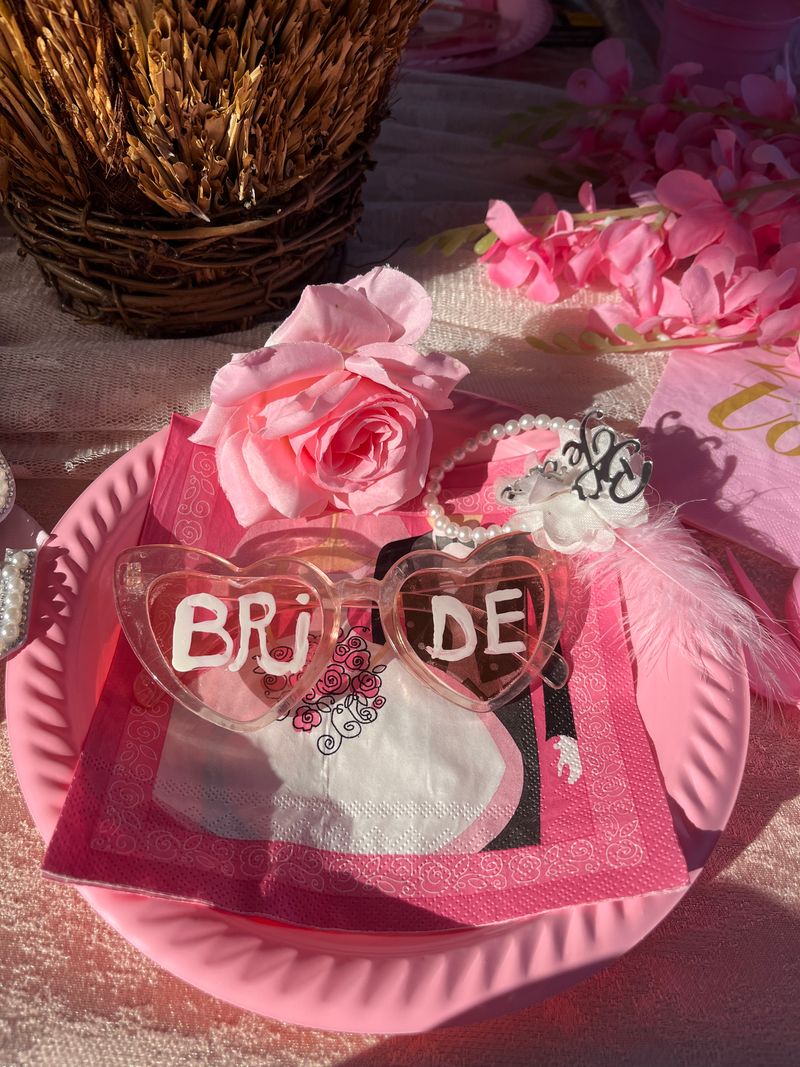
Do the place settings properly. This is where showers either look considered or thrown together. A charger, a plate, a folded linen or good-quality paper napkin, a sprig of eucalyptus or a single stem, and a handwritten name card. Floral paper plates do a great deal of work here — they carry the botanical pattern for you, so you can keep the flowers simple and let the tableware provide the detail, and there is no washing up at the end.
Flowers. Three or four small arrangements down the length of a table look more generous than one enormous centrepiece, and they do not block sightlines across the table. Buy in season. In spring, ranunculus and tulips; in summer, garden roses, dahlias and cosmos; in autumn, dahlias and amaranthus. Supermarket flowers, unwrapped, re-cut and rearranged into three small vessels, look several times more expensive than they were.
Metallics. A run of rose gold party decorations is the reliable shortcut — rose gold flatters almost every palette, photographs warmly in daylight, and does not read as gaudy the way bright gold sometimes can.
Food and Drink
The single best decision you can make is to serve food that sits happily at room temperature for two hours. Nothing that needs plating, nothing that congeals.
Grazing board. Cheeses at three textures — something soft, something hard, something blue — plus prosciutto, grapes, figs, honey, marcona almonds, cornichons, two crackers and good bread. Build it on a long board down the middle of the table and let it double as decoration.
Something substantial. Quiche or a vegetable tart cut into squares. A tray of chicken skewers. A big grain salad with roasted vegetables and feta. One hot or hearty item stops the shower feeling like a snack.
Two salads. One leafy, one grain-based. Dress at the last minute.
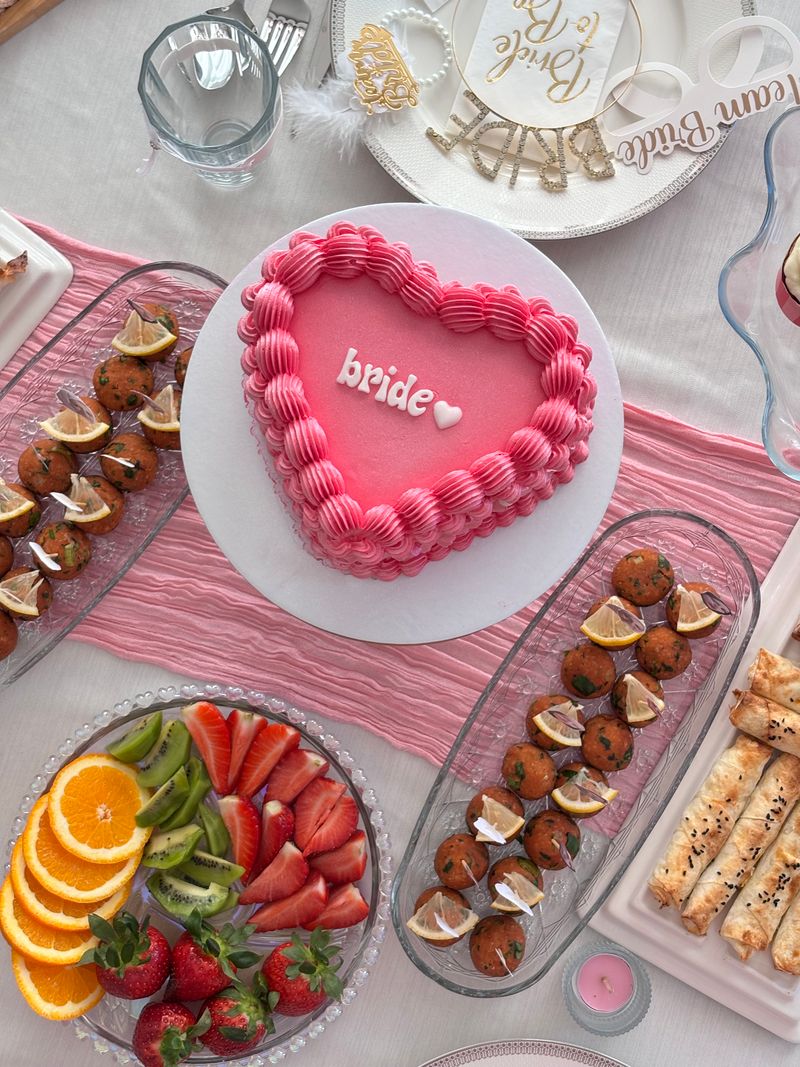
Sweet. A cake if you want the moment, or a dessert table of small things — macarons, mini tarts, strawberries dipped in white chocolate — if you would rather people graze. Small desserts have the advantage that guests take three without noticing.
Drinks. A signature cocktail in a large glass dispenser saves you two hours of mixing. Prosecco with elderflower and mint, or a white sangria with peach and basil, both work. Then still and sparkling water with citrus, and one properly good non-alcoholic option — a rosemary lemonade or a hibiscus iced tea, not just orange juice.
Allergies. Ask on the invitation, then label everything on the day with small folded cards. Nut, dairy and gluten allergies are common enough that at a shower of twenty you will almost certainly have at least one. Labelling is cheaper and kinder than a guest quietly eating nothing.
Layout, Seating and the Flow of the Afternoon
Almost every shower that feels awkward has a layout problem rather than a planning problem. People end up standing in a doorway holding a plate with no free hand, or seated in a rigid circle where only two conversations are possible. A little thought about the physical space fixes both.
Seat everyone. This is the most important rule and the most frequently broken one. A shower is a sitting event — there is food, there are gifts, there is an age range that often spans sixty years. Count chairs against your final RSVP number and add two. Borrow from neighbours if you have to. A guest standing for three hours will remember that far longer than they remember the flowers.
Separate the food from the seating. Put the food on its own table away from where people are sitting, so the queue does not trap anyone. If space is tight, serve the grazing board down the centre of the dining table and put drinks somewhere else entirely — splitting the two stops a bottleneck forming in one corner.
Give the bride a defined seat. Not a throne, but a clear spot with good light behind the camera's shoulder, room for gifts beside her and a small side table for her drink. Everything visual happens around that chair, so choose it before you decorate rather than after.
Think about noise. Hard floors, bare walls and twenty-five people make a room in which nobody over sixty can hear anything. A rug, a few cushions and curtains left open soften it considerably. Keep the music low enough that it is a texture, not a competitor.
Plan the gift corner. Set aside a table for arriving gifts near the entrance, so guests can put theirs down within five seconds of walking in rather than carrying it around while they say hello.
Games People Will Actually Play
The reputation of shower games is poor, and largely deserved. The fix is simple: choose games that generate conversation rather than embarrassment, and run no more than two.
How well do you know the bride? Ten questions, answers collected from the bride in advance, guests write theirs on cards. Reading them aloud produces the best stories of the afternoon.
The newlywed quiz. Record the partner answering ten questions on video beforehand. Ask the bride the same questions live. The video plays back after each answer. Reliably the biggest laughs of the day.
Date-night jar. Every guest writes a date idea on a card and drops it in a jar. Costs nothing, takes two minutes, and the couple actually uses it.
Advice cards. One card per guest for a piece of marriage advice — sincere or ridiculous. Collect them into a small album for the bride.
Guess the spice. Six unlabelled jars from the kitchen, guests sniff and guess. Absurdly fun, costs nothing, and it works across every age group in the room.
Two to skip: anything requiring guests to wrap each other in toilet paper, and anything that asks the bride to answer questions about her sex life in front of her grandmother.
Gifts and Favours
Managing the gift opening. This is the part that can drag. With twenty guests and thoughtful presents, opening everything individually takes forty minutes and the energy drains out of the room. Two good solutions: cap it at ten minutes and open the rest privately, or ask guests to bring unwrapped gifts for a display table that people browse at their own pace.
Assign a note-taker. One bridesmaid writes down who gave what, in real time. Thank-you notes become a twenty-minute job instead of a memory test.
Favours. Small, edible or useful. A jar of local honey, a good candle, a bag of nice coffee, a potted herb. Skip anything engraved with the date — it goes in a drawer. Set them by the door so nobody forgets one on the way out.
Budget Breakdown
For twenty-five guests at home, a workable split looks like this:
- Food — 35 to 40%. The largest line. Self-catering a grazing table plus one substantial dish costs a fraction of catering and tastes better.
- Drinks — 15 to 20%. One signature cocktail plus wine and soft drinks. Buying sparkling wine by the case is the biggest single saving available.
- Tableware and decor — 20 to 25%. Plates, napkins, cups, cloth, balloons, candles. Good disposables cost far less than hiring china and eliminate the washing-up.
- Flowers — 10 to 15%. Buy in season and arrange them yourself the day before.
- Favours and extras — 5 to 10%.
If the budget is genuinely tight, the honest advice is this: cut the favours, cut the professional flowers, cut the custom printing. Do not cut the food or the seating. Guests remember whether they were fed and whether they had somewhere comfortable to sit; nobody has ever left a shower disappointed by the absence of monogrammed napkins.

An Eight-Week Timeline
Eight weeks out. Agree the date with the bride. Confirm who is hosting and how costs are split. Get the guest list from the bride and cross-check it against the wedding list.
Six weeks out. Book the venue if you are using one. Lock the theme and palette. Send invitations — digital is entirely acceptable now, and it makes RSVPs painless.
Four weeks out. Order tableware, decorations and anything that ships. Plan the menu. Chase RSVPs. Ask about allergies.
Two weeks out. Confirm final numbers. Write the shopping list. Prepare game materials. Record the partner's quiz video.
One week out. Buy non-perishables and drinks. Confirm helpers and who is doing what on the day. Make and freeze anything freezable.
Two days out. Buy flowers and fresh food. Deep clean the space if you are hosting at home.
The day before. Arrange flowers. Set the table completely. Prep everything that can be prepped. Chill the drinks.
On the day. Final food assembly two hours before. Ice out thirty minutes before. Music on, candles lit, and then hand yourself a drink — a visibly stressed host makes everyone else tense.
Frequently Asked Questions
Who pays for the bridal shower? Usually the host, often with the bridal party splitting costs. Agree the split explicitly and early. Nothing sours a bridal party faster than an unspoken assumption about money.
Can men be invited? Yes. Co-ed showers — sometimes called Jack and Jill showers — are increasingly common and work particularly well as a barbecue or a casual brunch. Follow the couple's preference.
Is a bridal shower the same as a hen party? No. The shower is daytime, generally multigenerational, gift-focused and calm. The hen party is a night or weekend out with friends. Many brides have both, and they should feel completely different.
What if guests are spread across the country? A hybrid shower works better than people expect. Set up a tablet on a stand at the table, schedule a thirty-minute window for the video portion, and have remote guests send gifts to arrive beforehand so they can be opened on camera.
Do you need a cake? No. A dessert table of small items is often more practical and lets guests try several things. If the bride loves a cake moment, have one — but it is not obligatory.
How long should the gift opening last? Fifteen minutes at most for a group of twenty-five. Beyond that, energy drops noticeably.
What if it rains? Decide the wet-weather plan a week out, not on the morning. Guests would far rather know in advance that it has moved indoors than arrive at a garden in a downpour.
The Part That Actually Matters
Every good bridal shower has the same moment. It is usually about ninety minutes in, after the food and before the gifts, when the conversation splits into two or three overlapping groups, somebody's mother is telling a story nobody has heard, and the bride is laughing properly for the first time in weeks. Everything in this guide exists to make room for that moment. The palette, the timeline, the labelled cheese — all of it is scaffolding.
So build the table the day before, choose food that does not need you, and keep the schedule loose enough that the afternoon can go where it wants to. When you are ready to pull the details together, our bridal shower party supplies collection covers the tableware, napkins and decorations in one place, and the wedding paper plates range gives you elegant options that hold up to a full plate of food — which, on a day built around a long table and good company, matters more than it sounds.