


Cyprus Independence Day 2026 Party Ideas: The Complete Party Planning Guide

Cyprus Independence Day 2026: The Complete Party Planning Guide
Circle Thursday, 1 October 2026 in your diary, because Cyprus Independence Day falls on a Thursday this year, giving you the perfect excuse for a long Mediterranean weekend of celebration. Whether you are Cypriot by heritage, married into a generous Cypriot family, or simply someone who fell for the island on holiday and never recovered, this is the day to bring a slice of the Mediterranean to your table. Independence Day is marked with a military parade in Nicosia, school flag processions, and a public holiday atmosphere, but in homes and gardens across the island the day is really about food, music, and philoxenia, the legendary Cypriot hospitality that turns every guest into family. In this guide we cover the history behind the date, the colours that anchor your theme, a menu of halloumi and souvlaki, the right drinks and music, games for all ages, and a budget and timeline that keep it stress-free.
Why 1 October Matters: A Quick History
Here is a detail that surprises even seasoned hosts: Cyprus actually became independent on 16 August 1960, when Britain relinquished control of the island after decades of colonial rule and a hard-fought struggle for independence. Yet the national celebration does not happen in August. Independence Day is observed on 1 October, because that was the date in 1960 when the Republic of Cyprus was formally proclaimed, with Archbishop Makarios III installed as its first President. The sweltering August heat was no time for a national ceremony, so the proclamation date carried the honour.
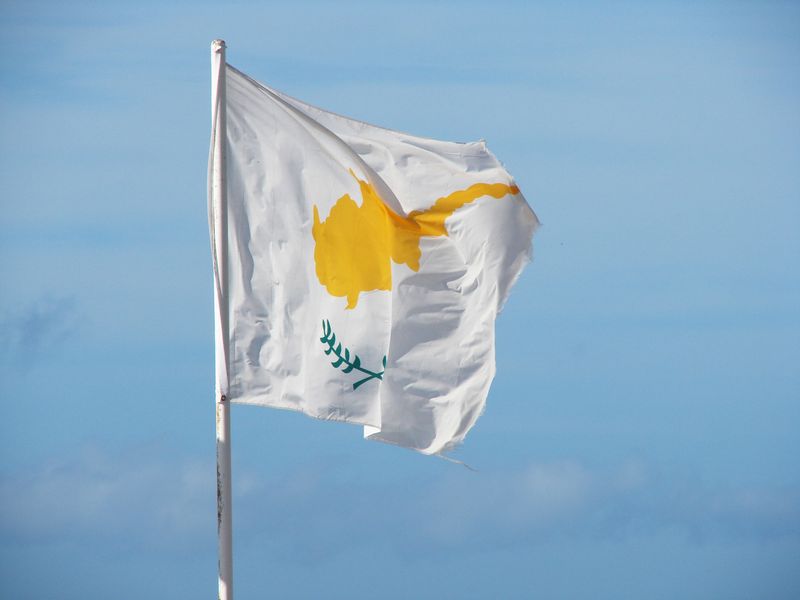
The island's story reaches back far further. Cyprus has been inhabited for more than ten thousand years, with Mycenaean Greeks, Phoenicians, Assyrians, Romans, Byzantines, Venetians, Ottomans, and the British each leaving something in the language, the kitchen, and the music. The Republic is also shared ground: Greek-Cypriot and Turkish-Cypriot communities have together shaped its cuisine, folk traditions, and dialects. The copper-coloured map on the flag is no accident; the very name Cyprus is linked to cuprum, copper, which the island mined and exported from antiquity. The map sits between two olive branches, the Mediterranean's timeless emblem of peace. Raise a glass on 1 October and you are toasting one of the oldest inhabited islands on earth and one of its youngest republics.
Setting the Theme: National Colours and Mediterranean Style
Every memorable party begins with a coherent visual idea, and Cyprus hands you a palette that is genuinely gorgeous. Start with the flag: crisp white as your foundation, warm copper-gold as your accent, and the green of the olive branch to balance both. Add the Mediterranean setting, bleached limestone, olive groves, terracotta rooftops, and coastal blue, and you have a theme that is patriotic and effortlessly stylish at once.
In practical terms, that means white tablecloths as your canvas with copper, gold, and sage-green accents on top. Hunt for olive branches, fresh or dried, at your local florist; a few sprigs laid along the table outperform any expensive ornament. Lemons still on the branch, small terracotta pots, and natural linen napkins complete the look. To spare yourself the hunt for matching pieces, our party tableware collection offers coordinated white, gold, and green sets that suit this palette beautifully and hold up to a full meze spread, which, as we will see, is no small ask of a plate.
Texture matters too. Cyprus is tactile: rough stone, woven baskets, sun-bleached wood, hammered copper. A wicker basket for the bread, a copper jug, and handwritten place cards on kraft paper will make the table feel curated rather than costume-party.
The Decor Playbook
The banner. A garland of printed Cyprus flags strung along a wall, fence, or pergola instantly sets the scene, and it is a lovely craft project for children in the days before the party. Cut small flags from white card, draw or print the copper island silhouette with two green olive branches beneath, and string them on jute twine, alternating with green and white paper lanterns or olive sprigs for rhythm.
The centrepieces. Keep them low so guests can see one another across the table, the Cypriot way. Three ideas that work beautifully: small terracotta pots planted with rosemary or olive cuttings at each place setting, doubling as take-home favours; shallow bowls of lemons and green olives, decorative, fragrant, and edible all at once; and jam jars filled with dried lentils holding a single olive branch and a slim copper-toned candle.
The backdrop. Designate one corner as the photo spot. A white sheet or canvas drop hung behind a small table works as a base; onto it, pin a large paper cut-out of the Cyprus map in copper, garlands of olive branches, and strings of warm fairy lights. A small framed note explaining the story of 1 October gives guests something to read and quietly turns your decor into a little act of remembrance.
The Menu: Halloumi, Souvlaki, Kleftiko and More
A Cyprus Independence Day table should follow the island's greatest culinary tradition: the meze. Instead of one imposing main course, lay out many small dishes and let guests graze for hours. It is the most forgiving format a host can choose, as nearly everything can be prepared in advance and served at room temperature.
Begin where every Cypriot feast begins, with bread and dips: a village loaf or warm pita, alongside bowls of tahini, taramosalata, talatouri (the Cypriot tzatziki, thick with strained yoghurt, mint, and garlic), and olive tapenade, plus cracked green olives and wedges of lemon. Then the cheese course, the moment your guests will remember: halloumi. Cyprus's famous squeaky cheese, made from goat's and sheep's milk, is best grilled over charcoal or fried in a dry pan until golden, then finished with honey or served with watermelon. Griddle it properly and serve it warm, and you are honouring tradition.
For the substantial dishes, souvlaki is essential: cubes of pork or chicken marinated in olive oil, lemon, oregano, and garlic, skewered and grilled until charred at the edges. If you have time for one showstopper, make it kleftiko: lamb wrapped in parchment with potatoes, bay leaves, cinnamon, and a splash of wine, slow-roasted until it falls apart at a glance; the name comes from the kleftes, mountain brigands who supposedly baked stolen lamb in sealed underground ovens so the aroma would not betray them. Add sheftalia, skinless sausages of pork mince, onion, and parsley, and afelia, pork braised in red wine and coriander seed.
To balance the richness, serve a proper Cypriot salad of tomato, cucumber, green pepper, red onion, and olives under a slab of local salty cheese, dressed only in olive oil and oregano, plus koupepia, stuffed vine leaves, a dish shared across Greek-Cypriot and Turkish-Cypriot kitchens. For dessert, keep it simple: loukoumades, golden puffs of fried dough soaked in honey and dusted with cinnamon and walnuts, beside a platter of watermelon and the pomegranates October delivers. Finish with strong Cypriot coffee, brewed sweet in a small copper mbriki.
Drinks: From Commandaria to Zivania
Cyprus drinks like a country with five thousand years of practice, because it is one. The jewel in the cellar is Commandaria, the amber dessert wine from the foothills of the Troodos mountains, widely acknowledged as the world's oldest named wine still in production; it was praised by crusader kings and served at the wedding of Richard the Lionheart in Limassol. Tasting of dried figs, raisins, and honey, it is the perfect pour beside your loukoumades, served slightly chilled in small glasses.
The local spirit is zivania, a potent grape distillate, close kin to the grappa of Italy, long made by Cypriot households from the skins and stems left after winemaking. It is served ice-cold in small glasses, straight from the freezer, offered when guests sit down and again when coffee arrives. For beer drinkers, the island's own lagers, Keo and Leon, are the gold bottles of every taverna terrace.
Build the rest of the drinks table around the classic Cypriot non-alcoholics: freshly squeezed lemonade with mint and ayran, the salty iced yoghurt drink favoured in Turkish-Cypriot homes. For a signature cocktail, mix brandy and lemon squash over ice, topped with lemonade and bitters: the brandy sour, unofficial national cocktail since the island's mid-century hotel boom. Add wines from the native grapes Xynisteri and Maratheftiko if you can find them, and plenty of water; in the Cypriot climate, even a warm October one, hydration is hospitality.
Music and Dancing
No Cypriot party is complete without a soundtrack, and the island's musical inheritance can fill a whole night. Start in the late afternoon with laika and rembetiko, the urban folk music of cafes and waterfronts, all bouzouki, baglamas, and weathered voices; traditional Cypriot music adds the violin and the laouto, the lute that drives village dancing at weddings and festivals. As the evening warms, move into the great taverna voices, then finish with modern Greek pop that brings the youngest guests to the floor.
And then there is the dancing. Syrtaki, made world-famous by Zorba the Greek, was choreographed for the 1964 film but drew directly on genuine folk forms, and it is the perfect party finale because it needs no skill. Dancers line up holding shoulders; the line begins slow and builds, faster and faster, and the steps are simple enough to teach anyone in two minutes. You do not need to get it right; you need to get everyone in the line. Somewhere between the second chorus and the collapsed laughter, your party will have become a Cypriot one.
If children are present, teach them a few steps of the kalamatianos circle dance beforehand and let them lead the line, just as young troupes in traditional costume lead the dancing at village festivals across the island.
Games and Activities for All Ages
Keep the afternoon moving with games that suit every generation. A Cyprus trivia quiz works wonderfully: twenty questions mixing the easy (what colour is the island on the flag? what is the capital?) with the tricky (which spirit is distilled from grape skins? which wine did the crusaders praise?), with teams of mixed ages competing for a bottle of Commandaria.
For the children, set up a flag-painting station with white card, copper and green paint, and plenty of brushes, then string the results onto your banner, which grows more festive as the afternoon goes on. A treasure hunt across a hand-drawn map of Cyprus is another hit: hide clue cards at points marked Nicosia, Limassol, Larnaca, Paphos, and Kyrenia, and let the children "tour" the island collecting a small treat at each stop. Add a lemon-and-spoon relay and a round of music statues.
Do not overlook the quiet pleasures. Set up a corner with a backgammon board and a deck of cards for biriba; the island's cafes run on these games, and older guests will gravitate there gratefully. A small table of photographs of Cyprus gives grandparents a natural place to tell stories, which at a family party is worth more than any organised entertainment.
Practical Planning: Budget and Timeline
Here is the reassuring truth about a Cypriot feast: because it is built on meze rather than plated courses, it scales beautifully and forgives generously. Work backwards from Thursday, 1 October 2026. Three weeks out, send the save-the-dates, choose your playlist, and order any tableware you want delivered in good time. Two weeks out, finalise the guest list, draft your shopping list, and buy the wine and spirits. The weekend before, do the big shop, make the decorations, and prepare what freezes: the kleftiko marinade and the loukoumades dough both keep well. Two days before, assemble the dips and desserts, marinate the souvlaki and afelia, and set the table, covering it with a sheet. On the day, your list is short: lay out the meze, chill the zivania and lemonade, light the charcoal by five, grill the halloumi and skewers as guests arrive, and let the evening carry itself.
On budget, for a party of fifteen to twenty guests, expect roughly half your spend to go on food and drink; the meze format keeps the cost per head low, especially if you buy halloumi, olives, and olive oil in bulk. Spend a quarter on tableware and decor, and keep a quarter in reserve for the extras that always arise. Choose one splurge, the lamb for the kleftiko or a fine bottle of Commandaria, and economise elsewhere with paper goods and homemade touches. On the table itself, our party plates and napkins come in coordinated sets that match the white, copper, and green theme, and sturdy plates matter when a guest is balancing souvlaki, salad, and a brandy sour in one hand. If the weather threatens, have an indoor fallback: the meze table, the music, and a cleared living-room floor for the syrtaki line transplant indoors without complaint.
FAQ
Is Cyprus Independence Day the same as Greece's national day? No. Greece celebrates its own independence from Ottoman rule on 25 March, while Cyprus marks the proclamation of the Republic on 1 October 1960. The celebrations share music, food, and dance, but 1 October is distinctly Cypriot.
Why is Independence Day on 1 October if independence came in August? Independence was formally achieved on 16 August 1960, but the Republic of Cyprus was proclaimed on 1 October 1960, and it is the proclamation date the nation celebrates. October also suits a public holiday better than mid-August, when the island is at its hottest and half the country is on holiday.
What should guests wear to a Cyprus-themed party? Keep it easy and in the palette: white, copper, gold, olive green, and Mediterranean blue. Linen and cotton in natural tones fit the theme perfectly, and a small copper-toned accessory or an olive sprig pinned to a lapel nods to the flag without turning the day into fancy dress.
Can I host this party if nobody in my family is Cypriot? Absolutely. A national day celebrated among friends is about warmth, good food, and curiosity about another culture's story. Cook the food honestly, play the music properly, and share the history with your guests; philoxenia means opening your table, not checking passports at the door.
What can I prepare ahead if I am short on time? Almost everything. The dips, salads, marinades, kleftiko, and loukoumades can all be made a day or two in advance. Only the grilled halloumi, the souvlaki, and the coffee demand last-minute attention, which is exactly the balance a relaxed host wants.
Ready to Celebrate?
Cyprus Independence Day 2026 arrives on Thursday, 1 October, and it deserves better than an afterthought. With the flag's white, copper, and green as your palette, a table heavy with halloumi and souvlaki, a chilled bottle of Commandaria, a playlist that builds from bouzouki to syrtaki, and a timeline that leaves you calm on the day, you have every ingredient for a celebration that honours one of the Mediterranean's most storied islands while giving your guests an evening to remember. Start with the essentials: browse our party tableware collection to set your copper-and-green foundation, and pair it with matching party plates and napkins sturdy enough for a full meze spread. Then send the invitations, cue the music, and celebrate the Republic of Cyprus the way the island itself would: with open doors, full plates, and dancing until the neighbours join in.