


Halloween Party Games & Activities for Kids and Adults

Why Halloween Parties Go Flat Without a Plan
Halloween has a problem that other holidays do not: everyone arrives in costume, feeling bold, and then stands around the food table not knowing what to do next. Costumes create energy, but they do not create structure. The hosts who throw the best Halloween parties all do the same thing — they plan two or three activities and let everything else be social.
Below is a full set of Halloween games and activities, grouped by age group and by how much setup they need. Some require a pumpkin and nothing else; others need a few minutes of preparation. Pick two for a small party, four for a big one, and always plan the order so the loudest activity comes after people have eaten.
The Order of the Evening Matters
Before the games themselves, get the sequence right. A party that runs in this order always works:
- First 30 minutes: Arrival, drinks, and photos. People need time to settle and show off costumes. Do not start a game yet.
- Next 45–60 minutes: Food. Eating together is itself an icebreaker, and it gives the group a shared experience before competition starts.
- Then: The big activity — costume contest, trivia, or a team game. This is when energy peaks.
- After: Relaxed games and desserts. Think pumpkin decorating, candy stations, and photo booth rounds.
- Final hour: Music, dancing, and conversation. Do not schedule a structured activity in the last hour; people want to talk.
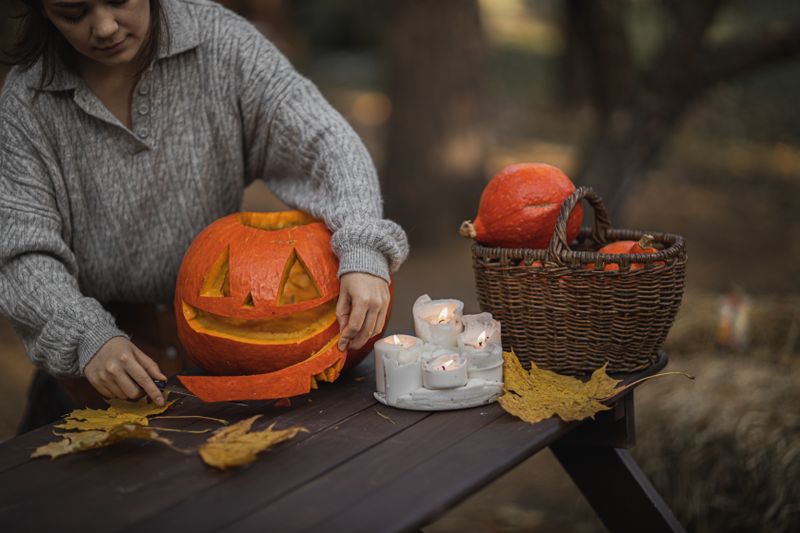
Games for Young Children
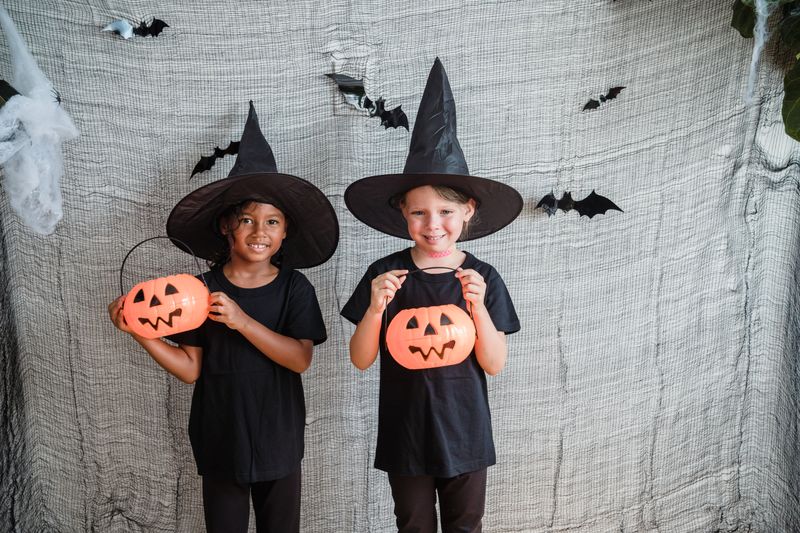
Children under ten need games with simple rules, short rounds, and no elimination — being "out" while everyone else plays is miserable at that age. Keep every round under five minutes and give a small prize to everyone who participates.
- Mummy Wrap. Teams of two or three wrap one child in a roll of toilet paper until they are a mummy. Time it, then let them break free. Cheap, hilarious, and genuinely memorable. Buy more toilet paper than you think you need.
- Pumpkin Bowling. Line up plastic cups or empty bottles in a triangle and roll a small pumpkin (or a ball) at them. Ten minutes of setup, twenty minutes of play.
- Pin the Spider on the Web. Print a web poster and give each child a paper spider with tape on the back. The traditional blindfold version works perfectly.
- Candy Guess Jar. Fill a jar with candy corn or wrapped candy and have children guess the count. The closest guess wins the jar.
- Spooky Scavenger Hunt. Hide ten small items around the room and give each child a picture list to tick off. This works especially well at the start of a party, when children arrive at different times.
- Witch's Hat Ring Toss. Place pointed party hats on the floor and toss hoops over them. Adjust the distance by age.
For very young children, keep the candy station supervised and consider snack cups so each child gets a contained portion rather than a free-for-all at the bowl.
Games for Tweens and Teens
This age group wants games that feel competitive and slightly gross or dramatic, but not childish. Avoid anything that could embarrass someone in front of peers.
- Fear Factor Tasting. Blindfolded players taste "mystery" foods — it is all normal food with dramatic names. Peeled grapes become "eyeballs" and cold cooked spaghetti becomes "intestines." Label everything clearly after the round so guests know what they ate.
- Halloween Trivia. Ten questions about Halloween history, movies, and folklore. Split into teams and give small prizes. This is the easiest way to fill twenty minutes with almost no setup.
- Spooky Pictionary. A Halloween-only word list — vampire, haunted house, jack-o-lantern, spider web. Teams draw and guess against the clock.
- Zombie Tag or a Costume Relay. Any physical game is better outdoors. A relay race in costume, with a pumpkin to carry, is simple and burns energy.
- Escape the Room (mini version). Hide a locked box with a small prize, give three clues, and set a ten-minute timer. One box is enough; you do not need a full escape room.
Games for Adults
Adult Halloween games should be social rather than physical, and they should give people an excuse to talk to guests they do not know.
- Costume Contest with Real Categories. The trick is specificity. Instead of "best costume," use categories like Most Creative, Best Couple or Group, Most Authentic to a Decade, and Funniest. Specific categories mean more people win and the judging becomes a conversation.
- Murder Mystery. A structured mystery works beautifully at Halloween, but it needs commitment from guests and takes most of the evening. Assign characters a week in advance and send a short briefing to each person.
- Spooky Trivia with Teams. Same as the tween version but with harder questions, better prizes, and teams deliberately mixed so people meet each other.
- Guess the Cocktail or Punch. Set out three labeled punches and have guests guess the ingredients. This works equally well with non-alcoholic recipes and pairs naturally with a drink station.
- The Story Circle. Each guest adds one sentence to a growing ghost story, going around the room. It is genuinely funny, needs nothing, and works with any group size.
The Costume Contest: How to Run One Well
A costume contest can be the highlight of the night or a five-minute awkwardness. The difference is preparation.
- Announce it on the invitation. Guests who know about the contest arrive with better costumes and more enthusiasm.
- Have categories ready before the party. Four to six specific categories, with a prize for each.
- Vote anonymously. Give each guest a ballot with the category list. Collected ballots are faster and fairer than an open show of hands.
- Announce winners mid-party, not at the end. Doing it while energy is high means more participation and better photos.
- Keep prizes small and themed. Candy, a candle, a small gift card, or a themed goodie bag. The recognition matters more than the value.
Use goodie bags as prize packaging — it makes a modest prize feel like an award and costs very little per winner.
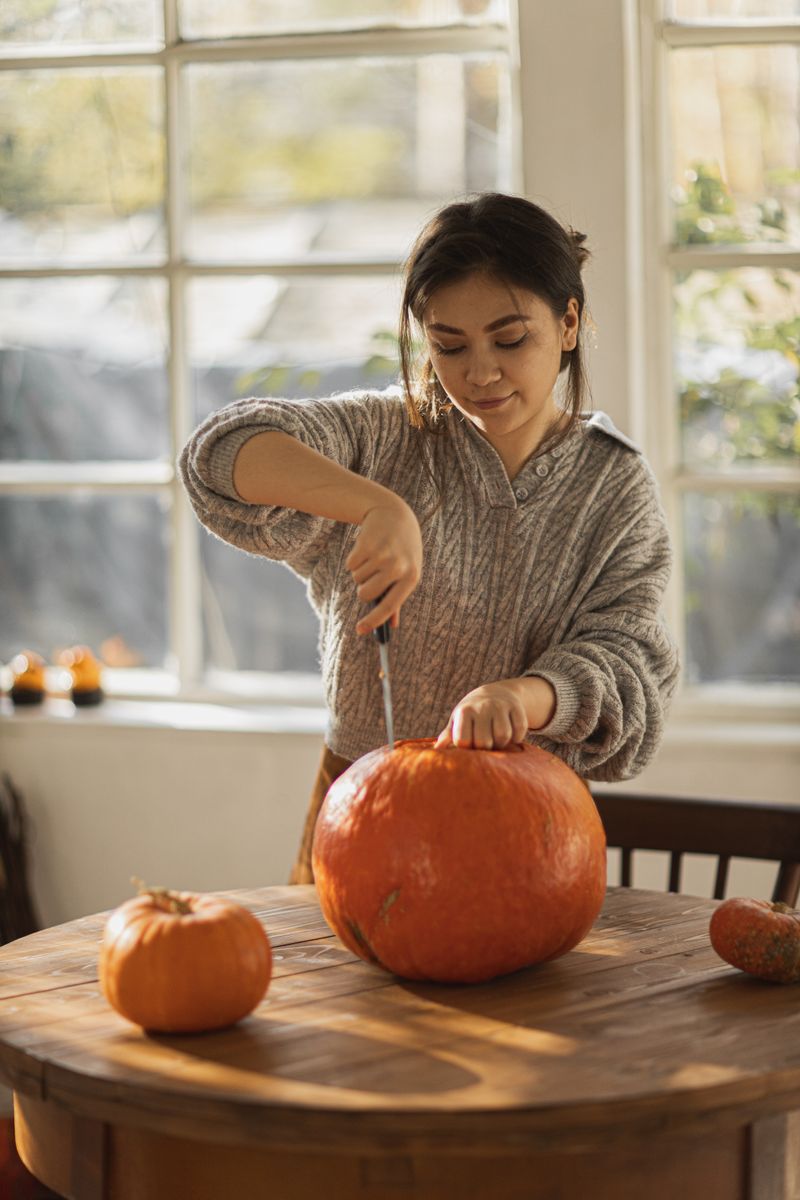
The Pumpkin Decorating Station
This is the most versatile Halloween activity because it scales to every age and requires almost no instruction. Set up a table with pumpkins, markers, stickers, and paint, and let guests cycle through whenever they want. Two important notes: use markers and stickers rather than carving knives if children will be present, and put down a disposable tablecloth or paper before anyone starts.
For carving specifically, keep it a well-lit, adult-supervised activity at a separate table, use proper pumpkin carving tools rather than kitchen knives, and keep a bowl for the pulp. Designated containers matter more than people expect — a session with six pumpkins produces a surprising amount of mess.
The Photo Booth and Photo Plan
Costume parties exist partly to be photographed, so make photos easy.
- Location: Put the photo spot near the entrance, so people get photographed as they arrive in fresh costume and fresh makeup.
- Lighting: One warm light source in front of the backdrop. Two lights create double shadows, and phone flashes alone look harsh.
- Props: A few held props — a paper mask, a candelabra, a feather duster — get reluctant guests to pose.
- Shared album: Create a shared photo link before the party and put a card with the QR code at the photo spot. This is the single best way to collect everyone's photos afterward.
- Designate a photographer for twenty minutes. One person with a phone, assigned to roam for twenty minutes mid-party, will capture more usable photos than everyone taking pictures randomly.
Trick-or-Treat at Home: A Party Activity in Itself
If your party runs on October 31, trick-or-treating is part of the night, and it can be turned into a coordinated activity rather than a disruption. Options that work:
- A porch candy station. Set up a table at the door with a candy bowl, snack cups, and a goodie bag or two for neighbors' children. Spooky Rustic Alphabet Goodie Bags work well as a handout that is more memorable than a handful of candy.
- A group walk. If several families are attending, send a supervised group out together at an agreed time and have them back for dessert. It turns trick-or-treating into part of the party rather than an interruption.
- A candy swap. Children trade candies when they return, which keeps them engaged while adults finish dinner.
Either way, designate one adult to manage the door. Losing track of who is answering the bell is the most common logistics failure at a Halloween party.
Music and Atmosphere
Music sets the energy between activities and covers the awkward silences when a game ends. Build a playlist in three sections: atmospheric and slightly eerie for arrival, upbeat and recognizable during food and games, and a dance-friendly set for the last hour. Keep the volume low enough that people can talk — the mark of good party music is that nobody has to shout. If you have a group that loves karaoke, a Halloween song list is a ready-made late-night activity.
Adapting Activities by Age Mix and Group Size
- All children under eight: Three games maximum, all non-elimination, plus a pumpkin decorating station and a candy guess jar. Plan for a two-hour party; that is as long as the attention span lasts.
- Mixed families: Run children's games in the first hour, then hand them to a supervised activity (a movie, a craft table) while the adults eat and play trivia. A babysitter at this stage is worth every dollar.
- All adults: One big structured activity (mystery, trivia, or contest) plus two low-effort social games. Adults generally prefer talking to organized play, so do not over-schedule.
- Large groups (30+): Favor team-based games and a contest. Individual games stop working when the group is too big to watch, and the food-and-photo stations become activities in themselves.
- Small groups (under 10): Skip the team games and go straight to trivia, storytelling, and a mystery. Small groups handle conversation-based activities better than physical ones.
Frequently Asked Questions
How many games should I plan for a two-hour party? Two or three. More than that turns the evening into a schedule, and guests will start skipping rounds.
Should games have prizes? Small prizes yes, expensive prizes no. A themed goodie bag or a bag of candy is enough recognition, and it keeps the stakes friendly.
Is bobbing for apples still a good idea? We would skip it. It spreads germs between guests and it is a genuine choking risk for younger children. Apple-on-a-string hanging from a doorway is the safer version of the same game.
What is the best game for a party where guests do not know each other? Halloween trivia in mixed teams. It creates instant common ground and requires no physical contact or confidence.
How do I keep a costume contest fair? Use multiple specific categories, anonymous ballots, and announce the categories in advance. Structured judging is what prevents hurt feelings.
What activities work for a party that also involves trick-or-treating? A porch candy station, a supervised group walk at a set time, and a candy swap afterward. Treat trick-or-treating as part of the schedule rather than an interruption.
How do I handle a child who does not want to play? Give them a job instead — handing out prizes, holding the timer, or managing the candy station. Participation through responsibility works far better than coaxing.
Do I need to buy special game props? Almost never. The strongest Halloween games use toilet paper, a pumpkin, paper and markers, and candy. Props are nice to have, not necessary.
Low-Effort Activities for When Energy Drops
Every party has a lull, usually about ninety minutes in, when the food is finished and people are between conversations. Have one or two zero-setup activities ready for that exact moment. A candy guess jar is perfect, because it can sit on a side table all evening and only needs announcing. A pumpkin decorating station works the same way — guests drift to it when they want a break from talking. A shared photo album prompt ("add your best photo from tonight") keeps people engaged from their phones without pulling them out of the room. And a simple "spooky story, one sentence each" round can be started immediately with no props at all. The point is not to entertain people continuously; it is to have something to offer at the moment the room stalls, so the energy recovers on its own.
Giving Shy Guests and Helpers a Role
Not everyone wants to compete, and the fastest way to lose a quieter guest is to put them on the spot in front of a group. Give them a job instead. Someone can manage the candy station, run the timer for the contests, keep the photo album going, or take charge of the playlist. Responsibility is a socially acceptable way to participate, and it gives quieter guests a reason to talk to people throughout the evening. This also solves your own staffing problem: two or three guests with clear roles means you are not managing everything alone. Tell them in advance, so they can prepare, and thank them specifically at the end of the night.
What to Skip
Skip games that single anyone out for embarrassment, however gently. Skip anything requiring a physical costume change, because guests have already invested effort in their outfits. Skip long, complicated rules that need explaining twice, since you will lose half the room during the explanation. Skip organized games after the final hour — by then guests want to talk freely, and any structured activity will feel like an interruption. And skip the temptation to schedule every minute: the best sign that a Halloween party is going well is that the plan stops mattering because people are enjoying each other.
Two Good Activities Beat Ten
The best Halloween parties are not the ones with the most planned entertainment — they are the ones where the host picked two strong activities, put them in the right order, and then let people enjoy each other. Choose a kids' game and a costume contest, or trivia and a pumpkin station, and spend the rest of your energy on lighting and food.
Tableware, snack cups, and goodie bags for prizes and favors all live in our Halloween party supplies collection, and our party favors range has the small prizes that make contests land. Order in early October, and your games will run on real supplies rather than improvisation.