


Video Game Party Ideas: The Ultimate Guide to a Level-Up Birthday

Ask a room full of eight-to-fourteen-year-olds what they want for their birthday party, and the answer comes back faster than a speedrun record: video games. Gaming is the defining hobby of this generation — more than three-quarters of American kids play regularly — and a video game party takes the thing they already love and turns it into an event. The best part for parents: this theme is one of the most flexible you can throw. It works for a retro arcade crowd, a Minecraft obsessive, a Mario Kart family, or a squad of Fortnite teammates. It scales from four kids around a console to twenty kids rotating through game stations. And it delivers guaranteed engagement, because the entertainment is the theme.
The trap most hosts fall into is thinking a video game party means "kids stare at a screen for three hours." A great one is the opposite: it borrows the language of games — levels, power-ups, boss battles, achievements — and applies it to the whole party, on-screen and off. This guide walks through exactly how to pull that off, from pixel-art decor to real-world minigames, with a realistic budget and a planning timeline that won't leave you rage-quitting the week before.
Decor: Turn Your Home Into a Game World
Video game decor has an instantly recognizable visual vocabulary, and you can lean on it hard. Pixel art is your foundation: square balloon arrangements, 8-bit-style banners, and blocky lettering read as "video game" from across the room. A color scheme of bright primary colors — red, blue, green, yellow — against black feels like a retro arcade, while neon green and purple against black skews modern gamer.
Make the entrance count: tape a "PLAYER 1 — PRESS START" sign to the front door, and hang a "LOADING PARTY... 99%" banner in the hallway. Inside, set up zones labeled like game areas: LEVEL 1 (snack table), LEVEL 2 (game stations), BOSS ROOM (cake table), and RESPAWN POINT (a quiet corner with pillows for kids who need a breather — genuinely useful at high-energy parties). Cover the snack table with a video game party supplies setup — themed plates, cups, and napkins do the heavy lifting so you don't have to craft everything from scratch.
Cheap, high-impact DIY touches: cut yellow "coin" circles from cardstock and string them into garlands; make question-mark blocks from square gift boxes wrapped in yellow paper; print oversized achievement badges ("ACHIEVEMENT UNLOCKED: ARRIVED ON TIME") and hand them out as guests walk in. Balloon "health bars" — a row of red balloons with a few popped ones at the end — make a hilarious photo-wall detail that gamers immediately understand.
Food and Drink: Power-Ups and Health Potions
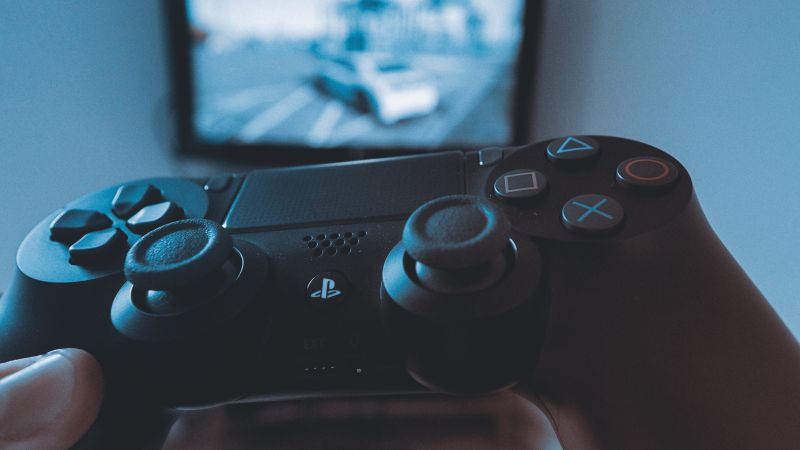
Gaming food should be grabbable — party guests eat in the gaps between turns, not in long sit-down stretches. Build a "Power-Up Station" buffet with clever labels: pizza bagels become "Extra Lives," a fruit skewer rainbow becomes "Power-Up Bar," red grapes and strawberries become "Health Points," and a bowl of gold-wrapped chocolate coins becomes, obviously, "Coins — Collect Them All." Popcorn in paper cones is an "Ammo Refill." Square-cut sandwiches with cheese pixel-squares fit the 8-bit aesthetic.
For drinks, mix a blue "Mana Potion" (blue sports drink with lemon-lime soda) and a red "Health Potion" (fruit punch) and serve them in labeled clear cups or small potion-style bottles. Water stays in play too — label the dispenser "Hydration Checkpoint" and kids will actually drink it.
The cake is your boss-level moment. Easy wins that don't require professional skills: a sheet cake frosted with a green pixel-grid to evoke a certain block-building game; a round cake decorated as a power button; cupcakes topped with mushroom, star, and coin toppers arranged on a tiered stand like a level map. If baking isn't your thing, a store cake plus a printed edible topper of the birthday child's favorite game character costs about $25 total and looks intentional. Pro tip: schedule cake for the party's midpoint rather than the end — it creates a natural all-together pause between game rotations, and sugar-fueled kids get a second wind for round two.
Games and Activities: On-Screen and Off
Structure is everything. Left unmanaged, one confident kid will dominate the controller for forty minutes while three others sulk. The fix is stations and rotations.
Station setup: If you can, run two or three screens — the main TV with a four-player party game (Mario Kart, Super Smash Bros., or a dance game), a second screen with a co-op title (Minecraft, Overcooked), and a tablet or retro handheld corner. Rotate groups every 15-20 minutes with a loud "LEVEL COMPLETE!" announcement. A kitchen timer is your best moderator.
Tournament mode: For older kids (10+), a bracket tournament in a familiar game is the main event. Keep matches short — first to one win in Smash, one race in Mario Kart — so eliminated players get back in the rotation quickly. Small prizes for champion, runner-up, and "best sportsmanship" (chosen by adults, and genuinely coveted) keep the energy positive.
Off-screen minigames keep the party from becoming pure screen time, and they're often the part kids talk about afterward. Try: real-life Fruit Ninja (parent tosses soft fruit-shaped toys, kids "slice" with pool noodles), a coin hunt (hide 50 chocolate coins around the yard, most coins wins a power-up prize), "lava floor" obstacle course with couch cushions, pin-the-mustache-on-the-plumber, and a piñata shaped like a question block or creeper. For a quieter table activity, set out perler beads with pixel-character patterns — kids make their own 8-bit keepsake, which doubles as a take-home favor.

Choosing the Game Lineup: A Host's Cheat Sheet
The game list makes or breaks the party, and the selection criteria are different from what makes a game good for solo play. You are optimizing for three things: short turn cycles (so waiting kids re-enter quickly), spectator fun (so the couch crowd stays entertained), and low skill floors (so the kid who doesn't own a console isn't humiliated).
Best-in-class party picks: Mario Kart remains the undefeated champion — three-minute races, rubber-band mechanics that keep last place hopeful, and grandparents can genuinely compete. Super Smash Bros. handles up to eight players and produces the loudest spectator moments. Overcooked and its sequels turn cooperation into comedy; even watching it is entertaining. Dance and rhythm games (Just Dance, Beat Saber if you have VR) burn energy and require zero gaming background. Fall Guys and Rocket League round out the modern picks for older kids.
Games to avoid at parties: anything turn-based and slow, story-driven single-player titles, and competitive shooters with steep skill gaps — one experienced player will dominate and the room deflates. Save the birthday kid's 80-hour RPG obsession for the decor and the cake topper, not the shared screen.
Practical hardware notes: Count your controllers before party day and match them to your rotation math — four controllers with sixteen guests means four groups of four on 15-minute rotations. Check for required accounts, updates, and DLC the night before; a 40-minute console update at 2:05 pm is the most preventable party disaster in the genre. If you're borrowing a second console, also borrow its power cable and HDMI cable — the number-one forgotten items in party history.
Health, Comfort, and Screen Balance
A little foresight prevents the classic video-game-party complaints. Enforce a "blink break" between rotations — two minutes of looking at anything that isn't a screen, ideally while collecting a snack, resets eyes and attention spans. Keep the room lit; gaming in the dark feels cinematic but produces headaches in kids and murky party photos for you. Motion-sensitive kids exist in every group: fast camera games (and especially VR) can trigger queasiness, so keep the perler-bead table or foosball running as a no-questions-asked alternative, and put the RESPAWN POINT pillow corner genuinely out of traffic. Finally, hydration: gamers forget to drink anything that isn't labeled a potion, which is precisely why your water dispenser is labeled "Hydration Checkpoint."
Age-Group Adaptations
Ages 5-7: Keep screen time light and cooperative — dance games and simple platformers beat competitive titles. Weight the party toward physical minigames and crafts. Two hours is plenty, and one adult per four kids keeps chaos survivable.
Ages 8-11: The sweet spot for the full format — stations, rotations, tournament, minigames. This crowd knows the games, respects the timer (mostly), and goes berserk for the coin hunt. Two and a half to three hours.
Ages 12-14: Drop the babyish elements, keep the tournament and the food. Let the birthday kid pick the game lineup and consider a later time slot — a 5-9 pm "LAN party" with pizza feels grown-up. A group video call setup for a friend who can't attend in person is a thoughtful touch this age group appreciates.
Mixed ages and non-gamers: Always run at least one station that requires zero gaming skill — the perler bead table, an air hockey or foosball surface, or a dance-game screen where flailing is the point. Every guest should have somewhere to win.
Practical Planning: Timeline, Budget, Checklist
Three weeks out: Pick the date and send invitations — pixel-art evites or printed "You've Been Selected for the Tournament" cards set the tone. Confirm your console/game lineup and check that every game is age-appropriate for the whole guest list (stick to E and E10+ ratings for under-12 parties; check ESRB ratings rather than trusting box art).
Two weeks out: Order decorations, tableware, and favors. Buy or borrow extra controllers — four is the practical minimum. Test every game and controller now, not party morning. Plan the food menu and cake.
One week out: Build the tournament bracket if you know the headcount. Print signage, labels, and achievement badges. Assemble favor bags.
Day before: Decorate, charge every controller and device, prep make-ahead food, and hide the chocolate coins after kids are asleep.
Budget for 12 kids: decorations and tableware $50-80; food, drinks, and cake $90-140; prizes and favors $40-60 (perler beads, chocolate coins, small game-themed trinkets, printed certificates); activity supplies $20-30. Total: roughly $200-310, or about $17-26 per guest. Already owning the consoles and games is what makes this theme such strong value — the entertainment budget is essentially zero.
Invitations and Photo Ops That Set the Tone
The invitation is the party's title screen, so make it look like one. Free design tools have ready-made pixel templates: frame the details as a game menu ("NEW GAME: Max's 10th Birthday — SELECT DATE: Saturday 2 PM — DIFFICULTY: All skill levels welcome"), or design it as a character-select screen with the birthday kid as the featured fighter. For paper invitations, fold them into small envelopes labeled "LOOT DROP." Include the game lineup and end time — gamer parents appreciate both.
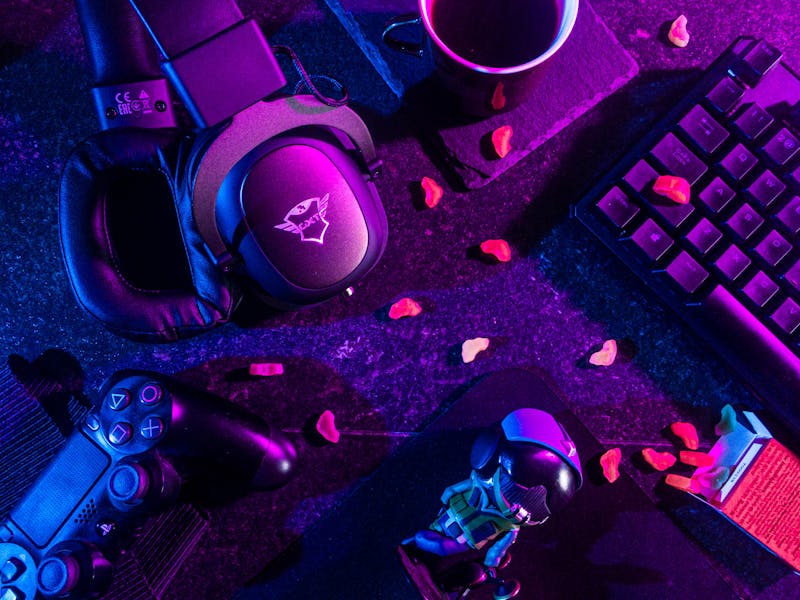
On party day, build one deliberate photo station and the memories take care of themselves. A cardboard "arcade cabinet" cutout that kids stand behind, a pixel-sunglasses-and-controller prop basket, and a backdrop banner reading "PLAYER 2 HAS ENTERED THE GAME" cover it for under $25. Two shots worth staging on purpose: the full group mid-jump on a "VICTORY!" count of three, and the birthday kid holding the tournament trophy with the bracket poster behind them. Print the bracket large, by the way — a hand-drawn tournament chart on poster board becomes an accidental decoration, a running scoreboard, and the single most photographed object at the party after the cake. When the champion is crowned, sign and date the bracket and send it home with the birthday kid; it is the kind of artifact that survives on a bedroom wall for years.
Favors and the Final Boss: Cleanup
Send guests home with an "Inventory Bag": chocolate coins, a perler-bead creation from the craft table, a small bag of gummy power-ups, stickers, and a printed "PLAYER 2 THANKS YOU" card. For a premium touch at around $4 per guest, add a mini keychain controller or a pixel-sunglasses pair.
Cleanup is mercifully easy for this theme if you set it up right. Use themed but disposable tableware so the kitchen isn't a second boss fight. Station a labeled "GAME OVER — DROP ITEMS HERE" trash bin and recycling bin near the exit of the food zone; kids treat labeled bins as part of the game and actually use them. Sticky spill risk concentrates around the potion station, so put a wipeable mat or old towel under the drink dispensers. Before guests leave, run a two-minute "loot collection" sweep where kids earn one extra chocolate coin for every five pieces of trash or stray perler beads they turn in — the floor gets cleaned by the same crowd that destroyed it, and everyone leaves laughing.
Frequently Asked Questions
How much screen time is too much at a video game party?
A good rule: no more than half the party on screens. For a three-hour party, that's about 90 minutes of actual play per kid, broken into rotations, with food, minigames, and cake filling the rest. Kids leave happier when the party has rhythm.
What if guests don't play the same games?
Choose broad, pick-up-and-play party titles for shared screens — kart racers, dance games, and four-player brawlers need no prior experience. Save deep single-player titles for another day.
Do I need to rent equipment?
Usually not. Ask two or three parent friends to bring a spare controller or a second console. If you do want to go big, mobile game-truck services bring a trailer full of screens to your driveway, typically $300-450 for two hours — a legitimate option for larger guest lists if your budget allows.
How do I handle game ratings with mixed parents' rules?
Publish the game list on the invitation. Sticking to E/E10+ titles removes the issue entirely for under-12 parties, and parents notice and appreciate it.
What's a good backup if the tech fails?
Have one fully offline hour in your back pocket: the coin hunt, the piñata, real-life Fruit Ninja, and freeze dance to a game soundtrack playlist. Honestly, this backup plan is good enough that some hosts run it even when the tech works.
Ready Player One?
A video game party succeeds because it meets kids exactly where their enthusiasm already lives, then adds the things a screen can't: friends in the same room, a cheering crowd at the boss battle, chocolate coins in the couch cushions, and a parent announcing "LEVEL COMPLETE" like a tournament emcee. Plan the rotations, label the snacks, charge the controllers, and the rest plays itself. Stock the whole table in one pass with the video game party supplies collection, and browse the wider birthday party supplies lineup for candles, banners, and favor-bag fillers. Press start — the birthday kid is waiting.