


Art Painting Party Ideas: The Ultimate Guide to a Colorful Creative Celebration

An art painting party turns every guest into a creator. Unlike a typical gathering where guests stand around making small talk, an art party gives everyone something to do with their hands, a finished piece to take home, and a shared experience to remember. Whether you are planning a child's birthday, a creative bridal shower, a team-building event, or a relaxed adult craft night, the structure is the same: set up stations, protect your surfaces, provide quality supplies, and let people paint. This guide walks you through every step so your art painting party is colorful, low-stress, and genuinely fun.
Why an Art Painting Party Is Always a Good Idea
Art parties solve several common hosting problems at once. They give guests a built-in activity, so there is no awkward lull after arrival. They produce a natural party favor, because everyone leaves with their own artwork. They work for mixed ages, as long as you adjust the project difficulty. And they photograph beautifully, which makes them popular for birthdays and social media sharing.
The key is choosing the right project. A guided canvas painting, where everyone follows the same steps to create a similar image, is easiest for beginners and large groups. A freestyle painting station lets more confident artists experiment. For children, themed projects like galaxy skies, rainbows, animals, or sunsets work well. For adults, wine-and-paint evenings often feature landscapes, florals, or abstract compositions. Pick one main project and offer a small freestyle corner for anyone who wants to branch out.
Setting Up Your Painting Stations
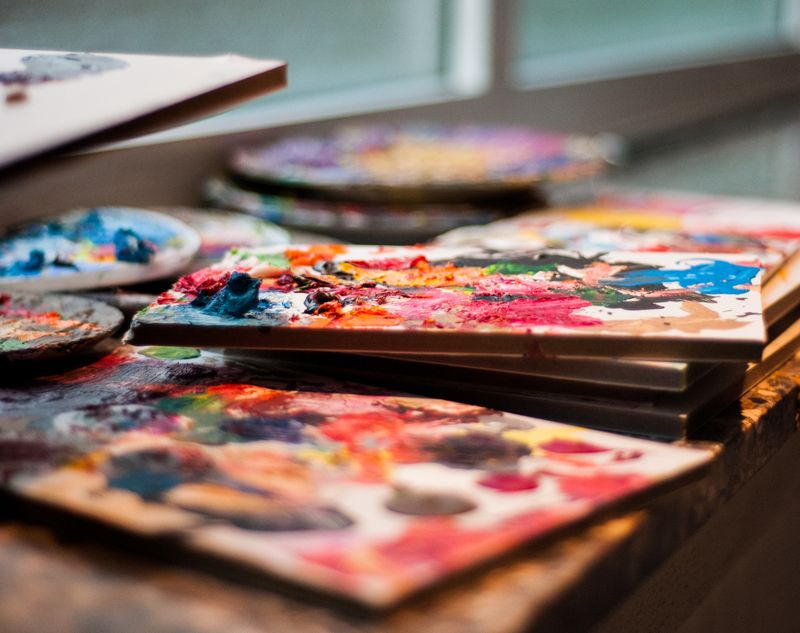
Before any paint comes out, protect everything. Cover tables with plastic drop cloths or disposable tablecloths, then layer brown kraft paper or newsprint on top for texture and extra absorption. Have a roll of paper towels, baby wipes, and a sink or hand-washing station easily accessible. Place a trash can at each table so guests do not have to carry dripping supplies across the room.
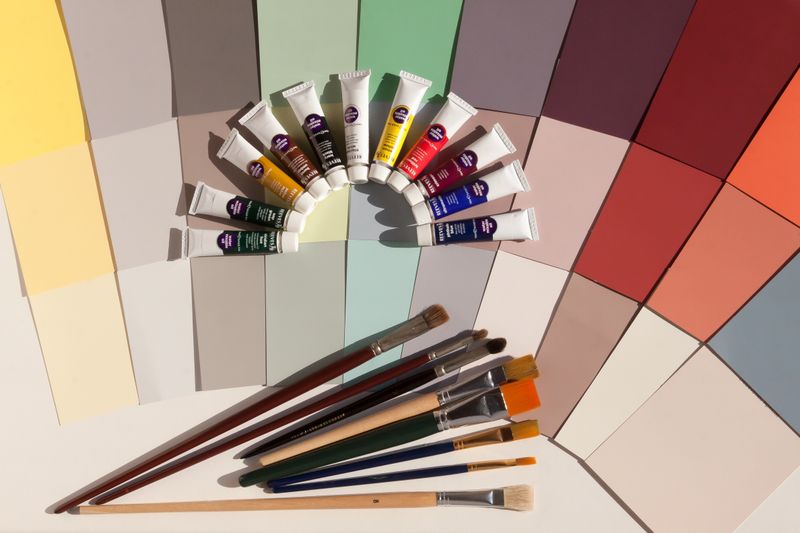
Each guest needs an easel or a thick piece of cardboard propped against a chair, a pre-primed canvas or heavy watercolor paper, a water cup, a paper plate or plastic palette, and a basic brush set. A typical brush set for acrylic painting includes a wide flat brush for backgrounds, a medium round brush for details, and a small liner brush for fine lines. Label water cups clearly so no one drinks from them.
Paint organization matters. Set out small squeeze bottles or shared cups of acrylic paint in the colors needed for the main project, plus a few extras for mixing. White, black, and the primary colors red, yellow, and blue are essential, because most other colors can be mixed from them. Provide paper towels and old newspapers for blotting brushes. A hairdryer at each table lets guests dry layers quickly and reduces waiting time.
For party tableware, use sturdy paper plates as palettes and kraft paper cups for water. These are cheap enough to throw away and sturdy enough to last the session.
Choosing a Painting Project by Age and Skill Level
For children ages four to eight, keep the project simple and sensory. Pre-draw an outline on each canvas, such as a flower, a fish, or a sun, so children can focus on filling in colors. Use washable tempera or acrylic paints and expect mess. A galaxy or rainbow sky is forgiving because there is no wrong way to blend those colors.
For tweens and teens, guided canvas paintings with a trendy theme work well: sunsets, ocean waves, geometric mountains, or neon city skylines. Give them more color choices and encourage personal touches, such as adding a quote or changing the sky color.
For adults, a wine-and-paint style evening with a landscape, floral arrangement, or abstract piece is most popular. Keep the project achievable in two hours, with a clear step-by-step demonstration. Abstract parties are increasingly popular because they remove the pressure of realism and let guests play with color and texture.
Food and Drinks That Work Around Paint
At an art party, guests paint with one hand and snack with the other. Food should be easy to eat without utensils and not too greasy, because oil can interfere with paint adhesion. Finger sandwiches, fruit skewers, cheese cubes, pretzels, veggie cups with hummus, and cupcakes are all good choices. Avoid anything that drips heavily or requires a fork.
For drinks, clear cups with lids and straws are ideal because they minimize spills near artwork. Water, lemonade, iced tea, and sparkling juice work for all ages. For adult parties, wine or beer can be served, but keep it moderate so coordination does not suffer. Label cups with guests' names so no one accidentally grabs the wrong drink or, worse, the paint water.
Schedule food either before painting starts or during a designated break after the first paint layer dries. Painting and eating simultaneously leads to crumbs in paint and paint on snacks. If you must serve during painting, stick to bite-sized, dry foods and keep them at a separate table.
Games and Activities Beyond the Canvas
While painting is the main event, a few side activities keep energy high. A color-mixing challenge, where guests try to recreate a specific shade, is fun and educational. A "paint with a twist" game, where guests close their eyes or paint with their non-dominant hand for one minute, produces laughter. For children, set up a spin-art station using a salad spinner and small paper plates.
A gallery walk at the end of the party lets everyone admire the finished pieces. Display canvases on a table or easel and give each guest a moment to talk about their work, or simply let people browse. This closes the party with a sense of accomplishment and gives parents a chance to photograph their child's masterpiece.
Invitations, Themes, and Dress Code
Let invitations set expectations. Include the date, time, location, what will be painted, what supplies are provided, and whether guests should wear old clothes or bring a smock. Mention that acrylic paint does not always wash out, so guests should dress accordingly.
Popular themes include paint splatter, rainbow, watercolor garden, art studio, and famous artist tribute. For a famous artist party, decorate with prints of Van Gogh, Frida Kahlo, or Monet, and let guests create in that style. For a rainbow theme, use colorful balloons, streamers, and a confetti sprinkle on the welcome table.
The dress code is simple: clothes that can get paint on them. Provide disposable aprons or old button-down shirts as smocks. If you want a fun photo moment, set up a backdrop of paint splatters or a giant picture frame guests can hold.
Budget-Friendly Art Party Tips
Art supplies can add up, but you can keep costs reasonable with a few strategies. Buy canvases in bulk from craft supply stores, especially during sales. Use heavy cardstock or watercolor paper for children's projects instead of canvas. Share paint sets across tables rather than giving each guest a full set. Use plastic plates and yogurt cups as palettes and water cups.
For party plates and napkins, choose bright colors that match the art theme. Napkins can double as blotting paper in a pinch. Cover tables with inexpensive kraft paper so you can simply roll up the mess at the end. Borrow easels from artist friends or use stacked books and tape to prop canvases.
Party Timeline: From Blank Canvas to Masterpiece
A two-and-a-half-hour art party usually feels complete without rushing. Use this timeline:
One week before: Choose the painting project, order supplies, and send invitations with a clear dress code.
Two days before: Shop for food and drinks. Prep any desserts that keep well.
Day before: Cover tables, set out easels, mix paint if using bulk bottles, and prepare a sample painting.
Day of, 30 minutes before: Set up the paint station, fill water cups, lay out brushes, and start music.
Start: Welcome guests, hand out aprons, and let them settle with a drink and snack.
15 minutes in: Introduce the project and demonstrate the first step.
45 minutes in: First break. Let paintings dry while guests snack and socialize.
60 minutes in: Resume painting with the next layer or details.
90 minutes in: Final touches and signature. Use hairdryers to speed drying.
2 hours in: Gallery walk, photos, and celebration of finished work.
2.5 hours in: Guests depart with their artwork wrapped in paper or a handled bag.
Scaling the Party for Large Groups
If you are hosting more than fifteen guests, consider a co-host or assistant instructor who can circulate while you lead. Set up identical stations in rows so everyone can see a central demo screen or easel. For very large groups, a projected step-by-step image works better than a single demonstration easel that only the front row can see.
Have a drying rack or a clean flat surface labeled with names so wet canvases do not smudge. For children's parties, ask parents to help with cleanup and drying. Send artwork home in large paper bags or wrapped in newsprint to protect wet paint in the car.
Color Theory Basics for Party Hosts
You do not need to be an art teacher to host a painting party, but a basic understanding of color theory helps when you explain mixing. Remind guests that the primary colors, red, yellow, and blue, cannot be made by mixing other colors, but they can be combined to create the secondary colors orange, green, and purple. Adding white lightens a color into a tint, while adding black darkens it into a shade. Complementary colors, such as red and green or blue and orange, sit opposite each other on the color wheel and create vibrant contrast when placed side by side.
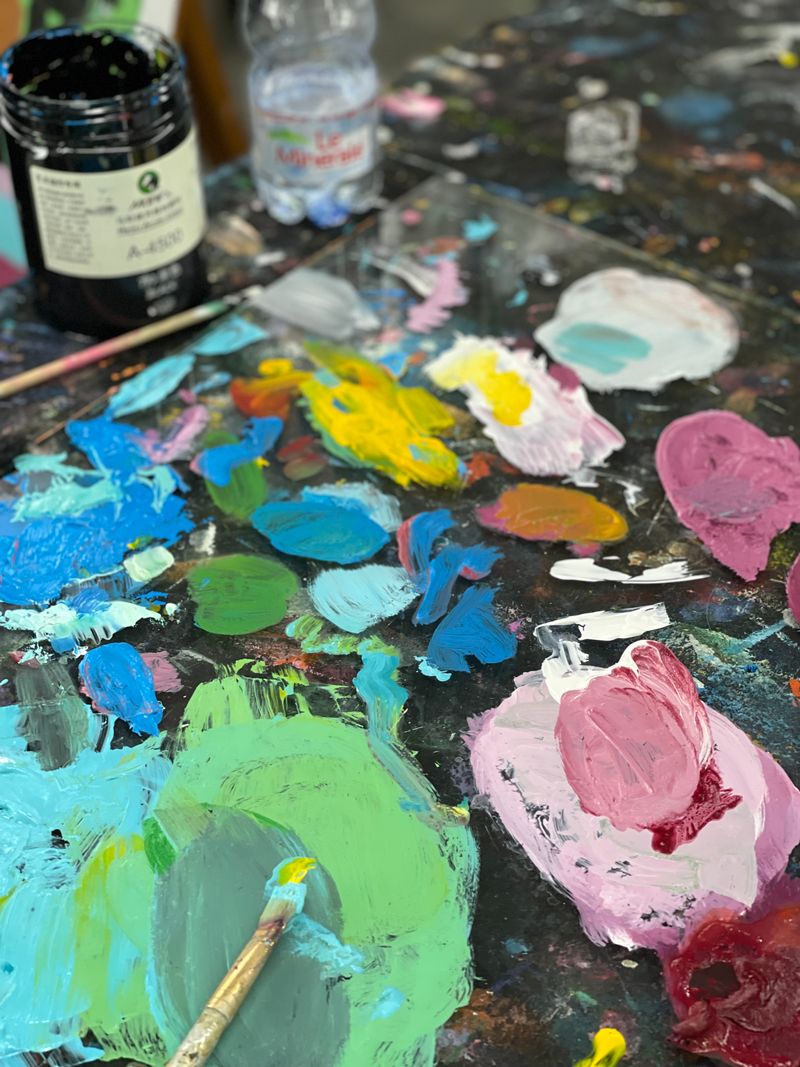
Teach guests how to keep their palettes organized. Put light colors in one area and darks in another so they do not accidentally muddy their yellow with leftover blue. Show them how to clean a brush thoroughly between colors and how to blot excess water before switching paints. A five-minute color-mixing demo at the start of the party prevents frustration later and gives beginners confidence.
Limit the number of paint colors available. Too many choices overwhelm beginners and increase the chance of muddy mixtures. A curated set of eight to twelve colors is usually enough. Include titanium white, mars or ivory black, cadmium red, cadmium yellow, ultramarine blue, burnt umber, and a pre-mixed green and purple. Guests can mix everything else they need from these basics.
Famous Artist Party Themes
For a more educational twist, base the party on a famous artist. A Van Gogh party might feature swirling starry night backgrounds and sunflower centerpieces. A Frida Kahlo party could include bold florals, Mexican-inspired decor, and self-portrait activities. A Monet party works beautifully for a garden or spring setting, with soft watercolor flowers and pastel palettes. A Jackson Pollock party is perfect for high-energy children who want to drip and splatter paint.
Display a few reproductions of the artist's work for inspiration, and share one or two fun facts during the demo. For example, Van Gogh painted "The Starry Night" from memory while in an asylum, and Frida Kahlo's self-portraits often included animals and plants from her home. These details give the project context and make the party feel more enriching than a standard craft session.
Match invitations, tableware, and music to the artist. For a Kahlo party, play Mexican folk music and serve hibiscus agua fresca. For a Monet party, use pastel balloons and a French lounge playlist. For a Pollock party, cover the entire floor in drop cloths and let guests work on a giant collaborative canvas.
Adult Paint Night Tips
Adult paint-and-sip parties require a slightly different approach than children's art parties. Guests want to socialize as much as paint, so keep the demo short and the painting simple. Choose a project that looks impressive but is achievable in ninety minutes, such as a sunset silhouette, a simple floral wreath, or an abstract color-block piece. Pre-trace the basic shapes on canvases if the group is mostly beginners.
Provide wine, beer, or signature mocktails, but serve them after the first paint layer is down. Guests who drink before picking up a brush tend to make bolder, sometimes messier, choices. Have plenty of paper towels and wet wipes within arm's reach. Keep the room warm enough that paint dries at a reasonable pace, and run a fan or open windows for ventilation if using acrylics heavily.
Take photos during the process, not just at the end. Guests enjoy seeing mid-paint action shots, and the host can share a group gallery later. End the night with a relaxed gallery walk and let guests trade paintings if anyone falls in love with a neighbor's work. It is a memorable way to close the evening and turns the party favor into a shared story.
Turning the Party into a Lasting Hobby
The best outcome of an art painting party is that guests leave wanting to paint again. Send each guest home with a small supply list and a few beginner tips. Recommend a basic starter kit: a set of synthetic brushes, a few tubes of student-grade acrylic paint, a pad of canvas paper, and a disposable palette. Suggest free online tutorials or local community classes for anyone who wants to keep practicing.
If you are hosting a birthday or milestone, consider giving a small sketchbook or travel watercolor set as the party favor instead of candy or toys. It extends the creative energy beyond the party and gives guests a practical reason to keep making art. You can also create a private group chat or social media hashtag where guests share their next paintings after the event.
FAQ
What age can start painting at an art party? Children as young as three can participate with washable paints and simple projects, but guided canvas parties work best for ages six and up.
Do guests need to bring anything? Usually no. Provide aprons, canvases, paints, brushes, and water cups. Ask guests to wear clothes they do not mind staining.
What if someone is unhappy with their painting? Encourage a "no mistakes" mindset. Offer to let them paint over a section or add an abstract element. Remind everyone that art is personal.
How do I keep acrylic paint from drying too fast? Work in layers, mist palettes lightly with water, and use a retarder medium if available. Keep paint cups covered between steps.
Can this work as a virtual party? Yes. Send a supply kit ahead of time and host a live video session where everyone paints the same project together. Keep the project simple so timing stays aligned.
Final Thoughts: Make a Mess, Make a Memory
An art painting party is one of the few party themes where the activity itself is the favor, the entertainment, and the memory all in one. With good party tableware, plenty of paint, and a relaxed host, you will create a celebration that feels colorful, creative, and completely original. So lay down the drop cloths, pour the paint, and let your guests discover what they can make. The masterpieces and the laughter are worth every drop of spilled water.