


Pirate Party Ideas: The Ultimate Guide to a Swashbuckling Birthday

Why a Pirate Party?
Few kids' party themes have the staying power of pirates. It's been a birthday-party staple for decades, and for good reason: it's inherently adventurous, easy to decorate for, and gives kids a ready-made script to follow. You're not just attending a party — you're a crew of buccaneers on a quest for treasure. From the moment a child puts on an eye patch and shouts "Ahoy!" they're bought in. This guide walks through every element of throwing a pirate party that kids will talk about for weeks, with enough practical detail that you can pull it off without losing your mind (or your living room).

Invitations: Set Sail Before the Party Begins
The invitation sets the tone, and pirate parties give you fantastic material to work with. Here are three approaches, from simplest to most elaborate:
The Message in a Bottle: Print the party details on parchment-style paper (tea-stained printer paper, dried and singed at the edges with a lighter for authenticity). Roll it tightly, tie with twine, and slip it into a glass bottle with a cork. A handful of sand and tiny shells inside the bottle adds flair. Hand-deliver these or package carefully for mailing — they're memorable enough that parents will text you about how cool the invite was.
The Treasure Map: Design an invitation that looks like an aged treasure map. The route on the map leads to an "X" that marks your house, with landmarks that are inside jokes or neighborhood references. Include the party details in a weathered font along the map's border. Print on cardstock and roll up like a scroll. This costs almost nothing but looks like you hired a designer.
The Digital Version: If you're going paperless, design a digital invite with a skull-and-crossbones motif, red-and-black color scheme, and pirate-themed wording: "Captain [Child's Name] requests yer presence for a swashbuckling celebration." Include a note about costumes — encourage eye patches, striped shirts, and bandanas, but reassure parents that extras will be available at the door.
Decor: Transforming Your Space Into a Pirate's Domain
Pirate decor can range from a few key props to a full backyard transformation, depending on your budget and ambition. The core elements that make the biggest impact:
Color Palette: Black, red, white, and touches of gold. Black tablecloths with red runners. Red and black balloons in clusters with gold ribbons. A black-and-white striped fabric — reminiscent of old-timey prisoner uniforms — makes an excellent table runner or photo backdrop.
The Entrance: If your party is at home, transform the front door or gate into the gangplank of a ship. Brown kraft paper or cardboard painted to look like wooden planks, taped to the doorframe. A sign above it: "Abandon All Dry Land, Ye Who Enter Here" or simply "The Black Pearl." Even a cheap plastic ship's wheel hung on the door signals the theme immediately.
Table Settings: Use black plates and red napkins, or vice versa. Scatter gold chocolate coins across the table as both decor and edible favors. For centerpieces, fill glass jars or small treasure chests with plastic gems, strings of beads, and more chocolate coins. A toy parrot perched on a candlestick or the back of a chair adds character. For all the pirate-themed tableware in one place — plates, cups, napkins, and coordinating pieces — check out our Pirate Party Supplies collection.
Backdrops and Photo Zones: A designated photo area lets parents capture memories and gives kids something to do while waiting for activities to start. Hang a black plastic tablecloth as a backdrop, tape on a cardboard ship's wheel and anchor, and provide props: eye patches, plastic swords, pirate hats, telescopes, and a parrot-on-the-shoulder accessory. A wooden crate or small barrel as a prop makes photos feel more dimensional. If you want to go bigger, a cardboard-box pirate ship — painted brown with portholes cut out — doubles as a photo booth and play structure.
Costumes: Dressing the Crew
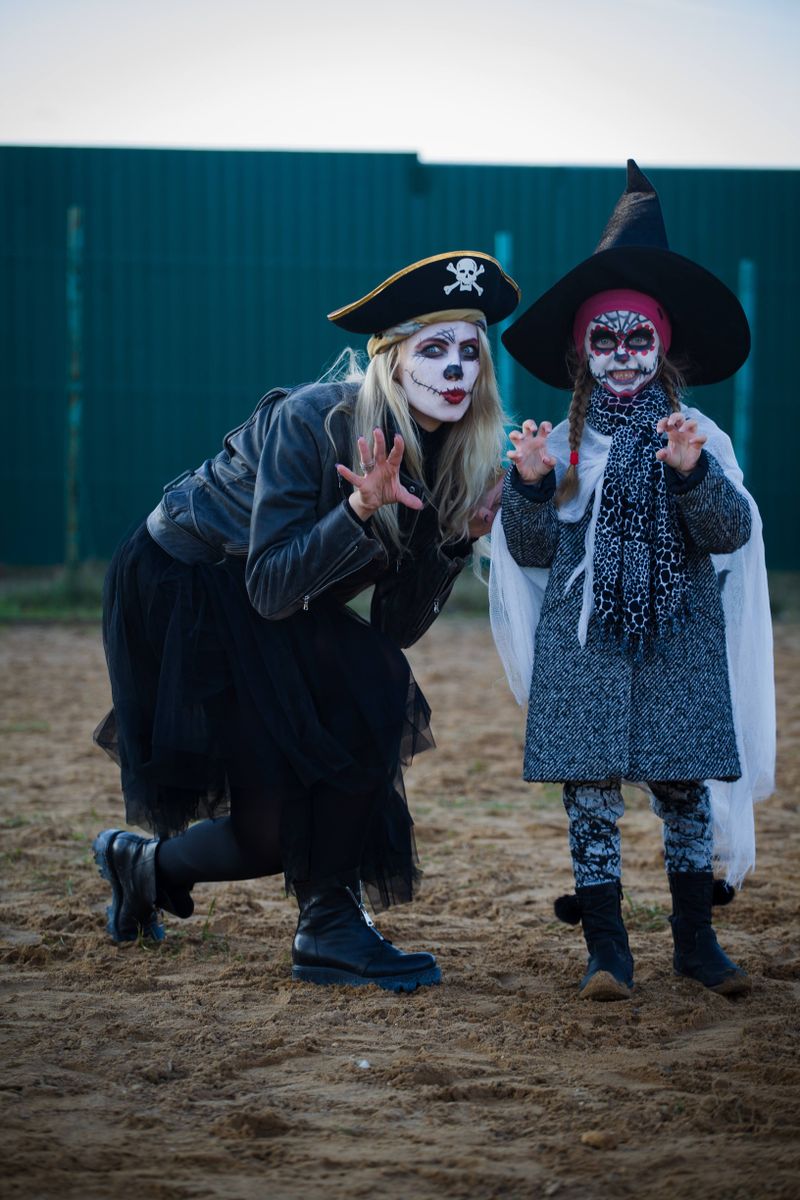
Half the fun of a pirate party is looking the part. Encourage guests to come in costume, but have a stash of accessories at the entrance for anyone who shows up without one. A simple pirate starter kit: an eye patch, a red bandana or striped bandana, and a temporary tattoo (skull and crossbones, anchor, or treasure map). These cost about $2-3 per child and prevent anyone from feeling left out.
For the birthday child, consider a more elaborate costume: a pirate captain's coat (available at costume shops or online), a tricorne hat with gold trim, and a plastic cutlass. Face paint — a beard stippled on with a sponge, a scar drawn with eyeliner — finishes the look without needing professional skills. If you're comfortable with face paint, offer simple designs to guests: an anchor on the cheek, a parrot on the forearm, or a skull and crossbones on the back of a hand. Set this up as an arrival station so kids cycle through while others are still arriving.
Food: Pirate Grub That Kids Actually Eat
Pirate-themed food walks a line between clever naming and being food kids will actually consume. The best approach is to serve familiar kid favorites with pirate-appropriate labels:
- Pirate Ship Subs: A platter of submarine sandwiches cut into thirds. Label them "Ship Provisions."
- Fish and Chips: Goldfish crackers and potato chips mixed together in a large bowl — "Catch of the Day."
- Treasure Chest Fruit: A watermelon carved to look like a treasure chest (cut the top third off, scoop out the fruit, carve a lid shape, fill with mixed fruit — there are tutorials online). Even if your carving skills are basic, kids are impressed by a watermelon that isn't just sliced.
- Pirate Peg Legs: Pretzel rods, optionally dipped in chocolate and rolled in gold sprinkles.
- Cannonballs: Meatballs in barbecue sauce, served with toothpicks.
- Sea Water: Blue sports drink or blue lemonade in a clear dispenser. Add gummy sharks floating on top for effect.
- Polly's Crackers: A bowl of cheese crackers labeled with a toy parrot watching over them.
For the cake, a pirate ship cake is the classic move. If you're not a confident baker, a sheet cake with blue frosting (the ocean), a toy pirate ship on top, and crushed graham crackers as sand around the edges looks polished with minimal skill required. Cupcakes with skull-and-crossbones toppers, treasure map fondant decorations, or simple gold foil cupcake liners with chocolate frosting are easier alternatives that still read as pirate-themed.
Games and Activities: The Treasure Hunt and Beyond
A pirate party without a treasure hunt is like a birthday without cake — technically possible, but why would you? The treasure hunt is the centerpiece. Here's how to structure it for different age groups, plus additional games to fill the party.
The Treasure Hunt (Ages 4-7): Keep it simple and highly guided. Create a series of 4-5 clues, each leading to the next. Each clue can be a picture (a drawing of the couch, the mailbox, the swing set) with an "X" marking the spot where the next clue is hidden. At the final location, a treasure chest filled with goodie bags for every child. The hunt should take 10-15 minutes — short enough to hold attention, long enough to feel like an adventure.
The Treasure Hunt (Ages 8-12): Make it more challenging. Use riddles instead of pictures: "I have four legs but cannot walk, I hold your plate when you use your fork" (the dining table). Add a simple decoding element — a cipher wheel where each letter is replaced by a symbol, and kids must decode the final clue. Divide kids into teams of 2-3 so no one is left behind, and stagger their start times by two minutes so they're not all racing to the same spot.
Additional Games:
- Walk the Plank: Lay a wooden board or a taped line on the ground. Kids walk across it while balancing a "treasure" (a beanbag or plastic gem) on a spoon. For an aquatic twist, place a blue tarp or blue plastic tablecloth underneath as the "ocean," with inflatable sharks scattered around.
- Cannonball Toss: Black water balloons or black beanbags tossed into buckets or hoops at varying distances. Label the targets with point values. Simple, active, and kids love throwing things at targets.
- Pin the Eye Patch on the Pirate: A pirate-themed twist on the classic. Draw or print a large pirate face on poster board. Blindfolded kids try to place the eye patch in the right spot. The one closest to the eye wins.
- Parrot, Parrot, Pirate: Duck, Duck, Goose with a name change. Kids sit in a circle. The "pirate" walks around tapping heads saying "parrot" until they choose someone, shout "PIRATE!" and race around the circle.
- Dig for Treasure: Fill a large plastic bin or kiddie pool with sand. Bury plastic gems, gold coins, and small toys. Give each child a sieve or small shovel and a time limit — whatever they find, they keep. This works especially well for younger kids who might struggle with the structured treasure hunt.

Pirate Party Favors: Send Them Home with Loot
Goodie bags at a pirate party practically theme themselves. Instead of a generic bag, use small treasure chests (available at party supply stores or online), canvas drawstring bags stamped with a skull and crossbones, or simple brown paper bags decorated to look like treasure maps. Fill them with:
- Chocolate gold coins (the essential pirate favor)
- Plastic gemstones and bead necklaces
- Temporary pirate tattoos
- A small compass (functional or decorative)
- A pirate-themed pencil or eraser
- A mini telescope or kaleidoscope
- A thank-you note that reads: "Thanks for sailing with us, matey!"
Budget about $5-8 per child for favors. If you want to simplify, one high-quality item — a decent plastic telescope, a pirate hat, or a small treasure chest filled with candy — makes a stronger impression than a bag of five cheap items that break before the car ride home.
Practical Planning: Budget, Timeline, and Checklist
Budget for 12-15 Kids:
- Decor: $35-55 (tablecloths, balloons, backdrop materials, treasure chest, pirate props — see our Party Plates and Napkins for basics in red, black, and gold)
- Costumes and Accessories: $25-40 (eye patches, bandanas, tattoos, face paint, captain's coat for birthday child)
- Food and Cake: $50-80 (sub ingredients, snacks, cake supplies, drinks)
- Activities: $15-30 (treasure hunt supplies, sand for dig station, water balloons, poster board for games)
- Favors: $60-120 ($5-8 per child)
- Total: Roughly $185-325, or about $15-27 per child
Timeline — Two Weeks Out:
- Send invitations. Mention costume encouragement.
- Order any specialty items: treasure chests, pirate props, costume pieces, themed plates and napkins.
- Decide on the cake approach: bake from scratch, order from a bakery, or do cupcakes.
One Week Out:
- Buy non-perishable supplies: balloons, tablecloths, face paint, sand, plastic gems, chocolate coins.
- Write and hide the treasure hunt clues. Test them — walk through the hunt yourself to make sure the clues are solvable and the hiding spots are accessible.
- Prep the music playlist (see next section).
Day Before:
- Bake the cake or cupcakes. Decorate if possible; add toppers day-of.
- Assemble goodie bags. Fill the treasure chest for the final hunt.
- Prep any food that can be made ahead: meatballs, fruit carving.
Day Of:
- Morning: Set up decorations, backdrop, photo zone, and activity stations. Blow up balloons.
- One hour before: Set out food. Fill the "dig for treasure" bin with sand and buried items.
- 30 minutes before: Put on your own pirate costume (or at least a bandana). Start the playlist.
- Guest arrival: Hand out accessories at the door. Direct kids to face painting or the photo zone while everyone arrives.
Music and Atmosphere
Build a playlist that keeps the energy up without driving adults crazy. Movie soundtracks are your friend here — the Pirates of the Caribbean score has enough swashbuckling instrumentals to fill an hour. Mix in sea shanties (there are kid-friendly versions of "Drunken Sailor" retitled "What Shall We Do with the Pirate Crew?"), instrumental tracks with Celtic or nautical themes, and some upbeat pop songs that fit the adventure vibe. He's a Pirate (the main Pirates theme) is essentially the party anthem — play it during the treasure hunt for maximum drama. Keep the volume at a level where kids can hear instructions without shouting. If you're outdoors, a Bluetooth speaker placed centrally and aimed away from seating areas prevents volume wars.
Safety Notes for Pirate Parties
Pirate parties involve a few specific safety considerations. Plastic swords and cutlasses are fun but can escalate quickly — set a ground rule at the start: "Swords are for posing, not for poking." Any sword fights should be supervised and with pool-noodle swords, not hard plastic. If you're using eye patches, remind kids (and parents) that wearing them for extended periods can cause disorientation, especially during active games — they're costume pieces, not vision aids. For the treasure hunt, make sure hiding spots are safe and accessible: no climbing on furniture, no reaching into dark corners where sharp objects or cleaning supplies might be stored. If you're using sand for the dig station, keep it outdoors or on a tarp indoors — sand and hardwood floors are a bad combination. For food allergies, pirate-themed food leans heavily on common allergens (dairy in cheese crackers, gluten in pretzels and subs, nuts in some chocolates) — ask parents about allergies in advance and label everything.
Frequently Asked Questions
What age is a pirate party best for?
Ages 4 to 10 is the sweet spot. Younger than 4, the treasure hunt and structured games may be too complex — simplify to a sand dig, costume play, and free-form activities. Ages 8-10 can handle more elaborate clues, decoding challenges, and competitive games. For kids older than 10, a pirate theme can still work if you lean into the theatrical and absurd — think elaborate costumes, a movie screening of Pirates of the Caribbean, or a pirate-themed escape room setup.
Can I do a pirate party indoors?
Absolutely. The decor works in any room — black tablecloths, red accents, and pirate props transform a living room or basement as easily as a backyard. For the treasure hunt, hide clues in bookshelves, under couch cushions, behind curtains, and in kitchen cabinets. The dig station can use a smaller bin on a tarp. Just move fragile items out of the way before the sword fights begin.
What if it rains?
Pirate parties actually adapt well to indoor spaces — ships are enclosed, after all. Move the treasure hunt indoors, swap the sand dig for a smaller bin on a tarp, and set up the photo booth against a wall instead of a fence. The games (Walk the Plank, Cannonball Toss) all work indoors with minor adjustments.
How do I handle kids who are scared of pirates?
Keep the tone playful, not scary. Skip the skull-and-crossbones imagery if you have very young or sensitive kids — focus on treasure maps, parrots, ships, and gold. Avoid pirate characters who are meant to be frightening (no one needs a Captain Hook impersonation that makes a four-year-old cry). The vibe should be "adventure on the high seas" not "horror movie with eye patches."
How long should a pirate party last?
Two hours is the sweet spot for ages 4-7. Two and a half hours works for ages 8-10. Structure it roughly: 30 minutes for arrival, costumes, and free play; 30 minutes for the treasure hunt; 30 minutes for food and cake; 30 minutes for additional games and wind-down. Anything longer and you risk the post-cake chaos spiral where tired kids start using the plastic swords for their intended purpose.
A pirate party succeeds when kids forget they're at a birthday party and believe, just for a couple of hours, that they're on an actual adventure. That doesn't require a professional event planner — just a treasure map, some gold coins, a good playlist, and a willingness to say "Arrr!" with conviction. Stock up on pirate-themed supplies from our Pirate Party Supplies collection, hide your treasure well, and let the crew do the rest.