


Uganda Independence Day 2026 Party Ideas: Celebrate the Pearl of Africa in Style

October 9, 2026, marks the 64th anniversary of Uganda's independence from British colonial rule. For Ugandans at home and in the diaspora, this is more than a date on the calendar. It is a day to honor the courage of the nation's founders, celebrate the rich tapestry of Bantu, Nilotic, and Sudanic cultures, and share the warmth of Ugandan hospitality with family and friends. Whether you are planning a community gathering in Kampala, a backyard braai in Nairobi, or a living-room celebration in London or New York, a well-planned Uganda Independence Day party brings people together around food, music, and shared pride in the Pearl of Africa.
Uganda's journey to independence began with the Uganda Constitutional Conference in London in September 1961. On October 9, 1962, the union jack was lowered and the black-yellow-red flag of Uganda was raised for the first time. The first celebrations were held at the Kololo Ceremonial Grounds in Kampala, a tradition that continues today with military parades, cultural performances, and speeches by the president. The national anthem, "Oh Uganda, Land of Beauty," speaks of the country's natural riches, from the snow-capped Rwenzori Mountains to the vast waters of Lake Victoria.
Planning a Uganda Independence Day party means embracing these layers of history and culture. Your guests do not need to be Ugandan to appreciate the music of Jose Chameleone or the flavors of matoke and groundnut stew. What matters is creating an atmosphere of unity, joy, and respect for a nation that has overcome colonialism, political turbulence, and economic challenges to emerge as one of East Africa's most dynamic countries.
Uganda Independence Day Decor: Black, Yellow, and Red
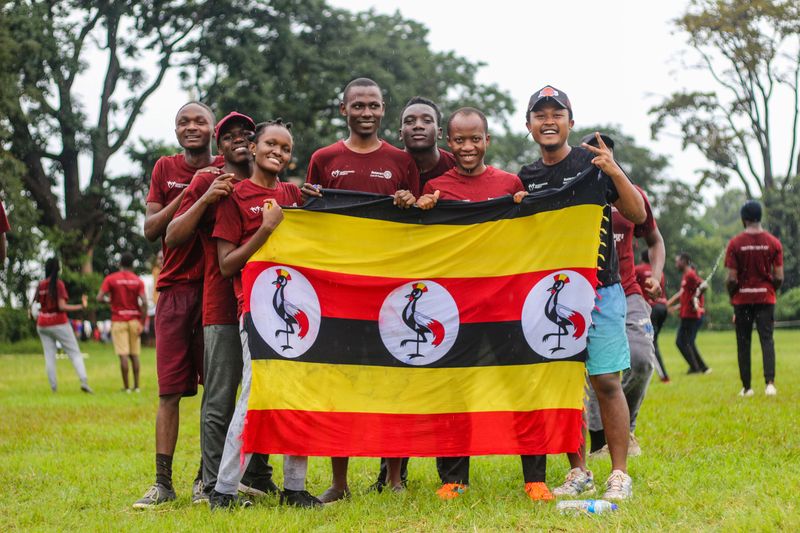
The Ugandan flag is the visual anchor of any Independence Day celebration. The three horizontal stripes carry deep meaning: black represents the African people, yellow symbolizes the sunshine that bathes the equatorial nation, and red stands for the blood that unites all people in the struggle for freedom. These three colors should dominate your decor, but the key is to use them with sophistication rather than overwhelming your space.
Start with your tablescape. A black tablecloth or runner creates a dramatic foundation. Layer yellow napkins and red placemats, or reverse the combination depending on what looks best in your lighting. For a more elevated look, use gold charger plates beneath white dinnerware, with black napkin rings and red floral centerpieces. If you are hosting outdoors, string yellow and red fairy lights against a dark backdrop of trees or a black fabric wall.
Flags and banners are essential, but avoid making your venue look like a political rally. A single large Ugandan flag behind the main table or dessert station makes a powerful statement. Smaller hand-held flags can be placed at each table setting or given to guests as they arrive. Bunting in black, yellow, and red triangles adds a festive touch across doorways and patio edges. You can also print posters of iconic Ugandan landmarks such as the Source of the Nile, Murchison Falls, or the Bwindi Impenetrable Forest to spark conversation.
Fresh flowers are another way to bring the color scheme to life. Yellow marigolds, red roses, and black-centered sunflowers arranged in simple glass vases create beautiful centerpieces. If you can source them, bird-of-paradise flowers add an unmistakably East African feel. For a more budget-friendly option, scatter yellow and red petals along the table runner.
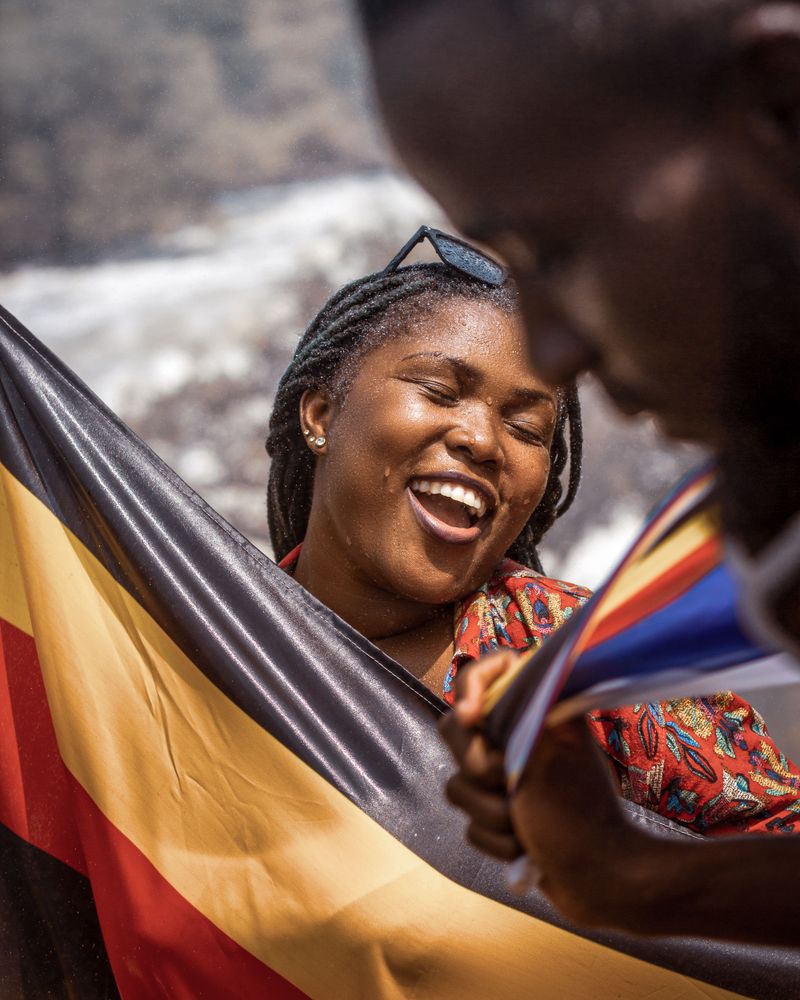
Lighting sets the mood as the sun sets. In Uganda, power outages are common, and celebrations often continue by candlelight or lantern. Embrace this by using black metal lanterns with yellow LED candles, or red glass votives scattered throughout your space. If you have access to African-print fabric, drape it over side tables or use it as a photo booth backdrop. Kente cloth, kitenge, or barkcloth all add texture and authenticity.
Do not forget the entrance. A simple archway wrapped in black, yellow, and red fabric or balloons creates an immediate sense of occasion. Place a welcome sign at the door with a phrase in Luganda, such as "Tukusanyukidde" (Welcome), or in Swahili, "Karibu." This small detail signals to guests that this is not just another barbecue but a culturally immersive experience.
Ugandan Food and Drinks: A Feast Fit for the Pearl of Africa
Ugandan cuisine is one of the most underrated in East Africa. It is hearty, flavorful, and built around staples that have sustained generations. For an Independence Day party, your menu should showcase the breadth of Ugandan cooking, from the staple matoke to street-food favorites like the rolex.
Matoke, or steamed green banana, is the cornerstone of Ugandan cuisine. The bananas are peeled, wrapped in banana leaves, and steamed until soft. They are then mashed and served with a variety of sauces. For a party, prepare matoke in individual portions wrapped in banana leaves, or serve it family-style in a large bowl with a ladle. The key is to source green cooking bananas, which may be available at African grocery stores. If you cannot find them, plantains make a reasonable substitute, though the texture will be slightly different.
Groundnut stew, known locally as ebinyebwa, is the perfect accompaniment to matoke. Made from ground peanuts simmered with onions, tomatoes, and spices, this thick, creamy stew is both comforting and deeply satisfying. For meat eaters, add pieces of beef or chicken. For vegetarians, the stew is substantial enough on its own. Prepare it a day ahead so the flavors deepen overnight.
Another must-have dish is luwombo, a traditional Baganda dish where meat, chicken, or mushrooms are steamed in banana leaves with peanuts, vegetables, and spices. The banana leaf infuses the contents with a subtle, earthy flavor that cannot be replicated with foil or parchment. Luwombo takes time to prepare but makes an impressive centerpiece when unwrapped at the table.
Street food is an essential part of Ugandan culinary culture, and no party is complete without the rolex. Not the watch, but a rolled chapati stuffed with scrambled eggs, cabbage, tomatoes, and optional grilled meat. Set up a rolex station where guests can watch their snack being made fresh. You will need pre-cooked chapatis, a hot griddle, beaten eggs, and finely chopped vegetables. Roll them tight, wrap in parchment paper, and serve with chili sauce on the side.
For drinks, Ugandans love their beverages sweet and refreshing. Fresh passion fruit juice is a national favorite and easy to prepare by blending the pulp with water and sugar, then straining. Mango juice and pineapple juice are also popular. For adults, Uganda Waragi, a local banana gin, can be served in small glasses as a traditional toast. Bell lager, Uganda's most famous beer, is another authentic choice if you can source it. Otherwise, any quality East African beer will do.
Chapati, ugali (a stiff maize porridge), and samosas (borrowed from the Indian community that has lived in Uganda for generations) round out the menu. For dessert, consider mandazi, a lightly sweetened fried dough similar to a doughnut but less sugary. Serve them warm with a drizzle of honey or a dusting of powdered sugar. If you want something more elaborate, a cake decorated with the Ugandan flag or a map of the country makes a stunning finale.
Music, Dance, and Entertainment
Ugandan music is as diverse as its people. From the rhythmic drumming of the Baganda to the hypnotic string sounds of the Karamojong, music is woven into every aspect of Ugandan life. For your Independence Day party, curate a playlist that moves through the genres and eras of Ugandan music.
Start with traditional music. The engoma drums of the Baganda, the adungu harp of the Alur people, and the tube fiddle of the Basoga all provide a rich, acoustic foundation. These can be played as background music during dinner. If you have access to live musicians, even a single drummer can transform the atmosphere. The rhythmic patterns of Ugandan drumming are infectious and will have guests tapping their feet before they realize it.
Move into kadongo kamu, a Ugandan genre of storytelling music that emerged in the 1980s. Artists like Herman Basudde and Fred Ssebatta narrated tales of love, politics, and daily life over simple guitar accompaniment. This is perfect for a relaxed afternoon gathering. As the evening progresses, shift to contemporary Ugandan pop, or "kidandali." Artists like Jose Chameleone, Bebe Cool, and Bobi Wine (now a political figure but still a musical icon) dominate this scene. Their upbeat, danceable tracks will get everyone on their feet.
Dance is inseparable from Ugandan music. The Bakisimba dance of the Baganda, performed by women in graceful, synchronized movements, is beautiful to watch. The Amagunju, also from Buganda, is more energetic and involves drumming and vigorous body movements. For a party, the most accessible option is to simply clear a space and let people dance to the contemporary playlist. If you want to add structure, hire a dance instructor for a thirty-minute lesson in basic African dance steps. Guests will laugh, sweat, and remember the experience for years.
Games and activities keep the energy high, especially if children are present. A trivia quiz about Uganda is easy to organize and educational. Questions can cover geography (What is the capital? Kampala), wildlife (Where can you see mountain gorillas? Bwindi), history (When did Uganda gain independence? 1962), and culture (What is the staple food? Matoke). Offer small prizes for winners, such as packets of Ugandan coffee or handmade crafts.
A photo booth with props is always popular. Provide Ugandan flags, traditional hats, beaded necklaces, and fabric sashes in black, yellow, and red. A backdrop of an iconic Ugandan landscape printed on fabric or paper sets the scene. For children, face painting in the flag colors or with animals like gorillas, lions, and elephants adds a playful element.
If your budget allows, consider inviting a guest speaker who can share personal stories about Uganda. This could be an elder from the diaspora who remembers the first Independence Day, a recent immigrant who can speak about modern Uganda, or even a travel writer who has visited the country. Ten to fifteen minutes of storytelling adds depth and meaning to the festivities.

Practical Planning: Budget, Timeline, and Scaling
A Uganda Independence Day party can be as intimate or as grand as your space and budget allow. For a gathering of fifteen to twenty people in a home or backyard, plan on spending between two hundred and four hundred dollars. This covers food, drinks, decor, and music. For a larger community event of one hundred or more, costs will scale to fifteen hundred dollars or more, depending on whether you rent a hall, hire caterers, or book live entertainment.
Three weeks before the party, finalize your guest list and send invitations. Digital invitations are fine, but a printed card with the Ugandan flag adds a personal touch. Two weeks before, order any specialty ingredients like green bananas, groundnut paste, or Ugandan beer. Test your recipes if you are cooking unfamiliar dishes. One week before, shop for decor, confirming that you have enough black, yellow, and red items to carry the theme throughout your space.
The day before the party, cook anything that can be reheated, such as groundnut stew, luwombo, and chapati dough. Prepare the rolex fillings and refrigerate them. Set up the decor, including the tablescape, lighting, and photo booth. On the day of the party, focus on the fresh elements: steam the matoke, fry the mandazi, assemble the rolex station, and prepare the fresh juices. If you have helpers, assign specific tasks so no one person is overwhelmed.
For a diaspora celebration where guests may not be familiar with Ugandan culture, add small educational touches. Place cards on the buffet explaining each dish. Print a one-page handout with ten facts about Uganda. Play a short documentary or slideshow about the country's geography, wildlife, and history during the first hour while guests arrive and mingle. These details transform a themed party into a genuine cultural exchange.
Scaling the party is straightforward. For fifty guests, double the food quantities and rent tables and chairs. For two hundred guests, consider hiring a catering team that specializes in African cuisine. If you are organizing a public event in a park or community center, coordinate with local authorities for permits, especially if you plan to serve alcohol or have amplified music. Always have a contingency plan for weather if any portion of your event is outdoors.
Uganda Independence Day Party FAQs
What is the significance of October 9 in Uganda? October 9, 1962, is the day Uganda gained independence from British colonial rule. It is celebrated annually with military parades, cultural performances, and community gatherings across the country.
Do I need to be Ugandan to host an Independence Day party? Not at all. Anyone with an appreciation for Ugandan culture, history, and cuisine can host a respectful and enjoyable celebration. The key is to approach the theme with genuine interest and cultural sensitivity.
Where can I buy Ugandan ingredients outside Uganda? African grocery stores in major cities often stock green bananas, groundnut paste, chapati flour, and Ugandan beer. Online retailers also specialize in East African food products.
What should guests wear? Guests can wear black, yellow, and red, or traditional African attire such as kitenge, gomesi, or kanzu. There is no strict dress code, but encouraging festive colors adds to the atmosphere.
How do I make the party educational for children? Include a trivia game, a map-coloring activity, and storytelling about Ugandan wildlife. Children often enjoy trying new foods when the context is explained in an engaging way.
Can I serve alcohol at a Uganda Independence Day party? Yes, Ugandan beer and waragi are traditional choices. However, always provide non-alcoholic options like passion fruit juice and mango juice for guests who do not drink.
As your Uganda Independence Day celebration winds down and the last notes of kadongo kamu fade into the night, take a moment to reflect on what the day represents. Uganda's independence was not just the end of colonial rule; it was the beginning of a nation's journey to define itself on its own terms. By gathering your friends and family to honor this moment, you are participating in that ongoing story. Raise a glass of passion fruit juice or waragi, toast to the Pearl of Africa, and start planning next year's celebration. For all your flag-themed party supplies and party tableware, Grencian has everything you need to make your Uganda Independence Day 2026 party unforgettable.