


Masquerade Party Ideas: Themes, Masks & Decor Guide

A masquerade party has one thing going for it that almost no other theme can match: it changes how people behave. Put a mask on a guest and they stand differently, talk differently, and — crucially — stay at your party longer than they planned to. The anonymity does the entertaining for you. What it does not do is handle the planning, and that's where most masquerade parties fall apart. Guests arrive without masks, the lighting is too bright for the mood you promised, and by nine o'clock it's a normal party with some feathers lying around.
This guide covers the whole thing properly: how to pick a masquerade theme your guests can actually dress for, where masks come from and how to handle the big reveal, decor and lighting that turn a room mysterious without turning it dark and depressing, an elegant menu that works standing up, tableware that suits a black-and-gold palette, games that use the anonymity instead of ignoring it, and a planning timeline with realistic budget tiers. There's also a kid-friendly variation at the end, because masked parties work surprisingly well for children when you get the details right.
What Makes a Masquerade Party Different
Three mechanics separate a masquerade from a costume party, and understanding them makes every other decision easier.
First, the mask is a partial disguise. A full costume makes someone a character; a mask leaves them recognisable enough to be themselves but ambiguous enough to be interesting. That's the sweet spot. Guests should be identifiable by their laugh and their shoes.
Second, there's a built-in dramatic structure. The evening has a natural arc: arrival masked, mingling in character, and then a moment — usually an hour or two in — where masks come off. Plan around that structure and the party organises itself.
Third, it is inherently formal. Masquerade reads as an occasion. Guests will dress up if you tell them to, and they'll expect the room to match. A masquerade party in a brightly lit kitchen with a paper tablecloth feels like a letdown; the same party in a dim room with candles and a proper backdrop feels like an event.
Once you accept those three things, the rest is logistics. Most of this guide is logistics.
Choosing Your Masquerade Theme and Dress Code
"Masquerade" is a category, not a theme. Pick a specific flavour and your guests' outfits will cohere instead of clashing, your decor palette will be obvious, and your invitations will practically write themselves.
Venetian carnival. The classic. Rich jewel tones — emerald, ruby, sapphire — with gold and cream accents, feathers, brocade, and long gowns. Dress code: black tie optional, or "evening wear with a Venetian mask." This is the most forgiving theme because almost any formal outfit works with a well-chosen mask.
Black and gold gala. The most modern and the easiest to execute visually. Strict two-colour palette, minimal pattern, strong contrast. Dress code: "all black with a gold mask" or "black tie in black and gold." Because the palette is so tight, this is the theme that photographs best and the one that looks most expensive per dollar spent on decor.
Phantom/opera night. Gothic, theatrical, dramatic. Black, deep red and white; candles; heavy draping; a chandelier if you have one. Guests tend toward capes, gloves and structured masks. This is a strong choice for an adult party with a smaller guest list where you want an intimate, cinematic atmosphere.
Midnight garden or enchanted forest. Green, silver, deep purple, foliage, fairy lights and florals. Works well for spring and summer, for outdoor venues, and for guest lists that don't want to shop for formalwear. Dress code can be relaxed to "cocktail in deep greens or jewel tones."
Vintage mystery. 1920s–1940s lounge styling — velvet, art deco geometry, a speakeasy feel, jazz on the playlist, a dress code of "vintage glamour." Pairs beautifully with a tamer version of a murder-mystery evening.
A note on the dress code: be specific and be generous. "Formal" is ambiguous and stresses people out. "Evening wear, black or gold, mask provided if you forget yours" is a gift. Guests who arrive with no mask at all will otherwise spend the evening apologising, so plan for it — see the next section.
Masks: Buying, Making, and the Reveal Moment
Masks are the one item people forget, and the one item you cannot improvise at the door. Solve this before you do anything else.
Buy a small stash of backup masks. A dozen simple masks in your theme colours costs very little and saves the party. Keep them in a basket at the entrance with a sign: "Forgot yours? Take one." Guests who arrive maskless relax immediately, and guests who have one will often pick up a second for a photo.
Stock three formats. Half-masks on a stick are the easiest to wear and to hold during conversation — best for anyone eating and drinking. Over-eye masks with an elastic band suit dancing and photographs but get pushed up constantly. Full-face Venetian masks are dramatic but make eating nearly impossible, so buy them as decor and photo props rather than as the only option.
Comfort is a real design constraint. Cheap elastic cuts into ears within an hour. If you're providing masks, look for ones with ribbon ties rather than tight elastic, and offer a bowl of thin ribbon lengths so guests can re-tie. If you're asking guests to bring their own, mention comfort in the invitation — it's the kind of practical note people appreciate.
Handle the reveal deliberately. A reveal with no structure is just masks coming off one by one. Give it a shape: a toast and a countdown, a specific moment announced on the invitation ("masks off at 9:30"), or a game where guests must guess identities before unmasking. The countdown version is the simplest and works every time — 10, 9, 8, and a room full of cheers.
Run a mask contest, with categories. "Most elaborate," "best DIY," "most mysterious" and "best pair" gives you four winners instead of one and gives guests a reason to put real effort in. Ask for entries to be placed on a displayed table during the first hour so everyone can see them.
Decor and Atmosphere: Building the Room
Masquerade decor has an easy rule: decorate for the camera, and light for the mood. Two or three strong visual moments beat a room covered in props.
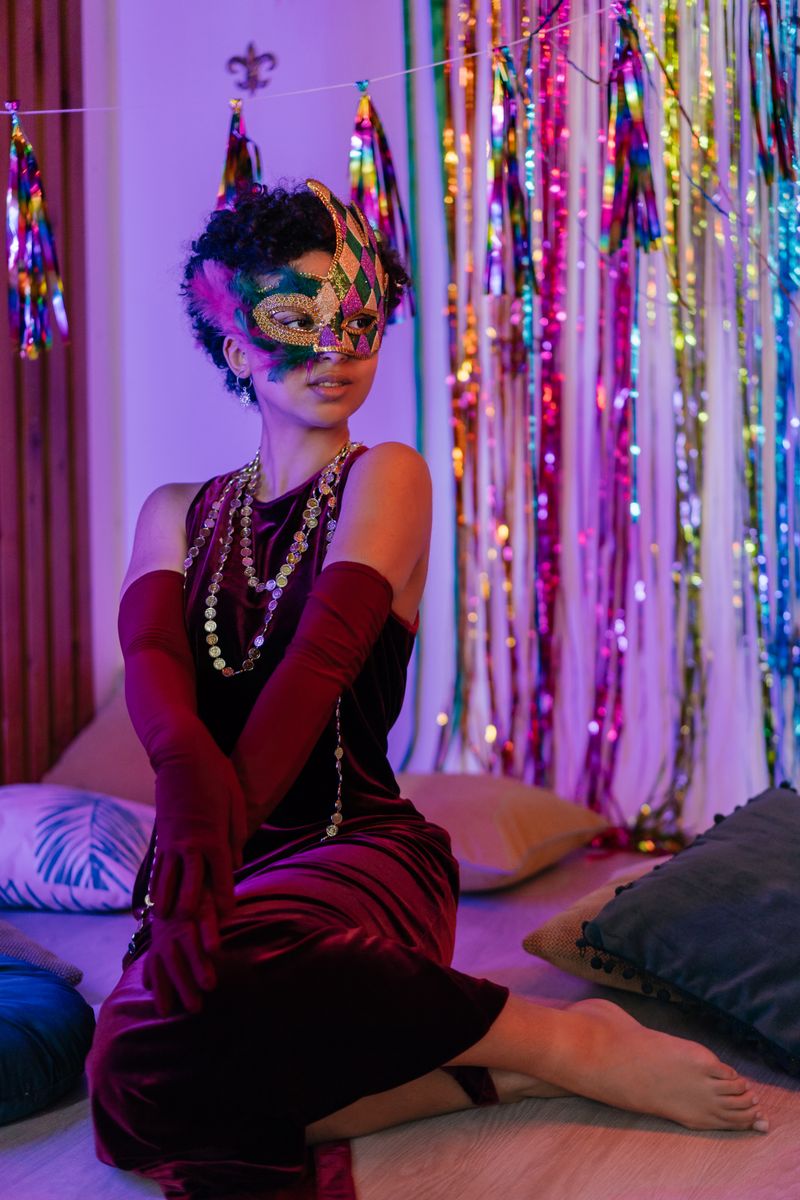
Anchor the room with a backdrop. Your entrance, your photo area, or the wall behind the bar is where guests will gather — put your strongest visual there. A draped fabric backdrop in your two palette colours, plus one metallic element and a mask display, does more than an entire room of scattered decorations. Our party backdrop range covers fabric and panel options that work well with formal palettes, and the party banners collection has letter and script banners if you want a themed line over the photo area or entrance.
Then subtract light. This is the single highest-impact change and it costs nothing. Turn off overhead lights entirely. Replace them with table lamps, candles, uplights, and string lights. Dim, warm, directional light is what makes masks look dramatic and guests look good. If you can't turn off the overheads, cover them with a dimmer-friendly shade or move the party to a different room.
Choose candles carefully. Real candles are unbeatable for atmosphere and a genuine fire risk in a room with feathers, tulle, chiffon and ribbon — which is precisely what your guests will be wearing. Use real candles only on stable surfaces away from traffic, in glass holders, and keep a pair of snuffers and a fire blanket on hand. Everything else should be battery-operated LED. Ballotins and votives should be real; centrepiece and shelf candles can be LED and no one will notice.
Add sound and scent. A playlist that stays in one lane — string quartet, jazz, or moody electronic — does more for atmosphere than extra decor. Scent is an underrated finishing touch: a diffuser with something warm and woody in the entrance and again near the bar, kept well away from the food table.
Drape generously. Fabric is the cheapest way to transform a plain room. Sheer curtains, satin runners, and scarves over lamp shades are all you need. If you're renting a hall with ugly furniture, cover it rather than moving it.
Food and Drink: An Elegant Menu That Works Masked
Here is the constraint that shapes everything: your guests are wearing masks and holding drinks in small glasses. Anything that requires a knife, a fork, two hands, or careful chewing is a problem. Build the menu around one-bite items.
Passed and plated one-bite options:
- Skewered items — caprese, melon and prosciutto, marinated olives, grilled halloumi
- Small tartlets and croustades, warm or room temperature
- Charcuterie and cheese cut into pre-portioned bites rather than a slice-your-own board
- Shrimp or prawn on a skewer, served chilled
- Mini quiches and savoury pastry cups
- Stuffed mushrooms and stuffed dates
- A good bread basket with whipped butter, which sounds plain and always empties
Skip anything that fights a mask. Soup, noodles, tacos, sliders that need to be compressed, powder-sugar desserts, anything with a long sauce drizzle. If you're set on dessert, choose small, clean items — truffles, macarons on a tray, small panna cotta cups.
Design a signature drink and one mocktail. A single named cocktail in your palette colour gives the party an identity and cuts your bar setup in half. Add a non-alcoholic version of the same drink so guests who aren't drinking aren't handed a plain soda. Clear drinks photograph better with masks than dark, staining ones — and red wine plus white gowns plus a crowd is a risk you don't need to take.
Serve drinks away from the food. Two stations, ideally in different parts of the room, keeps queueing manageable and keeps hands free. A small shelf or ledge near the photo area for guests to set down a glass while posing is a small touch that prevents a lot of dropped glasses.
Plan portions for a standing party. For a two-hour evening, estimate six to eight one-bite pieces per person if you're also serving dessert, and about one and a half drinks per guest in the first hour. Served in passes, food feels more abundant and less is thrown away.
Setting the Table: Black, Gold and Deliberate
Even at a standing party, the table you do set is the clearest signal of how much thought went into the evening. Masquerade gives you an unusually easy palette to work with.

Commit to a dark base and a metallic accent. Black plates on black linen with gold cutlery or gold-rimmed napkins is a combination that looks far more expensive than it costs. Black tableware is also the most practical choice for a formal evening: it hides sauce, it makes food colour pop, and it pairs with every jewel tone in any masquerade palette. Our black paper plates collection is the fastest way to build that base, and if you're setting multiple tables for a large event, it's the option that doesn't require matching a discontinued pattern.
Use napkins as the colour accent. A folded napkin in deep burgundy, emerald or gold on a black plate does the work of a full centrepiece. Textured or embossed napkins read richer than plain ones, and decorative napkins let you shift the whole palette from one party to the next without replacing your plate stock.
Add height, then add light. A table with everything at one level looks flat in photographs. Tapered candles in holders, a raised cake stand with macarons, or a small mask display on a stand changes the silhouette. Then light it from the side or below with a single warm source rather than from above.
Keep a runner down the centre and nothing else. For a buffet, a length of fabric runner plus a few candles plus a small floral arrangement is complete. Resist filling the empty space — at a dim party, empty dark surfaces read as elegant and cluttered ones read as messy.
Label anything that needs explaining. Small cards for the bites and the signature drink. At a formal standing event with masks on, labels genuinely help guests, and small printed cards look considered in a way that a marker on a plastic tub does not.
Games and Activities That Use the Anonymity
A masquerade party without games is still a nice party, but masks create opportunities no other theme has. Use two or three, not six.
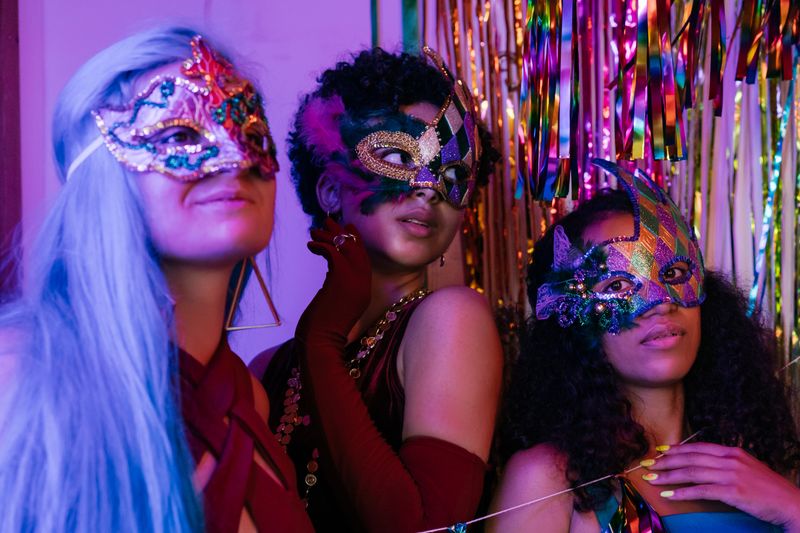
Guess who. The simplest and best. Guests write two true facts and one false one and leave them in a bowl at the entrance; through the evening you read them out and the room guesses the author. The masks add a layer of genuine uncertainty and the game creates conversation across the whole party rather than in cliques.
Identity cards. At the door, hand each guest a sealed envelope with a fictional identity and one instruction ("find the person with the matching crest"). This gives shy guests a task and an opening line, and works well for a mixed guest list.
Mask contest with a parade. Announce it at a specific time, have everyone who entered walk the room, then let the room applaud for winners. It takes fifteen minutes and it's the most photographed part of the night.
A countdown reveal. Not a game exactly, but structure the evening depends on. Announce a time on the invitation, gather for a toast, and count down together. It's the emotional peak of the night and it costs you a minute of planning.
Dance floor. Masquerade is a dancing party. Give it room, keep the playlist in one lane, and clear furniture to the walls. If you have space for a designated dance area, guests will use it — the masks lower the self-consciousness that usually keeps people seated.
What to skip. Anything that requires removing the mask, anything with a long setup, and anything that puts one guest in the spotlight for more than a few minutes. Masquerade flourishes as an ensemble evening.
Photos, Content and the Social Side
At a masquerade party, photography isn't a side activity — it's half the point. Guests came dressed for pictures.
- Set a photo zone deliberately. Backdrop, side light, and enough space for two or three people. Position it somewhere guests pass naturally.
- Add a ring light or a warm LED panel. Dim rooms produce dark, noisy phone photos; one light source at the photo spot fixes the output of every phone in the room.
- Provide a prop tray. Spare masks, a feathered fan, a pair of gloves, a vintage book. Props solve the "what do I do with my hands" problem in about five seconds.
- Offer to take photos. Designate a friend as unofficial photographer for the first ninety minutes, before masks come off. Group shots taken early are the ones you'll actually want.
- Ask before posting. Half-dressed anonymity is exactly why masks are fun, and exactly why you should check with each guest before anything goes online. A simple "good to share?" rule covers it.
Budget Tiers and a Planning Timeline
Modest budget — home party, 20 to 30 guests. Spend on masks and lighting, save on everything else. A draped fabric backdrop and ten battery candles transform a living room. Use black disposable tableware and a printed menu card instead of formal china. Skip the florist and use candles and greenery from a supermarket.
Mid budget — rented room, 40 to 60 guests. Add a proper bar setup, passed food instead of a buffet, a DJ or a hired playlist, and a hire fee for linen. This is the tier where tableware quality starts to be visible, so it's worth upgrading from thin paper to coated or bagasse plates.
Higher budget — venue, 80+ guests. Invest in lighting design, a live performer or a small band, hired florals, and a valet or coat-check. At this scale, coordination matters more than individual elements: one person owning lighting and sound, one owning food and drink, one owning the door.
Timeline. Six weeks out: fix the date, pick the theme, send save-the-dates with the dress code and the reveal time. Four weeks: book venue or confirm your space, order masks and banner or backdrop, build the playlist. Three weeks: finalise the menu, order tableware and napkins, write and print labels and game materials. Two weeks: send a reminder with parking and arrival details, confirm guest numbers, test one or two dishes. One week: assemble the prop tray and mask basket, print the identity cards, charge every LED. Two days: candles, fresh flowers, ice, fresh dairy. Party day: backdrop first, then lighting, then food stations, then the photo zone — and turn off the overheads last, once you can see how it actually looks.
The Kid-Friendly Masquerade Variation
Masked parties work beautifully for children as long as you remove the two elements that make them adult: formality and mystery.
Pick a friendlier theme. Superheroes, animals, fairies, knights and princesses — a mask plus a simple accessory is a whole costume. Skip anything gothic.
Provide everything. Children will not reliably bring a mask, and a child without one at a masked party feels excluded. Supply plain masks plus a decorating table with stickers, feathers, markers and glue dots at the entrance. Decorating takes twenty minutes and doubles as an activity.
Work around the practical realities. Choose elastic bands over ties, foam over rigid plastic, and skip feathers on masks children will wear while running. Keep masks off during food and games that involve movement. Keep the party shorter — ninety minutes to two hours is plenty.
Adapt the games. Guess-who works if the facts are about favourite colours and pets. A mask parade with everyone winning a category works better than a single winner. Add a photo zone with a mirror and a simple backdrop; children will use it unprompted.
Send the favours home on the mask. Handing each child a decorated mask and a small box at the door means the craft goes home with them rather than being abandoned on a floor. Our party favors collection has bag-and-filler sets that suit masked themes for both children and adults.
Masquerade Party FAQ
Does everyone have to wear a mask? Ask guests to, and provide spares for anyone who forgets. A few unmasked guests is fine; a few guests feeling left out is not.
What should I wear if I'm hosting? Something you can move and serve in, with a mask you can remove easily. Hosts who wear elaborate full-face masks can't read the room or talk to caterers comfortably.
How long should the party run? Three to four hours for an adult evening, with the reveal at around the two-hour mark. That gives guests time to arrive, mingle masked, and still have a full second act without masks.
Is masquerade the same as Mardi Gras? No. Mardi Gras is a specific carnival season with its own colours — purple, green and gold — and its own traditions. Masquerade is the broader mask-wearing party format. A Mardi Gras masquerade is a legitimate crossover, but they're not interchangeable.
How do I keep the party from just being a normal party with masks? Lighting and structure. Dim, directional light plus a scheduled reveal plus one identity game is enough to keep the theme alive all evening. If your room is brightly lit and nothing is scheduled, the masks come off in twenty minutes and stay off.
What about guests who don't know anyone? Give them a task at the door — an identity card, a name to find, a category to vote on. The mask gives them cover; the task gives them a reason to talk.
How many backup masks should I have? About a third of your guest count, at minimum six. They get borrowed, kept, and used for photos.
Can I host this outdoors? Yes, and evening outdoor masquerade works beautifully with string lights and lanterns. Plan for wind — masks fly off, candles blow out, and fabric drapes become sails. Battery candles and masks with proper ties are essential.
What's the biggest mistake hosts make? Bright lighting and no reveal moment. Fix those two and even a low-budget masquerade feels like an event.
Make It a Night People Talk About
Masquerade rewards a small number of deliberate choices far more than it rewards spending. Dim the room, anchor it with one strong backdrop, solve masks before guests arrive, keep the food to one bite, and put a reveal time on the invitation. Those five decisions carry the entire evening.
Start with the two elements that set the tone the moment guests walk in: the backdrop and the table. Browse party backdrops for a fabric anchor, set a dark table with black paper plates and a colour accent from decorative napkins, and pick up spare masks and small favours so nobody arrives at your door unprepared. Then turn off the overhead lights, strike a match, and let the evening do what masquerade evenings do best.