


Science Party Ideas: The Ultimate Mad Scientist Birthday Guide

Why a Science Party Is the Smartest Theme on the Calendar
Ask a room of parents what theme their child asked for this year, and you will hear the same three answers: dinosaurs, superheroes and science. Science has quietly become one of the highest-demand birthday themes in the world, and it is not hard to see why. It works equally well for four-year-olds and twelve-year-olds. It has no gender shelf. It turns into a party activity all by itself — you are not hiring entertainment, you are creating it. And at the end of the afternoon, every guest goes home having learned something they will repeat to their parents at dinner.
A well-built science party also happens to be one of the most photogenic themes you can host. Fog spilling out of a cauldron, neon green liquid in a beaker, tiny lab coats and safety goggles, a table set with "specimen" cups — the visuals do the work. You do not need a big budget. You need a palette, a plan for the experiments, and a way to keep twelve sticky-handed scientists moving through stations without chaos.
This guide covers all of it: eight different ways to angle a science party, the decor that makes a room read as a laboratory, twelve safe experiments with real wow-factor, a lab-themed menu, favor bags guests will actually keep, an age-by-age adaptation chart, and a complete timeline with a budget breakdown. Everything here has been tested at real children's parties and real classrooms.
Pick Your Angle: Eight Science Party Variations
"Science party" is a broad brief. Choosing a specific angle makes decor, food and favors all fall into place, and it prevents the party from feeling like a random assortment of experiments.
- Mad Scientist Lab. The classic. Bubbling beakers, hazard tape, lab coats, a slightly chaotic professor aesthetic. Best for ages 5–10. Neon green, purple and black.
- Slime Lab. Everything is slime. Slime-making stations, slime races, slime favors, slime-colored food. Best for ages 6–11 and the easiest theme to execute because slime is genuinely the activity.
- Space and Solar System. Planets, rockets, moon phases, astronaut training. Best for ages 4–9, and it pairs beautifully with a dark room, glow sticks and a projected star field.
- Dinosaur Paleontology Dig. Excavation trays, plaster "fossils", brushes and goggles, a dig site in a sandbox. If your child is torn between dinosaurs and science, this is the answer.
- Volcano and Earth Science. Eruptions, rock cycles, layers of the earth. Spectacular centerpiece potential.
- Forensic Detective Lab. Fingerprinting, invisible ink, footprint analysis, cipher puzzles. Best for ages 9–13 and brilliant for a party that wants a mystery narrative built in.
- Kitchen Chemistry. Every experiment is edible. Baking soda candy, colour-changing lemonade, rock candy, "molecular" desserts. Best for ages 6–11 and the only variant where the experiment table and the food table are the same table.
- Weather Lab. Tornado bottles, cloud jars, static electricity, homemade barometers, lightning demonstrations. Great for a school-adjacent party.
If you are undecided, Mad Scientist Lab is the safest choice because it accommodates every other variant inside it — you can add a slime station, a volcano and a planet table to the same party without it looking incoherent.
Invitations, Attire and Setting the Tone Early
The invitation is your first opportunity to lock the theme, and for a science party there is one detail worth getting right: tell guests what to wear. "Lab coats and goggles provided — wear clothes that can get messy" solves ninety percent of parent anxiety before it starts.
Ideas that generate real excitement:
- Security badge invitations. Print each guest a "Lab ID" card with their name, a photo slot, an access level ("Level 3 Chemist") and the party details. Kids wear them all afternoon and take them home.
- Test tube invitations. Roll the invitation into a plastic test tube with a cork stopper and hand-deliver.
- Top-secret memo invitations. Frame the party as a classified mission requiring their expertise. This works especially well for the forensic and space variants.
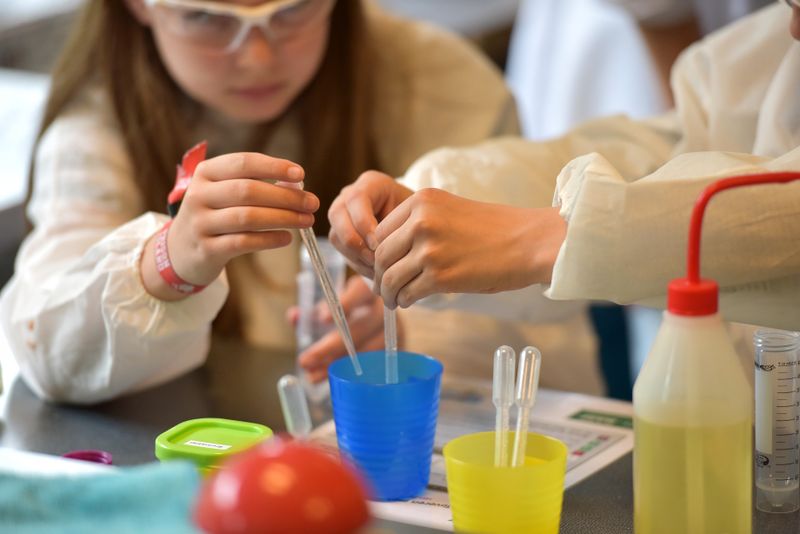
Provide basic lab coats and safety goggles as part of the party, not as a costume requirement. A stack of inexpensive white coats in a range of sizes, plus goggles, instantly transforms a group of ordinary kids into a research team. It also protects their clothes, which parents will thank you for.
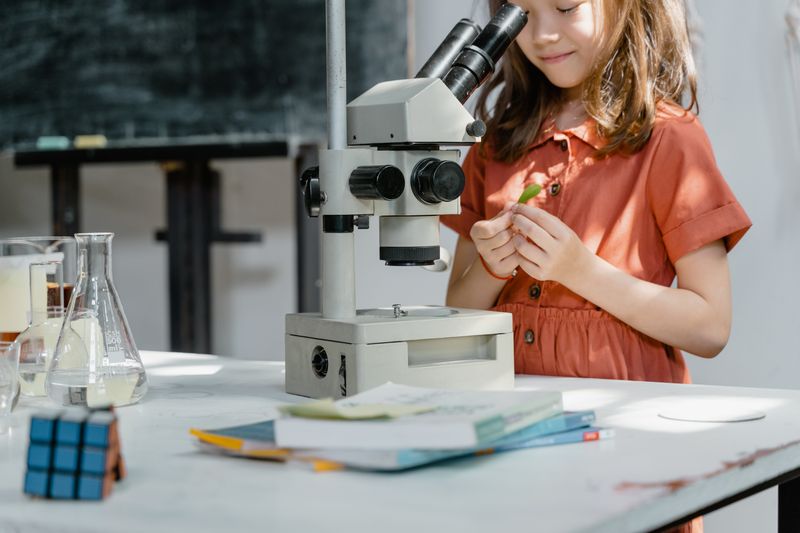
Decor: Turning Any Room Into a Laboratory
The science party look is one of the cheapest themes to produce, because so much of it comes from everyday objects. Here is what actually shifts a room.
Start with the palette. Neon green, electric purple, black and white. White tablecloths and black accents give you a clean lab surface; the neon comes through in liquid, lighting and balloons. If you want something softer, use teal, white and silver instead — this is the version that suits a space-themed party.
Centerpieces that read as science. Clear glass or plastic beakers, flasks and test tubes filled with colored water, colored sand, water beads, or layered liquids of different densities. The layered-liquid centerpiece is a favorite because it doubles as a real experiment guests can examine. Add a few paper "hazard" signs, printed element cards, or a periodic table printed on a large sheet and hung as a backdrop.
Balloons as molecules. Cluster three, four or six balloons together and label them H2O, CO2 or CH4. It takes ten minutes and looks like you spent a day on it.
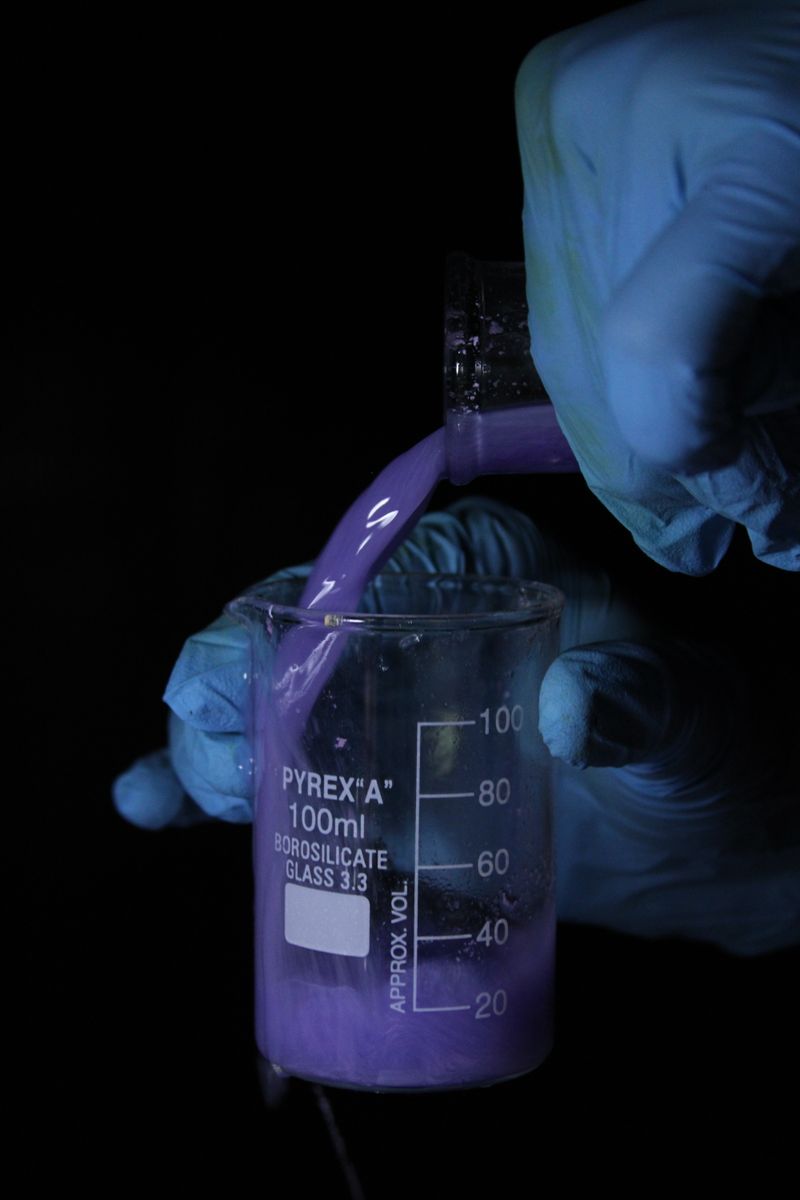
Lighting. Neon or purple uplighting from a pair of cheap LED par lights changes the entire room after dark. Add a fog machine or dry ice in water for twenty seconds of low-lying mist and you will get a genuine gasp when guests walk in.
Interactive decor. A "guess the specimen" table with numbered jars of mystery items — dried beans, cotton balls, glitter, rice, sand — never fails. Neither does a height chart marked out in "lab units" or a wall of paper where guests can write their hypothesis for the day's experiments.
For the backdrop — the single highest-impact decor element at any themed party — a plain party backdrop gives you a clean surface to build on, and a few party decoration pieces in neon colors finish the lab look without any DIY skills. Add a tablecloth in white or black and you have a laboratory.
Twelve Safe Experiments With Real Wow-Factor
These are all achievable at home with supermarket ingredients and all suitable for supervised children. Rotate three to four of them rather than attempting all twelve.
- Baking soda volcano. The undisputed crowd-pleaser. Build the cone from clay or papier-mâché in advance, fill with baking soda, and add vinegar with a drop of dish soap and red food coloring. Repeat it five times, because they will ask.
- Elephant toothpaste. Hydrogen peroxide, yeast, warm water and dish soap in a narrow-necked bottle. A dramatic foam column in seconds. Use 3% peroxide for a home-safe version.
- Slime. White glue, baking soda, contact lens solution and food coloring. Provides twenty minutes of making and an hour of playing.
- Oobleck. Cornstarch and water. A non-Newtonian fluid that behaves as a solid when punched and a liquid when poured. Every child remembers this one for years.
- Density tower. Honey, corn syrup, dish soap, water and oil layered carefully in a tall glass. Drop in a grape, a bolt and a piece of cork and watch them stop at different levels.
- Lava lamp in a bottle. Oil, water, food coloring and an effervescent tablet. Endlessly repeatable.
- Magic milk. Milk, food coloring and a cotton swab dipped in dish soap. Colors explode across the surface into marbled art you can then print onto paper.
- Invisible ink. Lemon juice or baking soda solution written with a cotton swab, revealed by heat or by grape juice concentrate. Perfect for the forensic variant.
- Balloon static electricity. Rub a balloon on hair and use it to bend a stream of water or move paper. No supplies beyond a balloon.
- Chromatography flowers. Coffee filters, washable markers and a cup of water. Colors separate into bands and the results become keepsake flowers.
- Dancing raisins. Clear soda and raisins. The raisins rise and fall for as long as the carbonation lasts. The best experiment for toddlers in the room.
- Instant rock candy / sugar crystals. Supersaturated sugar solution on a skewer. Start it at the beginning of the party and hand out the results as favors two weeks later — a lovely way to extend the party.
Non-negotiable safety rules: one adult supervising every experiment table at all times; safety goggles on; no tasting anything at the experiment table; keep all experiment materials physically separate from the food table; use only food-grade or clearly non-toxic household ingredients; skip anything involving open flame, strong acids, bleach or dry ice unless you are experienced and working outdoors.
Table Setup: Tableware That Sells the Theme
Here is where most science parties quietly succeed or fail. The experiments are exciting, but the table is what guests photograph, and getting it right is mostly about choosing the right paper goods.
Build the table in layers:
- Base: a plain white or black tablecloth. It reads as a lab bench and makes every colour pop.
- Place settings: solid-color plates in green, purple or blue. Round paper plates look like petri dishes, which is exactly the association you want.
- Drinkware: cups with a beaker or flask silhouette, or simple clear cups that guests can fill themselves from a "potion" dispenser.
- Snack vessels: small paper bowls and snack cups labelled with specimen numbers or element symbols.
- Cutlery and napkins: black or silver, kept deliberately plain so the food looks like an exhibit.
If you want to keep it simple and on budget, one coherent run of solid-color plates, party paper cups and paper bowls is all you need. If the party is for a younger child and you want character on the table, the birthday party plates collection has themed options that pair well with a lab setup. A plain party tablecloth under everything is the detail that makes the table look designed instead of improvised.
The Menu: Lab-Themed Food and Drink
Science party food is mostly about relabeling ordinary crowd-pleasers and getting playful with presentation. Nobody is grading the recipes, and the food needs to be genuinely easy to eat standing up.
Savory:
- "Petri dishes" — flat round crackers or rice cakes topped with cream cheese, cucumber slices and a single olive, served on a real glass dish.
- "Fossil cookies" — savory crackers with a dinosaur or leaf impression pressed into them.
- "Molecule skewers" — cherry tomatoes, mozzarella balls and olives on toothpicks, connected into three-atom shapes.
- "Specimen cups" — small clear cups of popcorn, pretzels or trail mix with a numbered label.
- Pizza cut into irregular "lab samples" and served on paper plates with a pipette drawn on top.
Sweet:
- Jello in clear cups in layers of two or three colours — the most convincing "specimen" on the table.
- "Brain" cupcakes with piped frosting swirls in pink or grey.
- Green and purple cake pops labelled with element symbols.
- Rock candy "crystals" and cookie "meteorites".
Drinks:
- Colour-changing lemonade. Butterfly pea flower tea turns from blue to purple when lemon juice is added — a genuine chemical reaction performed at the drinks table. This is the single best drink idea for a science party.
- Fizzy "potion" punch. Sparkling water, fruit juice and gummy worms, served from a clear dispenser.
- Smoking dry-ice punch. Only with proper handling and food-grade dry ice, outdoors or in a very well-ventilated space, mixed by an adult.
- Flavored water "samples". Four pitchers of water infused with cucumber, lemon, berries and mint, labelled with numbered cards. Kids will try all four.
Games and Activities Beyond the Experiment Table
A science party needs a rhythm: experiment, run around, eat, experiment, calm activity, cake. These fill the gaps.
Escape the Lab. Hide a key inside a locked box and provide three puzzle clues (a cipher, a simple chemical colour code, a measurement challenge). Best for ages 9 and up and easily the most engaging activity in this list.
Specimen scavenger hunt. Ten hidden items with a checklist and a magnifying glass each. Works for every age.
Guess the substance. Numbered containers of mystery textures, felt through a sock or box opening. Simple, funny, endlessly repeatable.
Slime race. Teams compete to see whose slime stretches furthest, bounces highest or holds its shape longest. Award categories rather than a single winner.
Build-a-molecule challenge. Toothpicks and gummy candies, with a card showing a target molecule. Older children build actual structures; younger ones build anything and then eat it.
Science trivia. Twenty questions, teams, small prizes. A reliable ten-minute filler while the cake is being prepared.
Bubble science. A tray of soap solution, homemade wands from pipe cleaners and straws, and the challenge of blowing a bubble inside a bubble.
Favor Bags Guests Will Actually Keep
Science party favors have a real advantage: they are small, useful and educational, which means they do not get thrown away the following week.
- Safety goggles in bright colors — the most-used favor in the entire category.
- A mini test tube or beaker with a cork, filled with candy.
- A homemade slime kit — a small jar of glue, a bottle of activator and a mini container of glitter.
- A magnifying glass or a small bug viewer.
- A "scientist certificate" with the child's name and the party date. Costs almost nothing, gets kept for years.
- Seeds in a labelled envelope — "grow your own experiment" — with a planting instruction card.
- Rock candy on a stick, especially the batch started at the beginning of the party.
Bag them in goodie bags and finish with a custom label: "Certified Lab Technician — [name]". For smaller items, a run of party favors and snack cups keeps the giveaway tidy and gives you a container for loose specimens, candy and slime.
Adapting the Party by Age
Ages 3–5. Two experiments maximum, both chosen for visual payoff over complexity: dancing raisins and baking soda eruptions. Everything must be non-toxic and mouth-safe, because at this age something will be tasted. Keep the party to 90 minutes and lean hard on the food table.
Ages 6–8. Three or four stations, slime as the centerpiece, and a craft activity that produces a take-home object. Goggles are non-negotiable because they all want to wear them. Two hours.
Ages 9–11. Add narrative: a mystery to solve, ciphers, a lab escape challenge. This age group wants to figure things out rather than be shown, so put the instructions on a card and let them work it out. Two to two and a half hours.
Ages 12–14. Forensic and engineering variants work best. Build something competitive — a bridge from straws, a balloon-powered car, a water filter challenge. Consider a glow-in-the-dark element and running the party in the evening.
Teens and adults. Relabel and rework the theme entirely: a molecular mixology night, a paint-and-sip with colour chemistry, or a wine and chocolate tasting framed as sensory science. The lab aesthetic carries beautifully into an adult evening with proper glassware, candles and low lighting.
Classroom and science-fair versions. Scale by station, not by experiment. Four or five tables, groups of four, ten minutes per station with a whistle rotation. Parent volunteers one per station is the difference between a good session and a chaotic one.
Budget, Timeline and a Two-Hour Party Flow
Budget for 12 children:
- Simple ($60–100): Baking soda, vinegar, cornstarch, food coloring, glue, contact solution, balloons, plain paper goods, printed invitations and certificates.
- Standard ($120–200): Add lab coats or aprons, goggles for every guest, neon balloons, LED uplighting, a backdrop, a themed cake and the favor components.
- Generous ($250–400): Add a fog machine or dry ice, a proper slime kit for each guest, custom lab ID badges, a photographer, and a hired STEM workshop leader if one is available locally.
Timeline:
- Four weeks out: Lock the angle, send invitations, order favors and paper goods.
- Two weeks out: Buy experiment supplies and test every experiment yourself once. This step is not optional — every single experiment behaves differently in a different kitchen.
- One week out: Print ID badges, certificates and experiment cards. Build it into a reusable kit per station.
- Two days out: Shop for food. Pre-mix dry ingredients into labelled bags so the day runs smoothly.
- Day before: Set up decor, prep the table, charge speakers, fill the mystery-jar table.
- Day of: Set out food an hour before, lay out goggles and coats at the door, put experiment kits in place, and mix the first batch of the colour-changing lemonade so it is ready for the arrivals moment.
A two-hour flow that works:
- 0:00–0:15 — Arrival. Lab IDs and goggles handed out at the door. Mystery jar table open. Dancing raisins running for the youngest guests.
- 0:15–0:45 — Main experiment block. Two stations, one adult each, goggles on.
- 0:45–1:15 — Food and the colour-changing lemonade demonstration.
- 1:15–1:40 — Free play, games or the escape-the-lab puzzle while the cake is prepared.
- 1:40–2:00 — Cake, certificates, favor bags at the door.
FAQ: Science Party Planning
Q: What is the best age for a science party?
A: Six to ten is the sweet spot. The theme works from age three with simplified experiments and can be adapted for teens and adults, but the classic children's format peaks between six and ten.
Q: How many experiments should I plan?
A: Three or four, run as stations. Planning more than four is the most common mistake — you will run out of time and energy, and children would rather repeat a favourite than rush through a new one.
Q: Do I need to test the experiments beforehand?
A: Yes. Always. Humidity, altitude, water quality and the age of your baking soda all affect results. Testing also tells you how long each experiment actually takes, which is information you cannot get from a tutorial.
Q: Is dry ice safe for a children's party?
A: Food-grade dry ice is safe when handled correctly, but it must never be touched with bare skin or eaten, and it must be used in a ventilated space. Many hosts skip it entirely and use a fog machine instead, which produces a similar effect with less risk.
Q: What if a guest has a latex or food allergy?
A: Ask on the invitation and keep every experiment material separate from the food. Avoid latex balloons in favour bags and offer a non-food favor option — goggles, a magnifying glass or a certificate all work.
Q: Can I host a science party indoors in a small space?
A: Yes. Cover the floor with a plastic sheet or an old shower curtain, keep the messy experiments to a kitchen counter, and choose experiments that do not spray — density towers, chromatography flowers and dancing raisins are all tidy options. Anything involving eruptions belongs outdoors.
Q: How do I keep the party from becoming pure chaos?
A: Use stations with one adult each, give every child a printed card with the day's schedule, and build in two sitting-down activities. A labelled specimen table is a surprisingly effective calm-down tool because it gives children something quiet and specific to do.
Hypothesis Confirmed: Final Thoughts
A science party works because it gives children what they actually want — permission to make a mess, discover something, and be treated as capable. The experiments are the hook, but the memory they keep is of the moment the volcano erupted, or the lemonade turned purple in their own cup, or the slime finally came together in their hands.
Keep the palette tight, test your experiments, put an adult at every station, and do not over-schedule. Everything else takes care of itself. For the table, the lab props and the giveaway — from paper cups and party favors to goodie bags and a clean party backdrop — Grencian has everything you need to build the lab. Now hand out the goggles and let them experiment.