


North Macedonia Independence Day Party Ideas 2026: Celebrate September 8 in Style

September 8 is the date that turned a referendum result into a country. On that day in 1991, voters in what was then the Socialist Republic of Macedonia chose sovereignty, and the modern state — renamed the Republic of North Macedonia in 2019 under the Prespa Agreement — has marked the anniversary ever since with parades, concerts, fireworks over the Vardar, and, more importantly for our purposes, an enormous amount of food shared outdoors while the weather is still generous.
If you are reading this in early August, you are in the sweet spot. Independence Day 2026 falls on a Tuesday, which means most people will celebrate on the weekend of September 5–6 or shift the gathering to the evening of the 8th itself. Either way, you have roughly five weeks — enough time to order decorations that actually arrive, to source the ingredients that make a Macedonian table taste like a Macedonian table, and to invite people while their September calendars still have gaps in them.
This guide covers decor, the food and drink that matter most, music and dancing, games that work for mixed-age crowds, a realistic budget, and a week-by-week timeline so nothing lands on you at once.
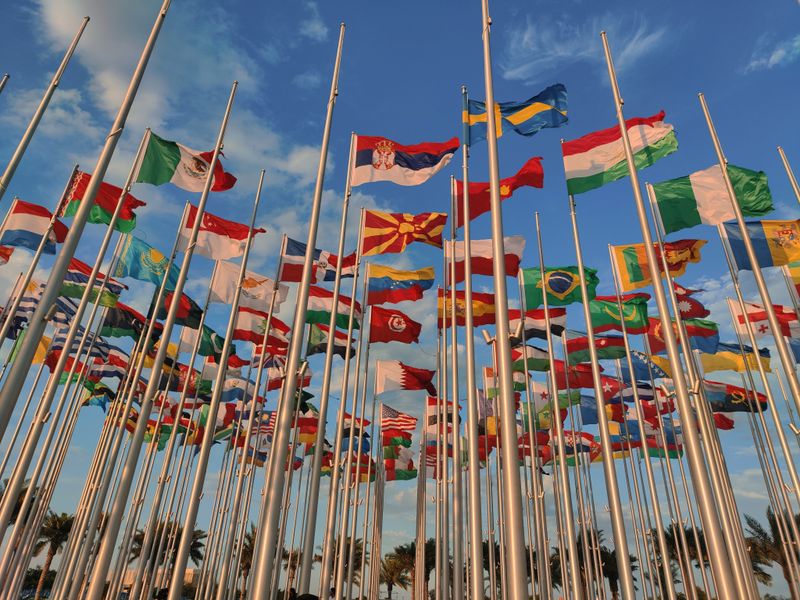
Start With the Flag: Red and Gold as a Design System
The Macedonian flag is one of the easiest national flags to translate into party decor, because it is essentially two colors and one shape. A deep red field, a golden-yellow sun, and eight rays that widen as they reach the edges. Adopted in 1995, it reads instantly even at a distance, and it gives you a palette that does not require any guesswork.
Build outward from that. Red as the dominant surface color — tablecloths, plates, the backdrop behind the food table. Gold or warm yellow as the accent — napkins, cutlery, balloon clusters, string lights, the ribbon on a gift table. Then leave the rest neutral: natural wood, terracotta, unbleached linen. Macedonian domestic style leans rustic and warm rather than glossy, so raw textures do more for the mood than anything metallic and shiny.
A few placements that carry a lot of visual weight for very little effort:
- The sun burst backdrop. Cut eight tapering rays from gold card stock, mount them radiating from a central disc on a red sheet or curtain, and you have a photo wall that costs under twenty dollars and reads as unmistakably Macedonian.
- Layered table runners. A red base with a narrow gold runner down the middle instantly frames the food without hiding the table.
- Height variation. Stack crates or upturned bowls under the tablecloth so platters sit at three different levels. Flat food tables photograph badly and force people to reach across each other.
- Warm lighting. Amber string lights over the eating area, not white. The gold in the flag palette dies under cool-toned LEDs.
For coordinated tableware, the national flag party supplies range is the fastest way to get red-and-gold plates, cups, and napkins that match rather than approximately match, and a plain red base layer from red paper plates lets you mix in gold accents without buying a full themed set.
One detail worth adding if you have children coming: print a simple flag-coloring page. It occupies the ten-minute window before food is ready, and it doubles as decoration when the finished pages get taped to the fence.
The Food Table Is the Whole Party
Macedonian hospitality is not subtle about quantity. The working assumption at a family celebration is that there should be visibly more food than the guests can finish, and that guests will be encouraged — repeatedly — to eat more of it. You do not need to cook everything from scratch to honor that spirit, but you should build the table around a few dishes that are genuinely characteristic rather than generically Mediterranean.
Ajvar is the obvious anchor, and September is exactly the right month for it. The tradition of pečenje piperki — roasting sacks of red peppers over an open flame in early autumn, then peeling, grinding, and slow-cooking them into a thick relish — is a real family ritual across the country, usually done outdoors with several generations involved. If you have the space and the patience, roasting peppers on a grill while guests arrive is the single most atmospheric thing you can do. If you don't, good jarred ajvar is widely available at Balkan and Eastern European groceries. Serve it with warm bread and white cheese and it will disappear.
Tavče gravče is the dish most often named as the national one: white beans baked in an earthenware pan with onion, paprika, and dried peppers, sometimes with sausage. It is inexpensive, it scales beautifully, it holds heat well on a buffet, and it is vegetarian in its base form, which solves a problem you would otherwise have to solve some other way.
Shopska salad — tomato, cucumber, raw onion, roasted pepper, with grated white brined cheese heaped over the top — is the fresh counterweight. Make it late, keep it cold, and grate the cheese over it just before serving so it stays snowy rather than sweating into the vegetables.
Beyond that core, choose based on your kitchen capacity:
- Kebapi — small grilled fingers of seasoned minced meat, served with chopped raw onion and flatbread. The highest-impact grill item.
- Pastrmajlija — an oval flatbread from Štip topped with cubed pork or lamb and often an egg cracked on top near the end. Distinctive and filling.
- Burek — filo layered with cheese, spinach, or meat. Buy it; making filo from scratch on party day is a decision you will regret.
- Trout — Lake Ohrid is famous for it, though the native Ohrid trout is protected and tightly restricted. Farmed trout is the appropriate substitute and grills well whole.
- Baklava, tulumba, and kadaif — Ottoman-legacy sweets standard at Macedonian celebrations, all better bought from a bakery than attempted at home.
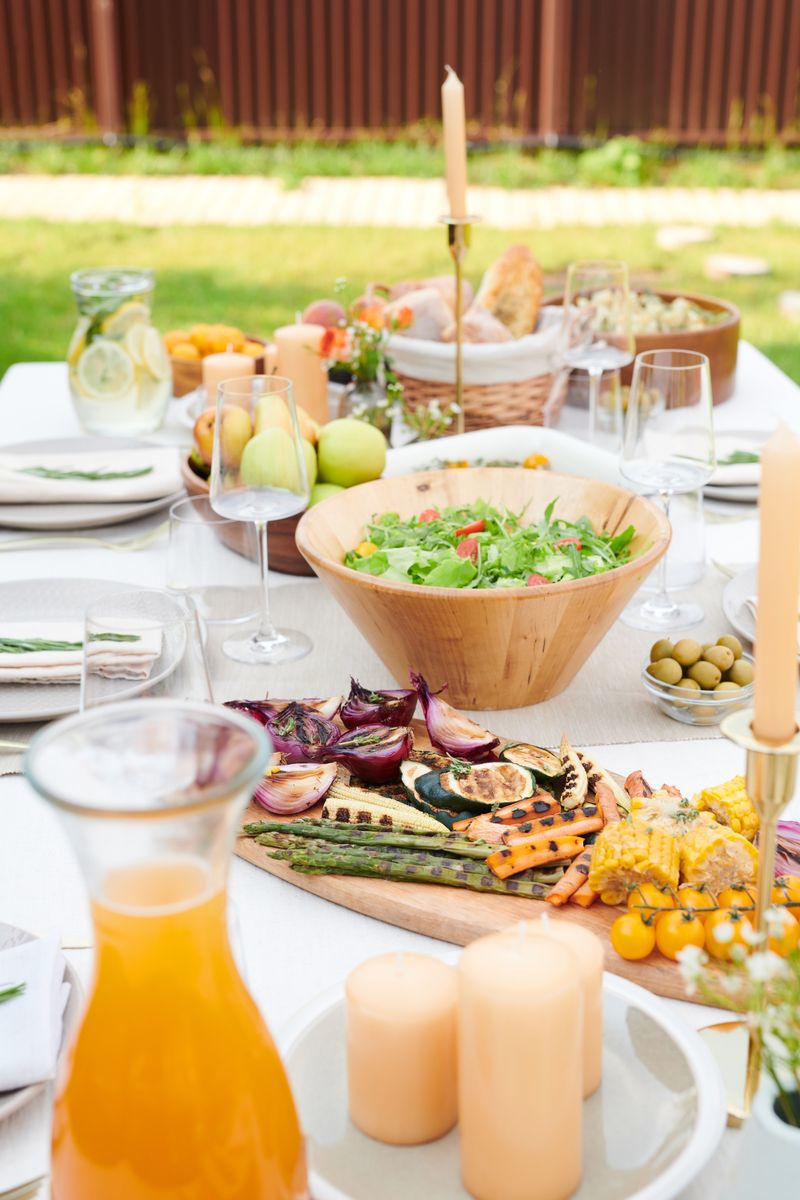
Set the table as a genuine meze spread: many small dishes out at once, no rigid courses, people grazing for two hours. That format is both culturally accurate and logistically forgiving, because nothing has to come out of the oven at a precise moment.
Drinks, Handled Sensibly
Rakija is the traditional opener — a strong fruit brandy, usually grape or plum, served in small glasses, usually with a toast of Na zdravje. It is genuinely strong, frequently 40% ABV or higher and sometimes considerably more when it is homemade. Serve it in proper small measures at the beginning of the meal rather than leaving the bottle out, make sure substantial food is already on the table, and have designated drivers or ride-share arranged before anyone starts. Hosts who pour generously all evening are not being hospitable; they are creating a problem for someone.
For the rest of the evening, Macedonian wine does the work. The Tikveš region produces the country's best-known bottles, with Vranec as the flagship red — dark, firm, good with grilled meat — and Smederevka or Temjanika on the white side. Skopsko is the standard lager. For anyone not drinking, boza (a lightly fermented, low-alcohol millet drink with a malty tang) is the authentic option, and mountain tea made from dried sideritis is what many households actually serve after a heavy meal.
Build a non-alcoholic option that looks like it belongs rather than an afterthought: sour cherry juice over ice with mint, or homemade lemonade with a slice of peach, served in the same glassware as everything else. Guests who are not drinking notice when the alternative is a warm plastic bottle of soda in the corner.
Music and the Oro
Macedonian celebration music is built around the oro, a chain dance where participants link hands or hold each other's belts and move in an open circle led by the person at the front. There are dozens of regional variants; Teškoto from the Mijak region is the famous, weighty men's dance, but most party oros are simple three-measure step patterns that anyone can pick up in about ninety seconds by watching the person to their left.
That accessibility is the point. Unlike partner dancing, an oro absorbs newcomers mid-song without embarrassment — you join the end of the line and copy. If you want one moment in the evening where the whole group is doing the same thing, this is it.
For sound, a playlist beats live musicians for most home budgets. Mix traditional instrumentation — tapan drum, zurla, kaval, gajda bagpipe — with the modern folk-pop that actually plays at contemporary Macedonian weddings. Keep the volume conversational during the meal and raise it deliberately once plates are cleared; a clear audio shift is what tells people the dancing part has started.
Games and Activities for a Mixed Crowd
Most people at your party will not know much about North Macedonia beyond a vague sense of the region, and that is an opportunity rather than a problem. Structure a little learning into the entertainment.
- Landmark guessing game. Print photos of Lake Ohrid, the Stone Bridge in Skopje, Matka Canyon, the Church of St. John at Kaneo, and Mavrovo National Park. Most correct guesses wins a jar of ajvar.
- Flag assembly race. Teams get a red base and eight gold rays and race to assemble the sun correctly. Harder than it sounds — the rays widen outward, and people reliably get the orientation backwards.
- Word of the day. Teach everyone three Macedonian words on arrival — zdravo (hello), fala (thanks), na zdravje (cheers) — and reward whoever uses all three most naturally.
- Ajvar taste test. Two or three brands, unlabeled, scored on spice and sweetness. Genuinely interesting, because commercial ajvars vary enormously.
- Oro lesson. Ten minutes, one confident leader, one simple pattern. Do it before dessert while people still have energy.
For children, the reliable trio is a coloring station, a piñata in flag colors, and a scavenger hunt with clues hidden around the yard.
Budget: What This Actually Costs
Assuming twenty guests and a home setting:
- Tableware and decor — $45 to $80. Red and gold plates, napkins, cups, cutlery, a tablecloth, balloons, and materials for the sun backdrop. This is the line item where buying a coordinated set saves both money and an hour of shopping.
- Food — $130 to $220. The grill items dominate. Beans, bread, salad vegetables, and ajvar are all cheap; kebapi and trout are where the number moves.
- Drinks — $70 to $150. Two bottles of rakija, six of wine, a case of beer, and non-alcoholic options. Buying wine by the case usually triggers a discount worth taking.
- Bakery desserts — $30 to $50. A tray of mixed baklava and tulumba from a Middle Eastern or Balkan bakery serves twenty and costs far less than the ingredients plus your Sunday.
- Prizes and extras — $15 to $25.
Total: roughly $290 to $525. The single largest saving available is making it semi-potluck. Macedonian celebrations are communal by default, so asking three or four guests to each bring one dish is culturally consistent rather than cheap, and it takes both cost and cooking load down substantially.
Five-Week Countdown
Week 1 (early August). Set the date — the 8th itself, or the preceding weekend. Send invitations while calendars are still open. Decide indoor, outdoor, or both.
Week 2. Order decorations and tableware. Anything shipped needs this much lead time, and red-and-gold sets tend to be seasonal stock. Confirm the guest count.
Week 3. Lock the menu. Find your nearest Balkan or Eastern European grocery and check what they stock — ajvar, white brined cheese, filo, sausage — so you are not improvising in week five. Book the bakery order if you are placing one.
Week 4. Build the playlist. Assemble the backdrop and store it flat. Buy shelf-stable items: beans, paprika, oil, drinks, disposables. Confirm your rain plan.
Week 5 (party week). Shop for fresh produce and meat two days out. Cook the beans and any baked dishes the day before — both improve overnight. On the day: salad and grilling only. Set the table three hours early so the last hour is calm.
Adapting the Party to Your Space
Apartment or small indoor space. Skip the grill and lean into the meze format entirely — ajvar, cheeses, cured meats, burek, salad, bread. Use a broiler or grill pan for kebapi. Push furniture to the walls so there is a clear strip for an oro; a chain dance works in surprisingly little floor space if the line curves.
Large group, 40+. Split the food into two identical stations at opposite ends of the space rather than one long queue, and check whether your municipality requires a permit for amplified music.
Diaspora family gathering. Ask the eldest guests to bring one photograph each from home and set them out on a side table with a card describing the place. It reliably becomes the emotional center of the evening, and it costs nothing.
Kids-heavy guest list. Eat earlier — 4pm rather than 7pm — and set a separate low table for children in the same red-and-gold theme so they feel included rather than parked.
Weather, Safety, and the Boring Essentials
Early September evenings cool quickly once the sun drops. Have blankets or a patio heater available and plan for the party to migrate indoors around 9pm rather than pretending it won't.
If you are roasting peppers or grilling, keep the grill well clear of the house and any fabric, keep a fire extinguisher or bucket of sand within reach, and never leave charcoal unattended around children. Dispose of ashes only once completely cold — the following morning, in a metal container, not a plastic bin.
Label anything containing nuts. Baklava, tulumba, and kadaif are all nut-heavy, and a small card in front of each dessert tray takes ten seconds.
Cleanup and Leftovers
Put a lidded bin and a recycling bin in visible positions before guests arrive; people will use them if they can see them, and won't if they have to ask. Keep a stack of empty containers near the kitchen — Macedonian hosting tradition sends guests home with food, and having containers ready makes that automatic instead of a ten-minute rummage through cupboards at midnight.
Tavče gravče reheats better than it cooks fresh and will hold three days refrigerated. Ajvar keeps for weeks once opened if you smooth the surface and cover it with a thin film of oil. Grilled meat is best eaten within two days. Shopska salad does not survive overnight — make only what you will eat.
Frequently Asked Questions
What exactly is celebrated on September 8?
The referendum of September 8, 1991, in which voters chose independence from the Socialist Federal Republic of Yugoslavia. It is the country's principal national day.
Is it correct to say "Macedonia" or "North Macedonia"?
The official name since February 2019 is the Republic of North Macedonia, following the Prespa Agreement with Greece. "North Macedonia" is the correct formal usage. Many people of Macedonian heritage still say "Macedonia" conversationally — follow your guests' lead rather than correcting anyone.
Do I need Macedonian ingredients to make this work?
No. Ajvar, white brined cheese, and filo are the three that make the biggest difference, and all three are available at most Balkan, Turkish, Greek, or Eastern European groceries, as well as online. Everything else is standard supermarket stock.
How much food per person?
For a meze-style spread, plan roughly 400g of food per adult across all dishes, plus one to two grilled items each. Err upward — an over-full table is the culturally correct outcome.
Can this work as a lunch instead of a dinner?
Yes, and it often does. An afternoon start suits families with young children and lets you use daylight rather than lighting. Serve the grilled items from 1pm and let the meze table run all afternoon.
What if it rains?
Decide the indoor version in advance. The meze table transfers indoors without any change; only the grill needs rethinking, and a grill pan on the stovetop handles kebapi acceptably. Have this plan written down so you are not making decisions at 10am on party day.
Bringing It Together
The thing that makes a national day party work is not accuracy for its own sake — it is that the details give people something to talk about. A guest who learns why the sun on the flag has eight rays, tries ajvar for the first time, and gets pulled into an oro they had never heard of will remember that evening. A guest who ate burgers under red bunting will not.
Give yourself the five weeks. Order the tableware early, find the Balkan grocery, make the beans the day before, and keep the rest simple. Everything you need to build the red-and-gold table is in our national flag party supplies and patriotic party supplies collections, and a party tablecloth in deep red will do more for the room than any other single purchase. Na zdravje — and happy Independence Day.