


Quinceanera Party Ideas: The Ultimate 15th Birthday Planning Guide

A quinceañera is the one party on the calendar where the guest list starts at eighty and nobody blinks. It's a fifteenth birthday, a family celebration, a coming-of-age ceremony and a full-scale production — often all in the same evening. And it is genuinely one of the most rewarding events you can host, because unlike a standard birthday party, a quinceañera comes with its own structure: a procession, a court, specific moments everyone in the room knows to watch for, and a dance floor that does not empty all night.
The catch is that the traditions are precise, the budget can spiral fast, and the timeline is long. If the mass is at five and the reception starts at seven, you need to have worked out the court's entrance, the shoe change, the last doll, the toast, the waltz and the surprise dance weeks — not hours — in advance.
This guide covers the whole thing: what a quinceañera actually is and where the traditions come from, the individual moments that make the night, how to choose a color story, decor and table planning, a menu that can feed a crowd without wrecking your kitchen, music, activities that keep guests engaged beyond the waltz, three realistic budget tiers, a twelve-month planning timeline, and a full FAQ. Whether you're planning for your own daughter, a granddaughter, a niece, or a friend who has somehow been put in charge, here's the whole picture.
What a Quinceañera Actually Is
A quinceañera marks a girl's fifteenth birthday and her transition from childhood toward young adulthood. The tradition is rooted in Latin America — Mexico, Cuba, Puerto Rico, the Dominican Republic, Central and South America all have their own versions — and it blends Indigenous coming-of-age customs with a Catholic thanksgiving Mass, then adds a modern reception that looks a lot like a wedding.
A few things worth knowing before you plan:
- The word does double duty. "Quinceañera" refers to both the celebration and the birthday girl herself. Many families also use quince años or fiesta de quince.
- It's not just a big birthday. A sweet sixteen is a party. A quinceañera is a ceremony with a party attached — there's a formal element, a public presentation of the young woman, and usually a religious component.
- Religious participation varies. A Catholic thanksgiving Mass (Misa de Acción de Gracias) is traditional and still common, but plenty of families today hold a secular ceremony, a blessing, or a short formal presentation at the venue instead. There's no single correct format.
- The court of honor is a real organizational project. Traditionally the quinceañera is flanked by fourteen damas (girls) and fourteen chambelanes (boys), though many modern celebrations use a smaller court, a mixed court, or skip the court entirely.
- Padrinos and madrinas matter. These are sponsors — godparents, aunts, uncles, family friends — who each traditionally cover a specific element: the dress, the cake, the flowers, the music, the hall, the favors. It's a genuinely useful tradition because it distributes the cost.
If you're planning your first one, the most important structural decision you'll make is scale: a backyard quinceañera for forty with a small court and a homemade meal is a completely legitimate, meaningful celebration. You do not have to choose between a modest party and a hall with a light-up dance floor.
The Moments That Make the Night
What separates a quinceañera from a nice birthday dinner is a sequence of specific moments. Even if you trim everything else, keep these — they're what the family is actually there to see.
The entrance. The quinceañera arrives formally, often escorted by her father or both parents, sometimes with the court in pairs ahead of her. In many celebrations she walks in wearing flat shoes, which matters for what comes next.
The Mass or ceremony. If you're doing a Mass, the quinceañera typically enters with her court, receives a blessing, and may receive a Bible, a rosary or a medal. She often brings a bouquet of flowers to lay at a statue of the Virgin Mary. Beyond the religious content, the ceremony is the part that gives the day gravity — it's the reason relatives fly in.
The last doll (la última muñeca). A doll is presented — often dressed in a gown matching the quinceañera's — symbolizing the end of childhood. A younger sibling or cousin usually carries it in and hands it over, and the quinceañera sometimes gives the doll to her youngest sister or a younger guest, passing the childhood symbol forward.
The changing of the shoes (el cambio de zapatos). The quinceañera begins the evening in flat shoes and, at a chosen moment, swaps them for her first pair of heels, presented by her father, a grandfather, or another honored family member. This is the ritual that signals the transition being celebrated. It's emotional, it photographs beautifully, and it takes ninety seconds — do not let it get lost in the schedule.
The tiara and the scepter. A crown or tiara is placed on her head, and she's given a scepter, symbolizing that she is being recognized as a princess for the evening and as a young woman taking responsibility for her own future. The presenting is usually done by a parent or godparent.
The waltz (el vals). The traditional father-daughter waltz expanded to include the whole court — often the quinceañera and her father, then the court in formation, then a choreographed group section. This is the single biggest rehearsal item and the thing that makes the strongest impression on video.
The surprise dance. After the formal waltz, the court switches outfits and performs a choreographed modern routine — reggaeton, cumbia, hip hop, a medley. It's usually the loudest, most fun two minutes of the night, and it's often prepared in secret from most of the guests.
The toast and the bouquet. Speeches from parents, godparents and the court, a toast, and often a presentation of flowers to the mother, grandmother or godmother. This is where the family gets to say what the day means.
The dollar dance or the presentation of gifts. In many traditions guests pin money or envelopes to the quinceañera's dress or drop them in a box during a designated dance, which is how a family can offset costs in real time. It's completely normal and expected in many communities — announce it so guests from outside the tradition know what's happening.
Choosing a Color Story
Once the court size is set, the color story drives every other purchase. Pink is the classic and still the most common — a deep magenta or a soft blush depending on the year — but modern quinceañeras have moved well past it.
Current directions that photograph well and hold up in a venue:
- Vibrant pink and gold. The classic pairing. Magenta gown with gold accents, gold chargers, gold-painted table numbers. High contrast, reads beautifully in dim rooms, and matches off-the-shelf pink tableware.
- Dusty rose and sage. Softer and more muted, very popular for outdoor and garden venues. Pair dusty rose with eucalyptus and pale wood for a look that feels grown-up rather than sweet.
- Lilac and silver. Cool, romantic, and a good match for formal ballrooms and evening lighting.
- Emerald or burgundy and champagne. Deep jewel tones are the move if the quinceañera wants something clearly less "princess" and more elegant. These read as formal wear in photos.
- Royal blue and white. A perennial favorite with coastal and Caribbean families, and one of the easiest palettes to find tableware for.
- Black and blush. Bold, modern, and surprisingly flattering under warm lighting. If the birthday girl is fifteen going on twenty-five, this is often her answer.
Whatever you pick, apply the same three-tier rule that keeps any themed event from looking cluttered: roughly half the visuals in a neutral (white, ivory, kraft, wood), a quarter in the main accent color, and a quarter split between a secondary accent and a metallic. Quinceañera setups go wrong when the gown color, the tablecloth, the napkins, the balloons, the backdrop and the cake icing are all fighting for the same saturated hue.
Decor: Papel Picado, Flower Walls and the Throne
Quinceañera decor has a real toolkit. Use the ones that fit your venue rather than trying to include all of them.
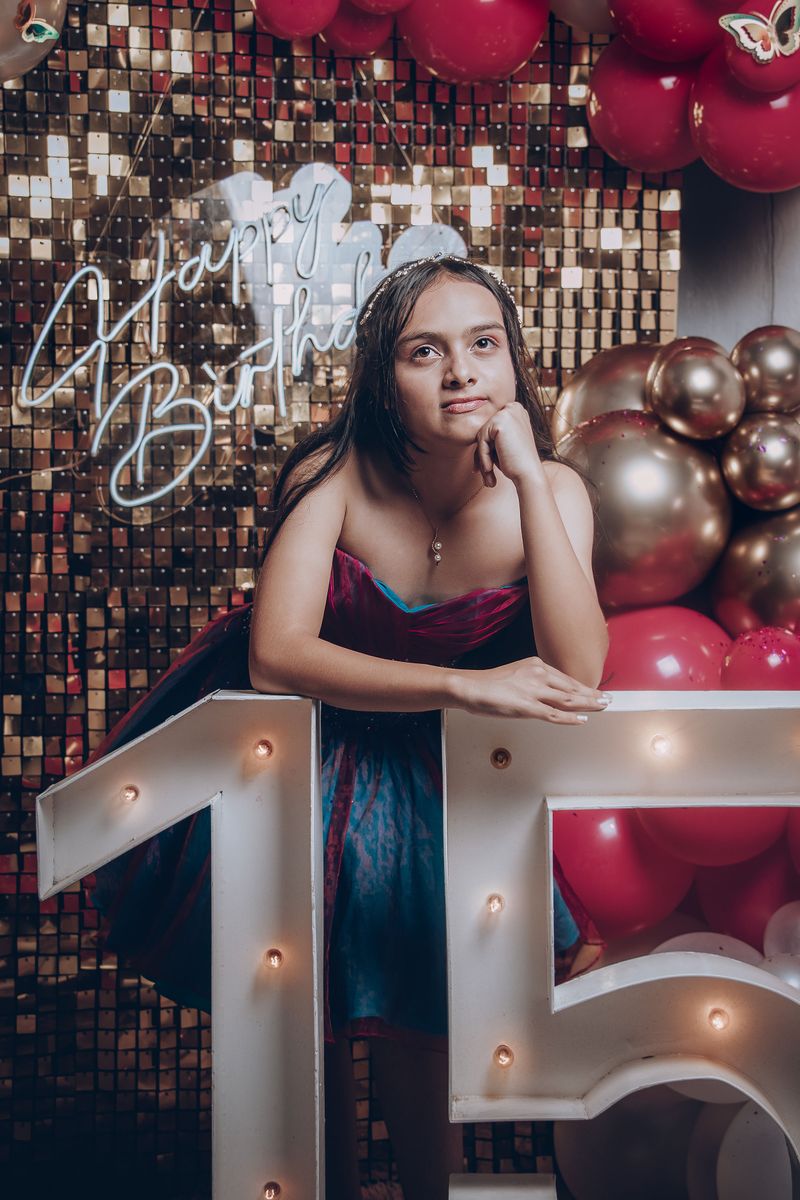
Papel picado. The punched paper banner with cut-out designs. It's inexpensive, it moves in the air, and it instantly reads as a Mexican celebration. String it across the head table, over a doorway, or across a backdrop. Layer two or three colors from your palette.
The head table and the throne. Most quinceañeras have a designated seat for the birthday girl — a decorated chair, a wingback, or a literal throne, often with tulle, florals and a sash draped over it. Position it so the camera can see it against the backdrop from the main guest seating.
Backdrop and photo wall. A fabric or flower backdrop with a paper flower installation is the single highest-impact decor investment, because every guest photographs against it. A simple fabric backdrop plus a cluster of paper flowers or a balloon garland gives you a photo moment for a fraction of a full wall of fresh flowers.
Balloons in the palette. Balloon garlands around a backdrop or over the cake table are standard now. Keep them to two or three colors and one metallic so the garland reads as intentional.
Centerpieces and lighting. Low centerpieces — floating candles, small floral clusters, bud vases — so guests can see across the table. String lights or warm uplighting transforms a plain hall more effectively than any tabletop decor, and it's what makes the room photograph like a venue instead of a gymnasium.
Personal touches. A table of framed photos from the quinceañera's childhood, a guest book, and a board of the photos from her court rehearsals. These are cheap to produce and they're what family members walk over to look at.
For the pieces you'd rather not build yourself — backdrops, banners, and the paper goods that carry the palette — our party decoration collection covers the basics, and party backdrops will save you a full afternoon of construction.
The Table: Paper Goods That Survive a Big Guest List
Here's the practical argument for disposable tableware at a quinceañera: you are feeding somewhere between fifty and two hundred people, the venue may not have a kitchen, and the last thing you want is a rented plate count that has to be reconciled the next morning. Paper and compostable tableware lets you over-buy deliberately — which is exactly what you should do at an event this size.
Build the table in three layers:
- Main plates. A larger-size plate with a wide rim, one per guest plus fifteen percent. Guests at a buffet will stack, and running out is worse than having extras.
- Small plates and bowls. For the buffet sides and for cake. Bowls matter if you're serving anything with sauce — rice, mole, beans, stews.
- Napkins, cups and cutlery. Two cups per guest is the right number, because people take a water glass and a drink glass. Pre-roll cutlery in napkins tied with a ribbon in your accent color and you've created a stylized place setting out of nothing.
If your palette is pink, start with pink paper plates and add a neutral for the sides so the table doesn't go monochrome. For a floral or garden-themed quinceañera, floral paper plates do a lot of the decorating by themselves. And for the core set — plates, napkins, cups, tablecloths all in coordinating finishes — our party plates and napkins collection is designed to mix across palettes rather than lock you into one.
One more upgrade worth the money: a tablecloth on every table, including the buffet. Bare folding tables are the most common thing that makes a well-planned quinceañera look improvised. A floor-length cloth in your neutral color fixes the entire impression for a few dollars a table.
The Menu: A Feast That Feeds Eighty
Latin American party food is designed for volume, which is why a quinceañera menu is easier than a plated dinner. The key is choosing a buffet format where nothing needs to be served hot at a precise moment.
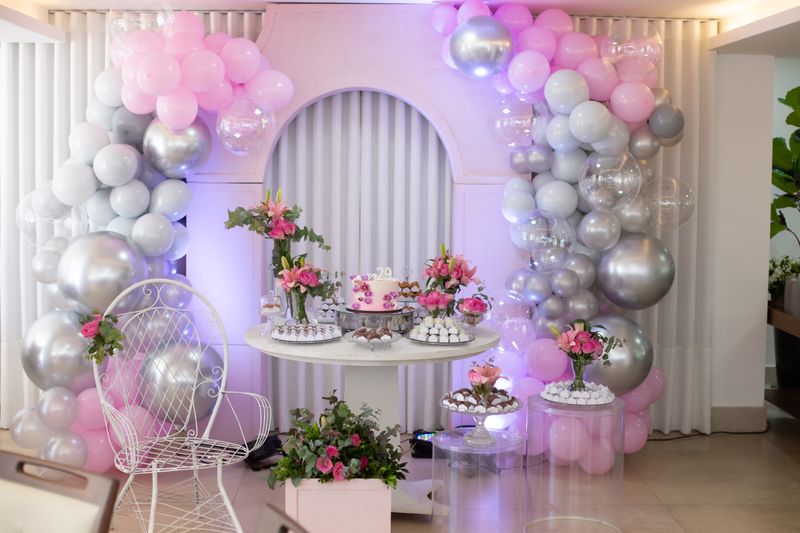
Main proteins. Pick two, not four. Carnitas or barbacoa for tacos, or birria if you want the dish everyone photographs (and the consommé for dipping), or roasted chicken in adobo or mole. A taco and birria bar is the most forgiving format because guests assemble their own plates and the meat can sit in chafing dishes for hours.
Rice and beans. Mexican rice and refried or black beans. Cheap, filling, vegetarian-friendly, and they stretch a buffet further than any other two items on the table.
Tortillas and the fixings bar. Corn and flour tortillas kept warm in a cooler, plus diced onion, cilantro, lime wedges, salsa roja, salsa verde, pickled jalapeños, crema, and queso fresco. The fixings bar is where guests spend their time, so make it wide and put it in the middle of the buffet rather than at the end.
Elote or esquites. Grilled corn with crema, cotija, chile and lime, served in cups. Works as a side, works as a snack during cocktails, and it's the item guests always ask about afterward.
Add two regional sides. Tamales if you have a family source for them. Tostones or plantains if the family is Caribbean. Pozole if the celebration is in cooler months — it's a pot that only improves as the night goes on. Pupusas, arepas or empanadas if you want a hand-held option that doesn't need a plate.
Savory snacks for the cocktail hour. This is the gap most hosts forget. Guests arrive forty-five minutes before dinner, the photos are still happening, and people are hungry. Set up a small station: chips and salsa, guacamole, a fruit platter, and something warm like mini empanadas or quesadilla wedges. It costs little and it prevents the buffet stampede the second it opens.
The cake. A multi-tier quinceañera cake is traditional, but a cake and a dessert table together is the modern standard — and cheaper than one enormous tiered cake. A modest two-tier cake for the ceremonial cutting plus a dessert table with churros, conchas and pan dulce gives you a real photo moment and plenty of dessert for a big room. Churros with a chocolate and a cajeta dipping sauce are, consistently, the first thing to disappear.
Drinks: Aguas Frescas and a Signature Pour
A drink station is a cheap way to make a reception feel catered. Set up three dispensers with clear labels — that's it:
- Horchata — rice, cinnamon, vanilla, lightly sweet. The one everybody likes and nobody can identify.
- Agua de Jamaica — hibiscus, deep red, tart. This is the drink that carries your color story into the glassware.
- Agua de tamarindo — brown, tangy, slightly caramel. The favorite of guests who grew up with it.
Add a signature mocktail in your palette — a lime and mint soda, a strawberry-lime punch, or a sparkling grapefruit cooler — and serve it in a clear glass with a rimmed sugar edge and a fruit garnish. Set the dispensers up with ice baths and put a stack of cups next to each one. Guests should never have to ask anyone for a drink.
For the adults, a signature cocktail or a punch bowl is enough; you don't need a full bar. If you do want a bar, keep it to two spirits, one mixer set and one signature drink and you'll serve faster and spend less. Always provide a clearly separate, equally attractive non-alcoholic option — the younger cousins and the designated drivers are a meaningful share of your guest list, and they should be drinking out of the same glassware as everyone else.
Coffee service matters more than you'd expect. A quinceañera runs late, and a coffee and hot chocolate station with churros set up around ten o'clock keeps the older guests awake and happy for the last two hours.
Music: Mariachi, Banda and the Dance Floor
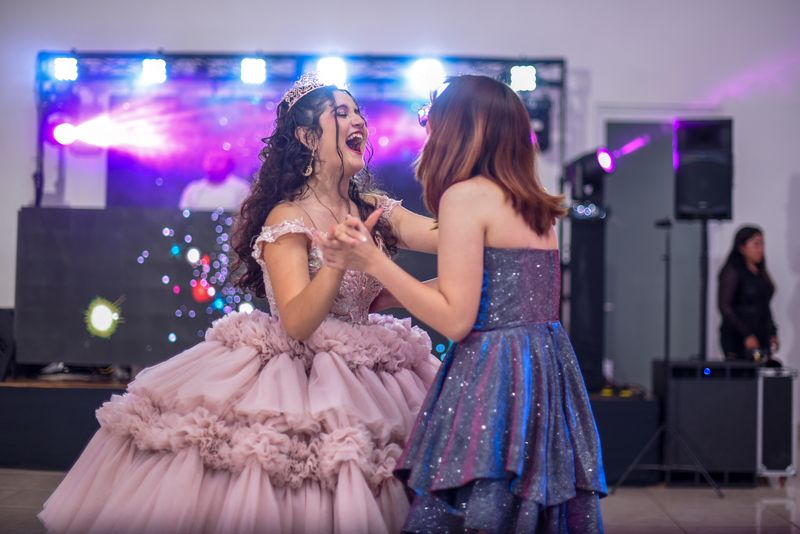
Music is where a quinceañera either becomes unforgettable or turns into a seated dinner with a playlist. The most reliable structure is a layered night:
- Cocktail hour: instrumental or acoustic — guitar trio, mariachi if you have the budget, or a curated Latin jazz and bolero playlist.
- Dinner and the formal program: quieter background music. This is when the mass-adjacent formalities, the toasts, the last doll and the shoe change happen. Keep the volume down so people can hear the speeches; a DJ who plays over the toast has ruined the moment for the family.
- The waltz: a specific recorded track or a live trio, decided weeks in advance and rehearsed to.
- Surprise dance: the modern medley.
- Open dancing: a real Latin set — cumbia, salsa, merengue, bachata, reggaeton, plus the American pop hits your younger guests want. Alternate between the two so different generations keep the floor.
- Late-night: the nostalgic set for the aunts and uncles still dancing at midnight.
If you book a DJ, give them a one-page brief: the timeline, the names of the people making speeches, the exact tracks for the waltz and surprise dance, the songs that are absolutely not allowed, and the cue for the dollar dance. A DJ who knows the schedule keeps a formal program on time. A DJ who doesn't will stretch your program by forty minutes.
Activities Beyond the Waltz
The formal moments are for the family. These are for the guests — especially the ones who don't know many people in the room.
Photo booth with props. Always works at this age. Provide props that match the palette and a backdrop, plus a simple sign with your event hashtag. Instant prints or a QR-share system both work; the point is that people leave with something.
Guest book with a prompt. Instead of a blank page, give guests a prompt: "One piece of advice for fifteen-year-old you" or "Your favorite memory of [name]." Guests write more, and the quinceañera ends up with something worth keeping.
Lotería. The classic Mexican bingo game with illustrated cards. Set up one table with a caller and small prizes — a beaded bracelet, a candy bag, a $5 gift card. It's multigenerational, it's fast, and it fills the hour when the photographer is doing formal portraits.
Prediction cards or a memory jar. Guests write a prediction for the quinceañera to open at eighteen or twenty-one. Almost free, genuinely meaningful, and it keeps the tables busy during the slow parts of the program.
Two or three open-table games. Giant Jenga, cornhole or a dice game in the corner. Not for everyone, but they're the thing that rescues guests who arrive knowing only the birthday family.
The court rehearsals as a social event. If the court is rehearsing anyway, turning one of those practices into a pizza night with the parents is a practical way to build the group into a real circle before the event. Courts that have spent time together perform better and photograph better, and the parents end up sharing vendors, ride arrangements and advice.
Budget Tiers
Quinceañera costs vary enormously by region, vendor and guest count, and the widely quoted averages in the several-thousand-dollar range are usually for a fully catered venue event. Here are three tiers built around 60 to 80 guests, framed as planning ranges rather than prices you can count on:
- Home or backyard, family-cooked — roughly $1,200 to $3,000. The bulk of the budget goes to the dress and the court outfits, then the cake and the food. Decor is DIY: papel picado, a fabric backdrop, a balloon garland, rented folding tables with your own tablecloths. Music is a playlist and borrowed speakers. Photography by a talented relative or a short two-hour student package. This is a completely legitimate quinceañera — the traditions are all intact.
- Community hall or church hall — roughly $3,500 to $8,000. Hall rental, a catered buffet with two proteins, a DJ, a small floral setup, a two-tier cake plus a dessert table, a photographer for four hours, and a full paper-goods and table-linen package. This is the most common middle tier and the one where careful vendor choices stretch furthest.
- Full venue and catered — roughly $10,000 and up. Formal venue, plated or chef-attended buffet, live mariachi plus a DJ, floral installations, a custom gown, a large court with matching outfits and a choreographer, a full photo and video package, and a professional planner. At this level, hire the planner — the cost is almost always recovered in vendor pricing and avoided rework.
Four places to spend, four places to save:
Spend on good food in generous quantities, a professional photographer for at least the formal hours, a reliably loud sound system, and enough table linen for every table.
Save on printed signage and stationery (a printed menu card per table beats individual menus), the number of floral arrangements (one statement backdrop beats twenty centerpieces), the dessert table (three items done well, not eight), and favors (one useful item with a meaningful card beats a bag of small plastic objects).

A Twelve-Month Planning Timeline
Twelve months out. Set the date and check family availability — a quinceañera is often also a family reunion, so check with the relatives who'd have to travel. Set the guest count range, decide venue type, and set the total budget before you look at anything. Agree on the religious or ceremonial element with the family.
Nine months out. Book the venue, the photographer and the DJ or band. Ask your padrinos and madrinas and confirm which element each is covering, in writing. Order the gown — custom orders need months. Choose the color palette and the court size.
Six months out. Invite the court. Book the choreographer and start waltz rehearsals. Order invitations. Book catering or finalize the family cooking plan. Reserve the cake. Confirm the Mass or ceremony with the church and get the paperwork in early.
Three months out. Court outfits — measure everyone, order, and allow time for a second round of alterations. Order the tableware, linens, decor and favors. Book hair and makeup. Build the playlist brief and the full program timeline with times.
One month out. Send invitations with an RSVP date at least three weeks before the event. Finalize the guest count. Confirm every vendor in writing. Buy non-perishables: paper goods, decor, favors, candles. Buy the shoes — the flat pair and the heels — and have the quinceañera practice walking in the heels. Print the program.
Two weeks out. Final numbers to the caterer. Make the seating chart and the table assignment cards. Print the menu cards. Rehearse the waltz with the full court at the actual venue if you can. Confirm the dress fitting. Prepare the last doll and the tiara and scepter.
One week out. Final dress rehearsal. Label everything — boxes by table, décor by zone, a labeled bin per task station with a printed instruction sheet. Confirm the DJ cue sheet and hand it over. Assign floor roles: a person on the buffet, a person on drinks, a person wrangling the court, a person holding the schedule.
Two days out. Deliver the cake instructions, confirm the venue delivery window, chill the drinks, charge the speaker and cameras. Pack the emergency kit: safety pins, extra heels, stain remover, hairspray, bandages, a sewing kit, tissues, and a phone charger.
The day of. Set the backdrop and photo area first — that's what gets photographed before anyone is seated. Set the head table and the throne. Lay the buffet with chafing dishes and the fixings bar. Put the guest book and photo booth props where guests enter. Assign one person to keep the schedule moving, and give the quinceañera's mother the one job of not doing any of the work. Then start the music and let the night run.
Quinceañera, Sweet Sixteen and Bat Mitzvah: What's the Difference?
If you're a guest or a first-time host trying to understand the format, this is the practical distinction:
- A sweet sixteen is a birthday party for a sixteen-year-old, usually with a party theme, a DJ, and a group of friends. There's no ceremonial structure, no court, and no formal presentation. The focus is entertainment.
- A quinceañera is at fifteen, and it has ceremony: a religious or formal presentation, a court, a waltz, and symbolic rituals like the shoe change and the last doll. The focus is the transition, not just the birthday.
- A quinceañero is the male equivalent in some communities — a fifteenth birthday celebration for a boy, with its own variations. It's less widely held but it exists and follows similar structure.
- A bat mitzvah (or bar mitzvah) is a Jewish coming-of-age ceremony at twelve or thirteen that involves a religious service, study and a reception. The ceremony is the centerpiece in a way that's structurally similar to the Mass in a quinceañera.
What they share is the underlying idea: a formal public moment where a young person is recognized as taking on more responsibility, with family present. That's why a quinceañera feels so much older and more serious than a sweet sixteen — and why relatives travel for it.

Hosting Without Being Latino, or Without Being Catholic
Plenty of people host a quinceañera for an adopted daughter, an exchange student, a granddaughter from a mixed family, or a close friend's child. A few guidelines keep it respectful and let the family lead:
- Let the person being celebrated decide the format. Some fifteen-year-olds want the full tradition. Others want a secular version or something much smaller. Both are correct answers.
- Keep the religious piece accurate or leave it out. If you're doing a Mass, arrange it with a priest and follow the parish's requirements. If the family isn't religious, a non-religious ceremony with a blessing, a presentation and a reading is a reasonable substitute — don't invent religious content.
- Credit the tradition by name. Tell your guests where the traditions come from — Mexico, Cuba, Puerto Rico, the Dominican Republic and others all have their own versions. Knowing that the doll, the shoes and the waltz mean something specific makes the ceremony more meaningful, not less.
- Skip the costume version. No sombreros, no fake mustaches, no "fiesta" props that turn a culture into a joke. Your color story, a Mariachi playlist or trio, and a proper meal carry the theme genuinely.
- Ask about court names and pronunciation early. Learning how to pronounce chambelán, damas, padrinos and the quinceañera's full name correctly before the toasts is a small thing that matters a lot.
FAQ: Quinceañera Planning
What age is a quinceañera for?
Fifteen — that's literally what the word means. It's celebrated on or near the fifteenth birthday, most often with the main event on the nearest weekend.
Do you have to have a Mass?
No. The Mass is traditional and still very common, but many families today hold the celebration with a short blessing or a secular presentation at the venue instead. What matters is that the ritual moments — the presentation, the shoe change, the last doll, the waltz — still happen.
Who are the padrinos and madrinas?
Sponsors, usually godparents or close family friends, who each take responsibility for one part of the celebration: the dress, the cake, the flowers, the music, the hall, the favors or the photography. The tradition distributes both cost and participation, and it's why quinceañeras can include extended family so naturally. Confirm contributions in writing — good feelings survive much better when expectations are clear.
Is the court of honor required?
No. Fourteen damas and fourteen chambelanes is the traditional count, but many modern quinceañeras use a smaller court of six to eight, a mixed court of friends regardless of gender, or no court at all. If the budget is tight, a small court with a single choreographed number looks better than a large court that never rehearsed.
What should the quinceañera wear?
A formal ball gown is traditional, in the color chosen for the court and decor. She'll need matching flat shoes for the entrance and heels for the shoe change, plus comfortable shoes for the last hour of dancing — pack them, she will need them.
How far in advance should we start planning?
Twelve months is comfortable. Nine months is realistic for a venue, photographer and DJ in most markets. Six months is workable if you're flexible on vendors and the gown is off the rack rather than custom.
How do we keep the program on schedule?
Write the program with clock times, not just an order. Give copies to the DJ, the photographer, the emcee and one family member who's willing to move people along. The two things that run long at almost every quinceañera are speeches and formal photos — cap the speeches at three minutes each and tell the photographer the cutoff time for portraits before the dance floor opens.
What's the best buffet format for a large guest list?
A taco or birria bar, rice and beans, elote, and a wide fixings bar. Guests self-serve, meat holds well in chafing dishes, and vegetarian guests can build a full plate. If you're over a hundred guests, run two identical buffet lines — the second line costs almost nothing and removes the single worst bottleneck of the night.
How many servings should I plan per guest?
For a buffet with two proteins: two tortillas' worth of meat per guest, one and a half cups of rice and beans total, and one elote. Then order fifteen percent more than that. Buffets produce a few extra plates, and a quinceañera with hungry teenagers at the end of the night is a problem you can solve cheaply in advance.
Closing: The Party Is the Family
Here's the thing worth remembering through the vendor calls and the rehearsal scheduling: a quinceañera is not really about the decor or the cake. It's about a fifteen-year-old walking in wearing flats, hearing her grandmother cry during the blessing, changing into the heels her father is holding, dancing a waltz she has practiced for months, and then watching her entire family stay on the dance floor until midnight.
The best thing you can do as a host is protect those moments. Keep the schedule tight through the formal program so the night doesn't drift. Put someone else in charge of the buffet so the mother can sit down. Make sure the audio works during the toasts and the waltz. Everything else — the balloons, the paper flowers, the churros — is scenery around a moment that the family will be describing for years.
Start with the table and the backdrop, since those are the two things every photo frames: our party plates and napkins for the core setting and party backdrops for the photo moment. Add your palette, a wide fixings bar, a real playlist, and one person holding the schedule — and let the celebration run. ¡Feliz quinceañera!