


Spain National Day 2026 Party Ideas: How to Host an Authentic Fiesta Nacional de Espana

Every year on October 12th, Spain lights up — flags cascade from balconies, the smell of paella drifts from open kitchens, and entire neighborhoods throw block parties that start at noon and end at sunrise. The Fiesta Nacional de España is more than a military parade watched on television; it is a country-wide celebration of Spanish identity, language, food, and the deep regional pride that makes Spain endlessly fascinating to throw a party around.
If you have ever dreamed of hosting a gathering that captures the warmth of an Andalusian patio, the energy of a Madrid bar crawl, or the romance of a flamenco tablao, October 12th is your natural excuse. This guide walks you through everything you need — historical context, decor themes, a complete menu, music and dancing, games for kids and adults, a realistic 8-week planning timeline, a sample budget, and answers to the most common questions about hosting a Spain-themed celebration. Whether you live in a city apartment, a suburb with a generous backyard, or are throwing a school event, there is a version of this party that will work for you. Browse our party tableware collection for plates, napkins, and cups that match the red-and-yellow palette, and our national flag party supplies for printed flags, banners, and bunting that pull the whole room together.
Why October 12th Matters — A Quick History
The Fiesta Nacional de España commemorates the arrival of Christopher Columbus in the Americas in 1492, and historically was framed as "Día de la Hispanidad" — a celebration of the shared language and culture of Spanish-speaking nations. Modern Spain, however, frames the day as a celebration of national unity, the Crown, and the country itself. The official ceremony in Madrid includes a military parade presided over by the King, a solemn tribute to those who have died in service of Spain, and a flyover by the Spanish Air and Space Force.
Outside Madrid, the day is celebrated very differently. In Andalusia, the week leading up to October 12th overlaps with the final days of the Feria de San Miguel and rural ferias where horses, flamenco dresses, and casetas (pop-up party tents) fill town squares. In Catalonia, October 12th falls right around the historical date of La Diada, and you'll see Catalan senyera flags alongside the Spanish roji-amarilla. In the Basque Country and Galicia, regional pride runs strong, so a thoughtful host acknowledges regional identity without putting any one flag above another. For a party in the United States, Canada, or the UK, the simplest approach is to embrace Spain's mainstream symbols (the red-and-yellow flag, paella, flamenco, bullfighting motifs) while staying sensitive to guests from any of Spain's diverse regions.
Decor — Bring the Spirit of Spain Home
Spanish decor is colorful, unpretentious, and built around texture: woven baskets, terracotta tiles, embroidered linens, and strings of dried peppers or garlic. You don't need an entire Mediterranean villa to evoke the feeling — a few targeted pieces can transform a backyard, living room, or classroom.
Flags, Bunting, and Color Palette
The unmistakable Spanish flag — horizontal bands of red, yellow, and red with the coat of arms — should be the visual anchor of the room. Hang a large flag on the main wall, drape small handheld flags across the food table, and weave longer bunting in solid red and yellow along the ceiling or porch. The coat of arms is rich (yellow crown, castle, lion, vertical stripes, pomegranate), so if you decide to print or buy decor featuring it, look for vendors that handle the details accurately. For a more abstract take, stick to red and yellow tissue fans, paper rosettes, and streamers — these read instantly as "fiesta" without committing to any one political symbol.
Table Settings
Dress the main table with a checkered or gingham tablecloth in red and white (the classic picnic-style Spanish look) or a single-color linen runner over a wood-top table. Layer chargers, dinner plates, and salad plates; add cloth napkins tied with twine and a sprig of rosemary. Traditional Spanish tableware often features blue-and-white or yellow-and-green patterns echoing the Talavera and Manises pottery traditions. For disposable convenience with style, browse our party plates and napkins collection — printed paper plates in the warm Spanish palette pair perfectly with cloth runners for a high-low mix.
Florals and Greenery
Spaniards love their plants. Set small pots of basil, rosemary, or lavender on the table as both decor and conversation starters. For a more traditional look, work in cut sunflowers or red carnations (the national flower of Spain). Low vessels of olive branches lend an authentic Mediterranean scent — just be careful with any guests who might be sensitive to olive pollen. Pomegranate branches, if available in early October, are visually stunning and thematically apt: the pomegranate (granada) appears on the coat of arms of Granada and is a Spanish culinary icon.
Lighting
Spain is famous for warm light. Use fairy lights strung overhead, beeswax or amber LED candles on every surface, and a few paper lanterns in red and yellow. If you're hosting outdoors, string solar lanterns along the fence and place torches or hurricane lamps around the patio. As the sun goes down, your space should glow.
Food — The Heart of a Spanish Celebration
Spanish food is communal, leisurely, and built for sharing. Forget a single plated main course — instead, plan a spread of small bites (tapas), one or two showstopping pans (paella or fideuà), a simple green salad, and a dessert table that lets guests graze.
Tapas Spread
A traditional tapas selection includes 6–10 small dishes. Pick a manageable subset for your party size:
- Patatas bravas: cubed fried potatoes topped with tomato sauce and aioli
- Gambas al ajillo: shrimp sizzled in olive oil with garlic and chili
- Tortilla española: a thick Spanish omelette with potato and onion, sliced into small squares
- Jamón ibérico or serrano: thinly sliced cured ham, draped over warm bread
- Manchego cheese: aged sheep's milk cheese, served with quince paste (membrillo)
- Pan con tomate: toasted bread rubbed with tomato and drizzled with olive oil
- Padrón peppers: blistered small green peppers with sea salt
- Boquerones: marinated white anchovies with parsley and lemon
- Albóndigas: Spanish meatballs in tomato sauce
- Empanadas or empanadillas: small filled pastries with tuna, chicken, or chorizo
For a vegetarian-friendly version, double up on patatas bravas, padrón peppers, Spanish olives (marinated with citrus and herbs), a chickpea and spinach tapa, and a roasted red pepper salad. For vegan guests, ensure the bread is plain (no lardon or butter), and offer a tomato-and-cucumber gazpacho shooter as a fun handheld option.
Paella — The Centerpiece
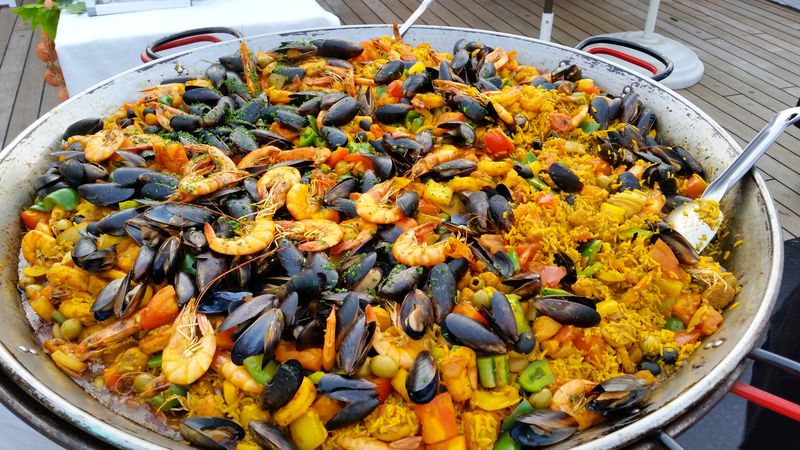
Paella is the dish most strongly associated with Spain. The original Valencian paella combines chicken, rabbit, and snails with green beans, artichokes, and saffron rice. The seafood paella (paella de mariscos) replaces meat with prawns, mussels, clams, and squid. The mixed paella (paella mixta) blends both. For a party of 8, you'll need a 16-inch pan; double the recipe for 16. Short-grain Bomba or Calasparra rice is essential. Real-deal paella is cooked outdoors over a wood or gas fire — a gas burner or charcoal grill with a paella pan works well in any backyard. If you're not ready to cook outdoors, you can also bake paella in the oven in a wide shallow pan; it won't get the prized socarrat (crispy bottom layer) but the flavor is still excellent.
Tip: set up the paella station as a "live cooking" experience. Guests gather around while the cook stirs and chats about the history of the dish. It is genuinely entertaining and frees the host from standing alone in the kitchen.
Drinks — Sangria, Tinto de Verano, and Beyond
Red sangria is the obvious pick. Combine 1 bottle of Spanish red wine (Tempranillo, Garnacha, or a young Rioja) with 1/4 cup brandy, 1/4 cup orange liqueur, sliced oranges, apples, peaches, and a splash of grape or pomegranate juice. Sweeten to taste with simple syrup. White sangria (sometimes called sangría blanca) uses Sauvignon Blanc or Verdejo, white peach, green apple, and elderflower liqueur. Tinto de verano — red wine with lemon soda — is more refreshing and less sweet, perfect for daytime outdoor parties.
For non-alcoholic drinks, Spanish-style horchata (tiger nut milk with cinnamon) and granizada de limón (frozen lemon slushie) are fun. For something universally beloved, set up a sparkling water station with sliced citrus, mint, and ice — Spanish summers are hot, and people will thank you for staying hydrated.
 Music, Dancing, and Entertainment
Spanish party entertainment falls into a few reliable buckets: live or curated background music, structured dancing, games, and conversation-friendly group activities.
Flamenco and Spanish Music
Build a playlist that moves through eras and regions: classical guitar (Paco de Lucía, Andrés Segovia), copla (past-its-prime romantic torch songs), rumba catalana (rumba Catalana style by Peret or Los Manolos), modern flamenco fusion (Estrella Morente, Niña Pastori), and contemporary Spanish pop (Rosalía, Aitana, Quevedo, Bad Gyal). Aim for at least 4 hours of music so it can run all night without repeating too obviously. For an outdoor party, a small speaker placed near the food table keeps the mood festive without overpowering conversation.
If your budget allows, hiring a guitarist or a small flamenco duo is unforgettable. A 45-minute set during peak dinner time turns the energy from "nice dinner" to "this is a real Spanish celebration." Even a single guitarist with a stool and a Coke can be magical in the right setting.
Sevillanas — Dance for Everyone
Sevillanas are a four-part social dance performed at every Feria in Andalusia. Unlike salsa or tango, they are completely accessible: the basic four-step pattern can be taught in five minutes. Print a simple step-by-step card at each table, cue a YouTube tutorial on the TV, and let a willing volunteer demonstrate. Within 30 minutes, even shy guests will be dancing. Sevillanas also work for families — children pick it up faster than adults.
Adult Games
After dinner, move the music up a notch and introduce a few Spanish-themed games:
- Tapas crawl: label each dish with its region of origin and have guests rank them
- Bull-themed trivia: questions on Spanish geography, food, history, and culture
- Bull-or-horse (toro o caballo): a hand-game with clapping and rhythmic beats — similar to rock-paper-scissors but with moves named after corrida figures
- Pin the tail on the donkey, Spanish edition: blindfold, mustache, and a giant picture of a bull
- Photo booth with props: a printed Spanish flag, a matador cape, a sombrero (avoid caricatured sombreros in favor of more elegant wide-brim hats or a flamenco fan), and signs reading "¡Olé!" or "¡Salud!"
Family-Friendly Activities
For a daytime event with kids, build a craft table: decorate small paper fans, color Spanish flag bookmarks, or paint tiny clay sun faces. Spanish-themed coloring sheets are widely available online. A piñata is always a hit — fill with small candy and inexpensive trinkets like plastic castanets, maracas, or temporary flag tattoos.
The Practical Side: Timeline, Budget, and Logistics
A great Fiesta Nacional party isn't built in a weekend. The earlier you start, the more thoughtful and less stressful the result.
8-Week Planning Timeline
- Weeks 8–6 (early August): pick your date (any weekend near October 12th works — Saturday October 10th or Sunday October 11th are most common in the diaspora), set guest count, draft your menu, and lock in your venue. If you need to rent tables, chairs, or a paella pan, book now.
- Weeks 5–3 (late August – mid September): order party supplies, flags, and tableware. Send invitations (paperless Postable or digital). Recruit 2–3 friends to help on the day, and assign clear roles — one on food, one on drinks, one on photos and music.
- Weeks 2–1 (last two weeks): shop non-perishable ingredients and Spanish wine. Plan your music playlist. Confirm the paella plan (who cooks, what recipe, what time). Shop decor — fresh flowers, candles, fairy lights.
- Days 3–1 before: shop fresh produce, fish, and bread. Confirm butcher orders. Pre-chop what you can. Set up tables and lighting the evening before.
- Day of: arrive 3 hours early. Cook paella outdoors. Lay out tapas. Set up the music and playlist. Greet guests, take a deep breath, and have fun.
Sample Budgets by Scale
For a host in a mid-size city, here are reasonable budgets. Prices are in USD and assume bulk-shopping at warehouse stores plus international or specialty shops for Spanish goods.
- Intimate gathering (10 guests, apartment): $250–$350. Most of the spend goes on food and wine — tapas ingredients ($80), paella for 10 ($60), wine and sangria ($80), candles and paper decor ($30).
- Backyard party (25 guests): $500–$750. Adds table rentals ($80), paella pan and gas burner rental ($50), extra wine and beer ($200), printed flags and bunting ($60), live music if budget allows (~$150).
- Full community event (60+ guests, hall rental): $1,500–$2,500. Hall rental ($400), catered paella for 60 (~$600), bar service ($300), decor and flags ($200), live music ($400), tableware and rentals ($200), contingency ($200).
To save money without sacrificing the vibe, focus the spend on Spanish wine and paella (the two things people remember most), and do-it-yourself decor using red and yellow butcher paper, printed flags from an inexpensive source, and grocery-store sunflowers. Another trick: ask guests to bring one Spanish wine bottle each, which both stocks the bar and covers a third of the cost.
Variations for Different Settings
Apartment-friendly version: skip the live paella cooking and order pre-made paella from a Spanish deli or make a stovetop seafood paella. Lean into the table spread with hot tapas, charcuterie, and a good olive selection. Lighting becomes more important than scale — get more candles and a smaller space will feel intimate and intentional.
Backyard cookout version: full paella outdoors, parade the Spanish flag from a tree branch or front porch, set up lawn games with a regional twist (a Spanish-themed trivia station, a "throw the ping pong ball into the wine barrel" kids game).
School classroom version: keep it simple with printed Spanish flags, a song-and-dance hour, and a paella-themed lunch where each child decorates their own cup of saffron rice with toppings. Edible paella cups (rice + toppings in a paper cup) are a huge hit with younger kids.
Wedding or large anniversary with a Spanish theme: a multi-station set-up with a paella station, an Iberian ham carving station, a sangria bar, and a flamenco performance or DJ. Custom cocktail napkins and roji-amarilla bunting can elevate an entire ballroom.
FAQ — Common Questions About Spain-Themed Parties
Is it appropriate to wear a sombrero and poncho?: For broad Mexican-themed parties, the sombrero is more commonly used, but for Spain-themed parties, authentic pieces would be a matador-inspired cape, a Spanish bolero hat, or a flamenco-style ruffled dress. Avoid using Mexican-themed items when throwing a Spain-specific party to keep the cultural references accurate.
How is Fiesta Nacional de España different from Cinco de Mayo?: Cinco de Mayo (May 5th) commemorates a Mexican army victory in 1862 and is celebrated primarily in Mexico and the United States. Mexico's actual Independence Day is September 16th. Spain's national day, October 12th, has a different historical origin entirely. Hosting a Cinco de Mayo party would feature different food (tacos, mole, margaritas), decor (papel picado, bright Mexican serape blankets), and cultural references than a Spanish national day party.
What if guests have dietary restrictions?: Spain's cuisine is gluten-heavy (bread, empanadas, paella skeptics may have concerns about saffron coloring) and dairy-heavy (manchego). Always have gluten-free crackers, a vegan tapas selection (roasted red peppers, marinated olives, pan con tomate with GF bread, padrón peppers), and clearly labeled dishes. Many tapa-style dishes are naturally gluten-free or easily modified.
How early should invitations go out?: Six weeks is ideal for a Saturday evening party. Four weeks works for casual. For a destination-style celebration or one requiring a special outfit, push it to 8 weeks.
What should I serve if I don't want to cook paella?: A tapas-only spread is a brilliant alternative. Lean into 8–10 different tapas, several bread varieties, a generous cheese and charcuterie board, and a dessert table. No paella needed.
What's a typical drink list length?: For an 8-person party: 3 bottles of red wine, 1 bottle of white wine, 1 bottle of cava (Spanish sparkling), 6 large bottles of beer (Mahou or Estrella are authentic), a half-bottle each of brandy and orange liqueur for sangria, lots of sparkling water, and lemon soda for tinto de verano.
What kind of music do guests expect?: Three hours of mixed Spanish music covers most parties. A practical ratio: 30% chill/classical guitar (during appetizers), 40% mid-energy rumba/flamenco fusion (during dinner), and 30% upbeat pop and reggaeton (during dancing). Keep overall volume lower than you think is necessary during dinner — conversation matters.
Pulling It All Together
A Spain-themed Fiesta Nacional party is one of the most genuinely joyful celebrations you can host. The food is universally loved, the music gets even wallflowers onto their feet, and the warm color palette makes any space feel welcoming. Start by locking in your guest list and a realistic budget, then build outward from there: paella or tapas, sangria or wine, flags and candles, flamenco or a smart playlist. Within a few weeks you'll have a celebration that feels distinctly Spanish and entirely your own.
Browse our full collection of party tableware for red-and-yellow plates, napkins, and cups that match your theme, and our national flag party supplies for printed flags, bunting, and banners that capture the spirit of October 12th. ¡Salud, and happy hosting!